/
/
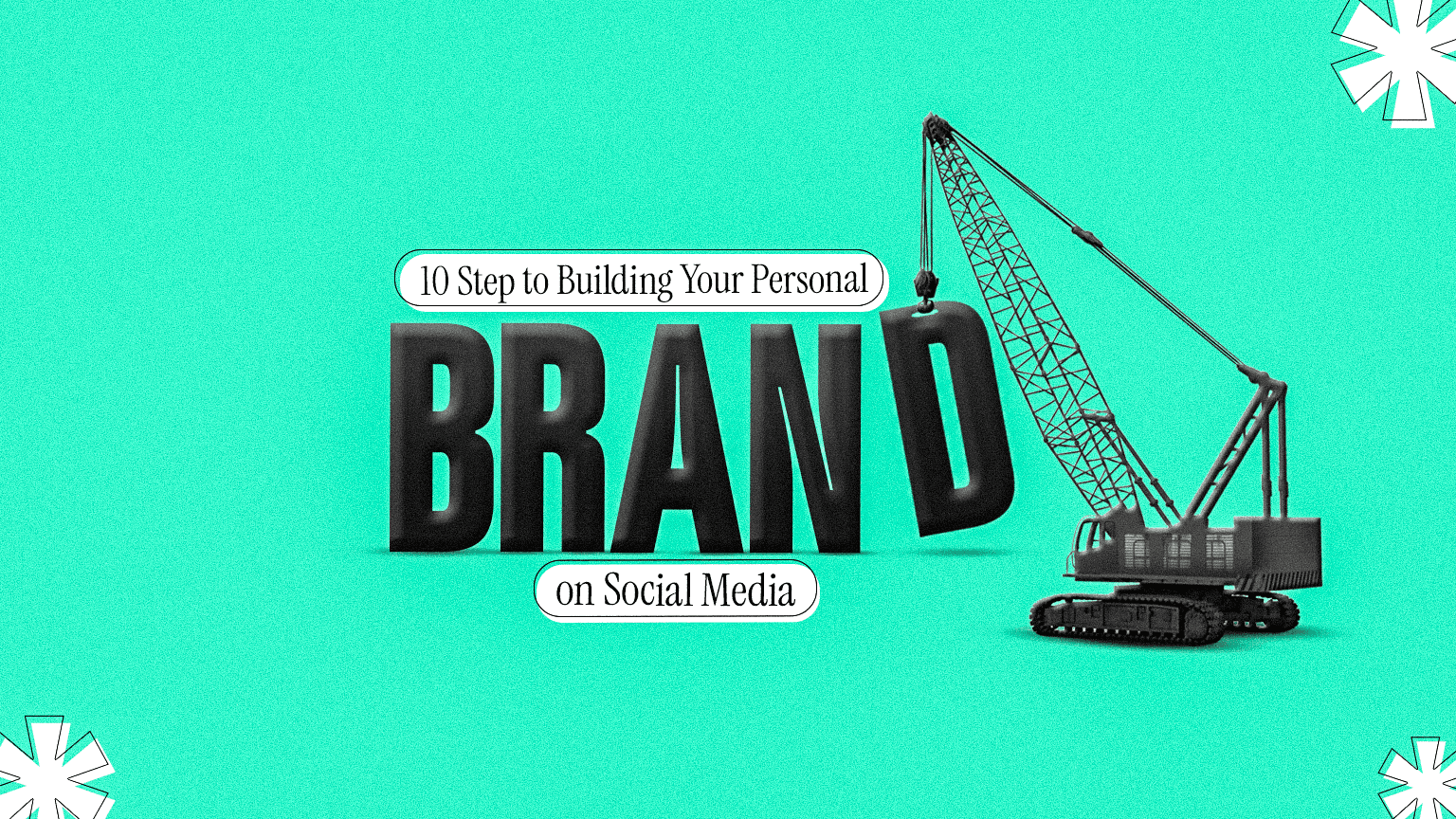
10 Steps to Building Your Personal Brand on Social Media
10 Steps to Building Your Personal Brand on Social Media
5 min
read
10 Steps to Building Your Personal Brand on Social Media
10 Steps to Building Your Personal Brand on Social Media
Startup
Marketing

Author
Scroll down
to read more!
Summerize with ChatGPT
Summerize with Gemini
Summerize with Claude
10 Steps to Building Your Personal Brand on Social Media
10 Steps to Building Your Personal Brand on Social Media
you don't need a massive following to build a powerful personal brand. You need clarity, consistency, and a strategy that fits how social media actually works in 2026. This guide walks you through exactly that, ten practical steps, built on current data, that will help you stand out in a crowded digital world. Your personal brand is already being built, whether you're intentional about it or not. Every LinkedIn post you skip, every comment you don't leave, every profile that stays half-finished is a missed opportunity to shape how the world sees you.
you don't need a massive following to build a powerful personal brand. You need clarity, consistency, and a strategy that fits how social media actually works in 2026. This guide walks you through exactly that, ten practical steps, built on current data, that will help you stand out in a crowded digital world. Your personal brand is already being built, whether you're intentional about it or not. Every LinkedIn post you skip, every comment you don't leave, every profile that stays half-finished is a missed opportunity to shape how the world sees you.
Why Personal Branding Matters More Than Ever in 2026
The digital landscape has shifted. AI-generated content is flooding every platform, making authentic, human voices rarer, and more valuable. Audiences are not just scrolling past logos; they're following people. They're buying from founders they trust, hiring professionals whose content they've followed for months, and partnering with creators who consistently show up with something real to say.
The numbers back this up. 82% of consumers say they trust companies more when executives are active on social media. Employee personal accounts have 10 times the organic reach of company pages. And 84% of consumers say a company's reputation is shaped by its employees' personal brands. Whether you're building a business, growing a career, or establishing yourself as a thought leader, your personal brand is the work.
70% of hiring managers say a strong personal brand matters more than a resume. And 60% of Americans say they'd pay more to work with a professional who has an established personal brand. In 2026, your online identity is your most valuable career and business asset. — Wave Connect, 2026 |
Step 1: Define Who You Are and What You Stand For
Before you write a single post, you need to answer three questions with brutal honesty: Who do I help? What problem do I solve? And what makes my perspective different from everyone else's?
Your personal brand is built on your Unique Value Proposition (UVP), the specific combination of expertise, experience, and perspective that only you bring. Vague positioning is the most common reason personal brands fail. 'I help businesses grow' is forgettable. 'I help B2B SaaS founders turn cold email into a consistent pipeline' is memorable, searchable, and referrable.
Write a one-sentence personal brand statement using this framework:
Personal Brand Statement Formula I help [specific audience] achieve [specific outcome] through [your unique method or approach]. Example: 'I help freelance designers land premium clients through LinkedIn content and a no-cold-call outreach strategy.' |
This statement becomes the filter for every content decision you make going forward.
Step 2: Pick Your Niche and Own It Completely
In 2026, niche authority beats broad appeal every single time. AI has made generic content cheaper than ever to produce — which means generic content is also easier than ever to ignore. The people cutting through the noise are the ones who go deep on a specific topic for a specific audience.
Niching down does not shrink your audience. It focuses on it. A focused audience is more engaged, more loyal, and far more likely to hire you, buy from you, or refer you.
Your niche sits at the intersection of three things:
• What you know well enough to teach or advise on
• What a real audience is actively searching for
• What you can talk about consistently without burning out
Once you've found that overlap, commit to it. Build every piece of content around that niche. Resist the urge to post about everything. The brands that stand out in 2026 are the ones known for something specific.
Step 3: Choose the Right Platforms: Then Master Them
You do not need to be on every platform. You need to dominate one or two. Spreading yourself thin across six platforms results in mediocre performance on all of them. Choosing strategically and showing up consistently on the right platforms produces compounding results.
Platform | Best For | Top Content Format | Posting Sweet Spot |
Professionals, B2B, Thought Leaders | Carousels, Native Video | 3–5x per week, Tue–Thu | |
Lifestyle, Visual Brands, Creators | Reels, Stories, Carousels | 4–7x per week | |
TikTok | Entertainment, Gen Z, Discovery | Short-form Video (15–60 sec) | Daily, trend-responsive |
YouTube | Education, Tutorials, Long-form | 10–20 min tutorials, Shorts | 1–3x per week |
X (Twitter) | News, Tech, Quick takes | Threads, Short text posts | 3–5x per day |
For most US professionals and entrepreneurs in 2026, the winning combination is LinkedIn (for authority and professional reach) paired with one content-forward platform — either Instagram, TikTok, or YouTube, based on your content style and audience.
Pro Tip Start with LinkedIn if you're building a B2B or professional brand. Only 3% of LinkedIn's 1 billion users post content regularly, which means the competition for attention is far lower than it looks. Posting quality content 3–5 times per week puts you in an elite minority. |
Step 4: Build a Visual Identity That's Instantly Recognizable
Your visual identity is the first impression your brand makes, and in scroll-speed social media, that impression happens in under two seconds. Consistency in your visual presentation makes your content recognizable even before someone reads the caption.
Your visual identity includes:
• A professional, on-brand profile photo that shows your face clearly
• A consistent color palette across posts, thumbnails, and graphics (two to three colors max)
• A defined style for all graphics, templates, fonts, and layouts that feel cohesive
• A banner image or header that communicates your niche and value instantly
Research from Lucidpress shows that consistent brand presentation across all platforms increases revenue by 23%. And on social media specifically, consistent visual branding improves audience recall by three to four times. You do not need a professional designer to achieve this, tools like Canva give you everything you need to build and maintain a consistent look.
Step 5: Create a Content Strategy Built Around 4 Pillars
Posting randomly is not a strategy. The personal brands that grow in 2026 are the ones that publish intentionally, mixing content types that serve different purposes in the audience relationship.
Structure your content around four pillars:
Content Pillar | What It Looks Like | Why It Works |
Expertise Content | How-to guides, tips, tutorials, frameworks | Builds credibility and demonstrates real knowledge |
Personal Story Content | Behind-the-scenes, lessons learned, failures, wins | Creates emotional connection and human authenticity |
Engagement Content | Polls, questions, hot takes, controversial opinions | Drives comments and algorithmic reach |
Social Proof Content | Client results, case studies, testimonials, milestones | Builds trust and signals real-world impact |
Curated Content | Sharing others' insights with your own commentary | Positions you as a knowledgeable connector |
A strong weekly content mix rotates through all four pillars. A rough framework that works: 40% expertise content, 30% personal story content, 20% engagement content, and 10% social proof content. Adjust based on what performs best for your specific audience.
Step 6: Go All In on Video: Especially Short-Form
If there is one non-negotiable for personal brand growth in 2026, it is video. Platforms prioritize it algorithmically. Audiences engage with it more. And nothing builds human connection faster than seeing and hearing a real person think, teach, and share.
Short-form video, content under 60 seconds on Instagram Reels, TikTok, YouTube Shorts, or LinkedIn, generates 2.5 times more engagement than any other content format. Brands posting short-form video at least three times per week see 67% more reach than those posting less frequently.
You don't need a studio. You need:
• A smartphone with decent lighting (a ring light helps but isn't mandatory)
• Captions on every video (80% of viewers watch without sound)
• A hook in the first three seconds, your opening line must earn the next 57 seconds
• One clear, actionable idea per video, don't try to teach five things in 45 seconds
Start with what you know. Film yourself answering one question your audience commonly asks. That's your first video. Post it, learn from it, and do it again.
Step 7: Post Consistently: Then Stay Consistent
The biggest mistake in personal branding is treating it like a campaign with a start and end date. Personal branding is a long-term compounding asset. The creators and professionals who dominate their niches in 2026 are the ones who showed up consistently for 12, 18, 24 months while everyone else burned out after six weeks.
Consistency does not mean daily, it means reliable. Your audience should know roughly when to expect content from you. LinkedIn posts perform best Tuesday through Thursday, 9am–12pm ET. Instagram Reels get highest early traction when posted between 6am–9am and 6pm–9pm in your audience's timezone. Whatever schedule you choose, commit to it.
Real Talk 91% of LinkedIn creators who maintained a strong personal brand in 2025 posted at least once every three days. You don't need to post every day. You need to post every few days — and never go silent for weeks at a time. Gaps in posting signal to both algorithms and audiences that you're not serious. |
Build a content calendar. Batch-create content weekly so you're never scrambling for what to post. Repurpose smart: turn a LinkedIn post into an Instagram carousel, a Twitter thread into a blog intro, a podcast clip into a YouTube Short. One idea, multiple formats.
Step 8: Engage Like Your Growth Depends on It, Because It Does
Content gets you visibility. Engagement builds community. And community is what turns a personal brand from a broadcasting channel into an actual business asset.
In 2026, algorithms across all major platforms reward content that generates genuine interaction,comments, saves, shares, and replies, within the first hour of posting. That means engagement is both a growth tactic and a distribution strategy.
Here's what actually moves the needle:
1. Comment on 10–15 posts in your niche before you publish your own, this primes the algorithm and puts your name in front of relevant audiences.
2. Reply to every comment on your posts within the first hour, this signals high engagement quality and extends distribution.
3. Send genuine, personalized DMs to new followers or people who engage with your content, relationship first, pitch never.
4. Leave value-add comments on others' posts, not 'Great post!' but a real insight, a question, or a counter-perspective.
Personal brand growth on LinkedIn specifically is heavily influenced by commenting. Commenting on 10–15 posts in your niche before publishing your own can increase early engagement on your post by up to 40%.
Step 9: Build Credibility Off-Platform Too
The strongest personal brands in 2026 are not just social media presences, they're recognized entities across the web. Google now uses your broader digital footprint as a trust signal, and AI search systems prioritize people and brands that are consistently mentioned, cited, and credited across multiple authoritative sources.
This is called building your 'authority flywheel.' Every time a high-authority site mentions or links to you, it becomes easier to rank for future searches related to your name and niche.
Practical ways to build off-platform credibility:
• Guest posting on relevant industry publications and blogs (with an author bio linking back to your profile or website)
• Being a guest on podcasts in your niche, even small podcasts with loyal audiences
• Speaking at virtual or in-person events and conferences
• Publishing original research or data that journalists and other creators reference
• Optimizing your LinkedIn profile for search, LinkedIn profiles frequently rank in the top three Google results for professional name searches
Your name, when built correctly, becomes your strongest SEO keyword. When someone Googles you, the results should tell a consistent, authoritative story across LinkedIn, your website, media mentions, and wherever else you show up online.
Step 10: Track Your Metrics and Refine Every Quarter
Personal brand growth that isn't measured is personal brand growth that can't be improved. In 2026, platform analytics are more powerful than ever, and you should be using them every single week.
The metrics that actually matter for personal brand building:
• Engagement rate, not follower count. A highly engaged audience of 2,000 is more valuable than 20,000 passive followers.
• Profile visits, how many people see your content and then click to learn more about you
• Follower quality, are you attracting people in your target niche, or just random traffic?
• Content saves and shares, the strongest signals of content value (saves especially on Instagram and LinkedIn)
• Inbound opportunities, DMs, partnership requests, speaking invitations, and leads that attribute directly to your content
Review your top three to five performing posts every month and look for patterns. What topics, formats, or hooks got the most traction? Do more of that. Kill what isn't working. Quarterly, step back and assess: Is your niche still right? Is your audience growing in the right direction? Is your content still reflecting your brand positioning accurately?
Personal branding is a living strategy. The best brands in any space are the ones that stay intentional, stay curious, and keep refining.
Why Personal Branding Matters More Than Ever in 2026
The digital landscape has shifted. AI-generated content is flooding every platform, making authentic, human voices rarer, and more valuable. Audiences are not just scrolling past logos; they're following people. They're buying from founders they trust, hiring professionals whose content they've followed for months, and partnering with creators who consistently show up with something real to say.
The numbers back this up. 82% of consumers say they trust companies more when executives are active on social media. Employee personal accounts have 10 times the organic reach of company pages. And 84% of consumers say a company's reputation is shaped by its employees' personal brands. Whether you're building a business, growing a career, or establishing yourself as a thought leader, your personal brand is the work.
70% of hiring managers say a strong personal brand matters more than a resume. And 60% of Americans say they'd pay more to work with a professional who has an established personal brand. In 2026, your online identity is your most valuable career and business asset. — Wave Connect, 2026 |
Step 1: Define Who You Are and What You Stand For
Before you write a single post, you need to answer three questions with brutal honesty: Who do I help? What problem do I solve? And what makes my perspective different from everyone else's?
Your personal brand is built on your Unique Value Proposition (UVP), the specific combination of expertise, experience, and perspective that only you bring. Vague positioning is the most common reason personal brands fail. 'I help businesses grow' is forgettable. 'I help B2B SaaS founders turn cold email into a consistent pipeline' is memorable, searchable, and referrable.
Write a one-sentence personal brand statement using this framework:
Personal Brand Statement Formula I help [specific audience] achieve [specific outcome] through [your unique method or approach]. Example: 'I help freelance designers land premium clients through LinkedIn content and a no-cold-call outreach strategy.' |
This statement becomes the filter for every content decision you make going forward.
Step 2: Pick Your Niche and Own It Completely
In 2026, niche authority beats broad appeal every single time. AI has made generic content cheaper than ever to produce — which means generic content is also easier than ever to ignore. The people cutting through the noise are the ones who go deep on a specific topic for a specific audience.
Niching down does not shrink your audience. It focuses on it. A focused audience is more engaged, more loyal, and far more likely to hire you, buy from you, or refer you.
Your niche sits at the intersection of three things:
• What you know well enough to teach or advise on
• What a real audience is actively searching for
• What you can talk about consistently without burning out
Once you've found that overlap, commit to it. Build every piece of content around that niche. Resist the urge to post about everything. The brands that stand out in 2026 are the ones known for something specific.
Step 3: Choose the Right Platforms: Then Master Them
You do not need to be on every platform. You need to dominate one or two. Spreading yourself thin across six platforms results in mediocre performance on all of them. Choosing strategically and showing up consistently on the right platforms produces compounding results.
Platform | Best For | Top Content Format | Posting Sweet Spot |
Professionals, B2B, Thought Leaders | Carousels, Native Video | 3–5x per week, Tue–Thu | |
Lifestyle, Visual Brands, Creators | Reels, Stories, Carousels | 4–7x per week | |
TikTok | Entertainment, Gen Z, Discovery | Short-form Video (15–60 sec) | Daily, trend-responsive |
YouTube | Education, Tutorials, Long-form | 10–20 min tutorials, Shorts | 1–3x per week |
X (Twitter) | News, Tech, Quick takes | Threads, Short text posts | 3–5x per day |
For most US professionals and entrepreneurs in 2026, the winning combination is LinkedIn (for authority and professional reach) paired with one content-forward platform — either Instagram, TikTok, or YouTube, based on your content style and audience.
Pro Tip Start with LinkedIn if you're building a B2B or professional brand. Only 3% of LinkedIn's 1 billion users post content regularly, which means the competition for attention is far lower than it looks. Posting quality content 3–5 times per week puts you in an elite minority. |
Step 4: Build a Visual Identity That's Instantly Recognizable
Your visual identity is the first impression your brand makes, and in scroll-speed social media, that impression happens in under two seconds. Consistency in your visual presentation makes your content recognizable even before someone reads the caption.
Your visual identity includes:
• A professional, on-brand profile photo that shows your face clearly
• A consistent color palette across posts, thumbnails, and graphics (two to three colors max)
• A defined style for all graphics, templates, fonts, and layouts that feel cohesive
• A banner image or header that communicates your niche and value instantly
Research from Lucidpress shows that consistent brand presentation across all platforms increases revenue by 23%. And on social media specifically, consistent visual branding improves audience recall by three to four times. You do not need a professional designer to achieve this, tools like Canva give you everything you need to build and maintain a consistent look.
Step 5: Create a Content Strategy Built Around 4 Pillars
Posting randomly is not a strategy. The personal brands that grow in 2026 are the ones that publish intentionally, mixing content types that serve different purposes in the audience relationship.
Structure your content around four pillars:
Content Pillar | What It Looks Like | Why It Works |
Expertise Content | How-to guides, tips, tutorials, frameworks | Builds credibility and demonstrates real knowledge |
Personal Story Content | Behind-the-scenes, lessons learned, failures, wins | Creates emotional connection and human authenticity |
Engagement Content | Polls, questions, hot takes, controversial opinions | Drives comments and algorithmic reach |
Social Proof Content | Client results, case studies, testimonials, milestones | Builds trust and signals real-world impact |
Curated Content | Sharing others' insights with your own commentary | Positions you as a knowledgeable connector |
A strong weekly content mix rotates through all four pillars. A rough framework that works: 40% expertise content, 30% personal story content, 20% engagement content, and 10% social proof content. Adjust based on what performs best for your specific audience.
Step 6: Go All In on Video: Especially Short-Form
If there is one non-negotiable for personal brand growth in 2026, it is video. Platforms prioritize it algorithmically. Audiences engage with it more. And nothing builds human connection faster than seeing and hearing a real person think, teach, and share.
Short-form video, content under 60 seconds on Instagram Reels, TikTok, YouTube Shorts, or LinkedIn, generates 2.5 times more engagement than any other content format. Brands posting short-form video at least three times per week see 67% more reach than those posting less frequently.
You don't need a studio. You need:
• A smartphone with decent lighting (a ring light helps but isn't mandatory)
• Captions on every video (80% of viewers watch without sound)
• A hook in the first three seconds, your opening line must earn the next 57 seconds
• One clear, actionable idea per video, don't try to teach five things in 45 seconds
Start with what you know. Film yourself answering one question your audience commonly asks. That's your first video. Post it, learn from it, and do it again.
Step 7: Post Consistently: Then Stay Consistent
The biggest mistake in personal branding is treating it like a campaign with a start and end date. Personal branding is a long-term compounding asset. The creators and professionals who dominate their niches in 2026 are the ones who showed up consistently for 12, 18, 24 months while everyone else burned out after six weeks.
Consistency does not mean daily, it means reliable. Your audience should know roughly when to expect content from you. LinkedIn posts perform best Tuesday through Thursday, 9am–12pm ET. Instagram Reels get highest early traction when posted between 6am–9am and 6pm–9pm in your audience's timezone. Whatever schedule you choose, commit to it.
Real Talk 91% of LinkedIn creators who maintained a strong personal brand in 2025 posted at least once every three days. You don't need to post every day. You need to post every few days — and never go silent for weeks at a time. Gaps in posting signal to both algorithms and audiences that you're not serious. |
Build a content calendar. Batch-create content weekly so you're never scrambling for what to post. Repurpose smart: turn a LinkedIn post into an Instagram carousel, a Twitter thread into a blog intro, a podcast clip into a YouTube Short. One idea, multiple formats.
Step 8: Engage Like Your Growth Depends on It, Because It Does
Content gets you visibility. Engagement builds community. And community is what turns a personal brand from a broadcasting channel into an actual business asset.
In 2026, algorithms across all major platforms reward content that generates genuine interaction,comments, saves, shares, and replies, within the first hour of posting. That means engagement is both a growth tactic and a distribution strategy.
Here's what actually moves the needle:
1. Comment on 10–15 posts in your niche before you publish your own, this primes the algorithm and puts your name in front of relevant audiences.
2. Reply to every comment on your posts within the first hour, this signals high engagement quality and extends distribution.
3. Send genuine, personalized DMs to new followers or people who engage with your content, relationship first, pitch never.
4. Leave value-add comments on others' posts, not 'Great post!' but a real insight, a question, or a counter-perspective.
Personal brand growth on LinkedIn specifically is heavily influenced by commenting. Commenting on 10–15 posts in your niche before publishing your own can increase early engagement on your post by up to 40%.
Step 9: Build Credibility Off-Platform Too
The strongest personal brands in 2026 are not just social media presences, they're recognized entities across the web. Google now uses your broader digital footprint as a trust signal, and AI search systems prioritize people and brands that are consistently mentioned, cited, and credited across multiple authoritative sources.
This is called building your 'authority flywheel.' Every time a high-authority site mentions or links to you, it becomes easier to rank for future searches related to your name and niche.
Practical ways to build off-platform credibility:
• Guest posting on relevant industry publications and blogs (with an author bio linking back to your profile or website)
• Being a guest on podcasts in your niche, even small podcasts with loyal audiences
• Speaking at virtual or in-person events and conferences
• Publishing original research or data that journalists and other creators reference
• Optimizing your LinkedIn profile for search, LinkedIn profiles frequently rank in the top three Google results for professional name searches
Your name, when built correctly, becomes your strongest SEO keyword. When someone Googles you, the results should tell a consistent, authoritative story across LinkedIn, your website, media mentions, and wherever else you show up online.
Step 10: Track Your Metrics and Refine Every Quarter
Personal brand growth that isn't measured is personal brand growth that can't be improved. In 2026, platform analytics are more powerful than ever, and you should be using them every single week.
The metrics that actually matter for personal brand building:
• Engagement rate, not follower count. A highly engaged audience of 2,000 is more valuable than 20,000 passive followers.
• Profile visits, how many people see your content and then click to learn more about you
• Follower quality, are you attracting people in your target niche, or just random traffic?
• Content saves and shares, the strongest signals of content value (saves especially on Instagram and LinkedIn)
• Inbound opportunities, DMs, partnership requests, speaking invitations, and leads that attribute directly to your content
Review your top three to five performing posts every month and look for patterns. What topics, formats, or hooks got the most traction? Do more of that. Kill what isn't working. Quarterly, step back and assess: Is your niche still right? Is your audience growing in the right direction? Is your content still reflecting your brand positioning accurately?
Personal branding is a living strategy. The best brands in any space are the ones that stay intentional, stay curious, and keep refining.
Conclusion
Building a personal brand on social media is not about going viral. It is about becoming impossible to ignore within your niche, the person your ideal audience thinks of first when they need what you offer.
The ten steps in this guide are not shortcuts. They're a system. Define your identity, own your niche, choose your platforms, build your visual and content presence, engage authentically, expand your authority beyond social media, and measure everything. Do all of that consistently for six months, and your personal brand will be working for you 24 hours a day.
In a world flooded with AI-generated noise and faceless brands, a clear, consistent, and authentic personal brand is your single greatest competitive advantage. Start building it today.
Conclusion
Building a personal brand on social media is not about going viral. It is about becoming impossible to ignore within your niche, the person your ideal audience thinks of first when they need what you offer.
The ten steps in this guide are not shortcuts. They're a system. Define your identity, own your niche, choose your platforms, build your visual and content presence, engage authentically, expand your authority beyond social media, and measure everything. Do all of that consistently for six months, and your personal brand will be working for you 24 hours a day.
In a world flooded with AI-generated noise and faceless brands, a clear, consistent, and authentic personal brand is your single greatest competitive advantage. Start building it today.
Frequently Asked Questions
Q. How long does it take to build a personal brand on social media?
Most people start seeing meaningful traction between three and six months of consistent posting and engagement. Building a recognizable, authoritative personal brand typically takes 12 to 18 months of sustained effort. The timeline depends heavily on consistency, niche competition, and content quality, not a follower starting point.
Q. Do I need a large following to have a strong personal brand?
No. Engagement quality matters far more than follower count. A highly engaged niche audience of 1,000 people who trust you and take action on your recommendations is more valuable — professionally and financially — than 50,000 passive followers who never interact. Focus on depth of connection, not breadth of numbers.
Q. What is the best social media platform for personal branding in 2026?
It depends on your goals and content style. LinkedIn is the strongest platform for professional and B2B personal brands, with some of the highest organic reach available to any creator today. Instagram and TikTok are best for visual, lifestyle, and creator brands. YouTube is ideal for in-depth educational content. Most people should start with LinkedIn and add one additional platform once they have a consistent rhythm.
Q. How often should I post to build a personal brand?
Consistency matters more than frequency. On LinkedIn, three to five posts per week is the sweet spot for most creators. On Instagram or TikTok, daily posting accelerates growth but four to five times per week is sustainable for most people. The most important rule: never go silent for more than a week. Gaps in posting signal disengagement to both algorithms and your audience.
Q. Can I build a personal brand without showing my face?
You can, but it is significantly harder in 2026. Video content — especially content where people can see and hear you — is the most effective format for building human connection and trust. Faceless brands can work in some niches (written content, design, data), but creators who appear on camera consistently build audiences faster and form stronger audience relationships.
Q. What content should I post for personal branding?
Build your content around four pillars: expertise content (tips, frameworks, how-tos), personal story content (lessons learned, behind-the-scenes, failures and wins), engagement content (polls, questions, opinions), and social proof content (results, testimonials, case studies). A healthy mix of all four creates a brand that is both trustworthy and relatable.
Q. How do I measure whether my personal brand is growing?
Track engagement rate, profile visits, content saves and shares, follower quality (are they your target audience?), and inbound opportunities like DMs, speaking requests, and leads. Review your top-performing content monthly to identify patterns, and reassess your overall brand direction every
Frequently Asked Questions
Q. How long does it take to build a personal brand on social media?
Most people start seeing meaningful traction between three and six months of consistent posting and engagement. Building a recognizable, authoritative personal brand typically takes 12 to 18 months of sustained effort. The timeline depends heavily on consistency, niche competition, and content quality, not a follower starting point.
Q. Do I need a large following to have a strong personal brand?
No. Engagement quality matters far more than follower count. A highly engaged niche audience of 1,000 people who trust you and take action on your recommendations is more valuable — professionally and financially — than 50,000 passive followers who never interact. Focus on depth of connection, not breadth of numbers.
Q. What is the best social media platform for personal branding in 2026?
It depends on your goals and content style. LinkedIn is the strongest platform for professional and B2B personal brands, with some of the highest organic reach available to any creator today. Instagram and TikTok are best for visual, lifestyle, and creator brands. YouTube is ideal for in-depth educational content. Most people should start with LinkedIn and add one additional platform once they have a consistent rhythm.
Q. How often should I post to build a personal brand?
Consistency matters more than frequency. On LinkedIn, three to five posts per week is the sweet spot for most creators. On Instagram or TikTok, daily posting accelerates growth but four to five times per week is sustainable for most people. The most important rule: never go silent for more than a week. Gaps in posting signal disengagement to both algorithms and your audience.
Q. Can I build a personal brand without showing my face?
You can, but it is significantly harder in 2026. Video content — especially content where people can see and hear you — is the most effective format for building human connection and trust. Faceless brands can work in some niches (written content, design, data), but creators who appear on camera consistently build audiences faster and form stronger audience relationships.
Q. What content should I post for personal branding?
Build your content around four pillars: expertise content (tips, frameworks, how-tos), personal story content (lessons learned, behind-the-scenes, failures and wins), engagement content (polls, questions, opinions), and social proof content (results, testimonials, case studies). A healthy mix of all four creates a brand that is both trustworthy and relatable.
Q. How do I measure whether my personal brand is growing?
Track engagement rate, profile visits, content saves and shares, follower quality (are they your target audience?), and inbound opportunities like DMs, speaking requests, and leads. Review your top-performing content monthly to identify patterns, and reassess your overall brand direction every
the call your competitor wish you would'nt take


Related Posts





Related Posts
Related Posts
Motion labs
info@motionlabs.agency


+971 55317 1706
C-1802, ONTARIO TOWER, PLOT NO. 49-0, BUSINESS BAY, DUBAI, 00000
click to meet me :)
click to meet me :)
© All Rights Reserved | 2026


Motion labs
info@motionlabs.agency
+971 55317 1706
C-1802, ONTARIO TOWER, PLOT NO. 49-0, BUSINESS BAY, DUBAI, 00000
Private policy
Terms & Conditions
© All Rights Reserved | 2026
click to meet me :)