/
/
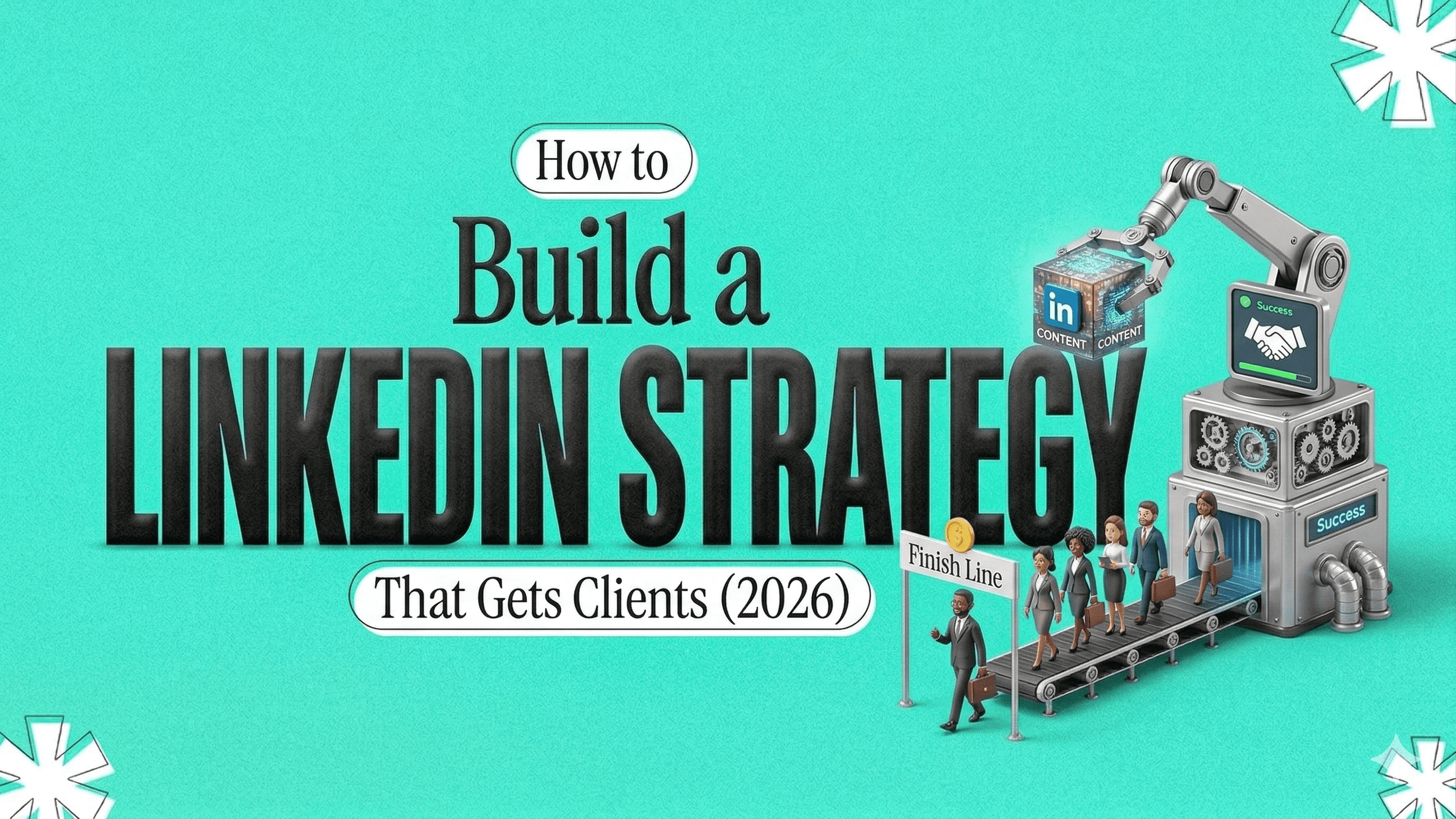
How to Build a LinkedIn Content Strategy That Gets Clients (2026)
How to Build a LinkedIn Content Strategy That Gets Clients (2026)
5 min
read
How to Build a LinkedIn Content Strategy That Gets Clients (2026)
How to Build a LinkedIn Content Strategy That Gets Clients (2026)
Content
Strategy

Author
Scroll down
to read more!
Summerize with ChatGPT
Summerize with Gemini
Summerize with Claude
How to Build a LinkedIn Content Strategy That Gets Clients (2026)
How to Build a LinkedIn Content Strategy That Gets Clients (2026)
Most people use LinkedIn incorrectly. They post motivational quotes, share articles they haven't actually read, and wonder why nobody's reaching out. Then they give up and say LinkedIn doesn't work. This guide is for anyone who wants to turn their LinkedIn presence into a client pipeline, a real one.
Most people use LinkedIn incorrectly. They post motivational quotes, share articles they haven't actually read, and wonder why nobody's reaching out. Then they give up and say LinkedIn doesn't work. This guide is for anyone who wants to turn their LinkedIn presence into a client pipeline, a real one.
Why LinkedIn Is Still the Best Platform for B2B Lead Generation in 2026
Let's start with the obvious question. Why LinkedIn and not Instagram or X?
Simple. The people with the budget are here. LinkedIn has over a billion users now, and more importantly, decision makers actually use it. CEOs, procurement heads, marketing directors. They scroll LinkedIn the same way you scroll Instagram. The difference is, they're in a buying mindset.
Instagram is for inspiration. LinkedIn is for business. That difference matters a lot when you're trying to get clients, not just followers.
Also, LinkedIn's algorithm is still relatively generous compared to other platforms. Organic reach on LinkedIn is genuinely good if you post consistently and know what you're doing. You don't need to spend money on ads to get in front of the right people.
📊 Quick Stat: LinkedIn generates 80% of B2B social media leads according to multiple industry studies. That number hasn't changed much, and it probably won't anytime soon. |
Steps to grow your business on LinkedIn
Step 1: Define Who You're Actually Trying to Reach
Before you write a single post, get clear on who you're writing for. Not 'marketing professionals." 'Not 'business owners.' Go specific. Who is the exact person you want to read your content, feel seen, and then reach out to you?
Something like: 'Mid-size SaaS founders who are struggling with content marketing and don't have an in-house team yet.'
That's a real audience. You can write for that person. You can speak their language, address their actual problems, and position yourself as the obvious solution.
This is the step most people skip. And it's exactly why their content doesn't convert. Generic content gets generic results.
💡 Pro Tip: Write down three real people you'd want as clients. Now write your content as if you're talking directly to them. It changes everything about how you write. |
Step 2: Optimize Your LinkedIn Profile Before You Post Anything
Your content brings people to your profile. Your profile closesor loses the sale.If your headline still says 'Founder at XYZ Company,' you're losing people. Your headline should say what you do and who you help. Something like: 'I help SaaS founders build content systems that generate inbound leads.' That's a headline that makes someone stay.
Your banner image should reinforce your positioning. Your about section should read like a pitch, not a resume. And your featured section? Use it to showcase results, testimonials, or a lead magnet. Think of your profile as a landing page and treat it like one.
Profile Elements That Convert vs. Profile Elements That Don't
✅ Converts | ❌ Doesn't Convert |
The headline explains what you do and for whom | Headline just lists your job title |
About section reads like a value proposition | About section reads like a CV summary |
The featured section shows results or testimonials | The featured section is empty or outdated |
Banner image reinforces your positioning | Default blue LinkedIn banner |
Profile photo is professional and clear | No photo or a blurry selfie |
Step 3: Choose the Right Content Formats for the Client
Attraction
Not all LinkedIn content is equal. Some formats build awareness. Some build trust. You need both, but in the right ratio.
Here are the formats that tend to work best for getting clients specifically:
Short-form text posts
These are your bread and butter. One idea, told clearly, in under 300 words. Share a lesson you learned, a mistake you made, a contrarian take on something in your industry. These posts get reshared. They build familiarity fast.
Case studies and results posts
Nothing sells like proof. Write about a client you helped. What was the situation? What did you do? What was the result? Be specific. Numbers help. These posts attract people in the same situation.
Educational carousels
PDF carousels still perform really well on LinkedIn. A 10-slide carousel that teaches something useful can get 5-10x the reach of a regular post. Use them to teach your methodology, break down a concept, or share a framework you've developed.
Thought leadership pieces
Take a stand on something in your industry. Disagree with the conventional wisdom. Offer a fresh angle. These posts don't always go viral, but they attract exactly the kind of client who thinks the same way you do. Which is exactly who you want.
📌 Reminder: You don't need to post every day. Three to four times a week, consistently, is more than enough. Quality beats frequency on LinkedIn — every single time. |
Step 4: Build a Content Calendar That You'll Actually Follow
Most content calendars fail because they're too ambitious. You build a 30-day plan, stick to it for a week, then fall off. And then you post nothing for two months.
Keep it simple. Plan one week at a time. Rotate content types so you're not doing the same thing every post. A rough weekly structure that works:
Day | Content Type | Goal |
Monday | Short text post | Build awareness, start the week |
Wednesday | Case study or result | Build trust, attract buyers |
Friday | Educational carousel or insight | Drive saves and shares |
Optional (Thu) | Thought leadership take | Attract ideal clients |
Step 5: Write Posts That Make People Stop Scrolling
The hook is everything. On LinkedIn, only the first two lines show before the 'see more' button. If those two lines don't grab someone's attention, they keep scrolling. Your post might as well not exist.
Good hooks are specific, provocative, or counterintuitive. Bad hooks are vague.
❌ Weak Hook: "I've been thinking about leadership lately and wanted to share some thoughts..." |
✅ Strong Hook: "I lost a $40,000 client last year because of one mistake. Here's exactly what happened — and what I'd do differently." |
After the hook, keep your writing clean. Short sentences. White space. One idea per paragraph. LinkedIn is read on phones. Dense paragraphs get skipped.
End every post with a call to action. Not a hard sell, just a nudge. Ask a question. Tell them to save the post. Invite them to DM you if they're dealing with the same problem. Simple stuff works.
Step 6: Engage Like a Human, Not a Bot
Here's the thing about LinkedIn that most people miss: it's a two-way street. You can't just post and disappear.
Comment on other people's posts. Not generic 'great post!' comments; actual thoughtful responses that add something to the conversation. People notice that. And when they check your profile, they see a real person with a point of view.
Reply to every comment on your own posts, especially early on. The algorithm rewards engagement velocity. If people comment within the first hour and you reply quickly, LinkedIn shows your post to more people. It's one of the easiest growth levers on the platform. These are the same things that make big mistakes in the long run.
Step 7: Use LinkedIn's Native Features to Get More Reach
LinkedIn rewards you for using its features. Simple as that.
LinkedIn newsletters are massively underused. If you start one and post even once a month, LinkedIn literally notifies your connections. Free distribution to your existing audience with zero extra work.
LinkedIn Live is another one. It's still relatively uncrowded, which means if you go live even once a week for 20–30 minutes, you can build an audience faster than almost anything else on the platform right now.
LinkedIn events are good too. Hosting a free virtual workshop or Q&A and inviting your connections creates touchpoints and builds trust faster than posts alone.
📈 Growth Hack: Post a teaser for your LinkedIn newsletter in a regular post once a month. Something like: 'This week's newsletter breaks down the 3-step framework I use with every new client. Link in comments.' It drives subscribers and increases newsletter reach. |
Why LinkedIn Is Still the Best Platform for B2B Lead Generation in 2026
Let's start with the obvious question. Why LinkedIn and not Instagram or X?
Simple. The people with the budget are here. LinkedIn has over a billion users now, and more importantly, decision makers actually use it. CEOs, procurement heads, marketing directors. They scroll LinkedIn the same way you scroll Instagram. The difference is, they're in a buying mindset.
Instagram is for inspiration. LinkedIn is for business. That difference matters a lot when you're trying to get clients, not just followers.
Also, LinkedIn's algorithm is still relatively generous compared to other platforms. Organic reach on LinkedIn is genuinely good if you post consistently and know what you're doing. You don't need to spend money on ads to get in front of the right people.
📊 Quick Stat: LinkedIn generates 80% of B2B social media leads according to multiple industry studies. That number hasn't changed much, and it probably won't anytime soon. |
Steps to grow your business on LinkedIn
Step 1: Define Who You're Actually Trying to Reach
Before you write a single post, get clear on who you're writing for. Not 'marketing professionals." 'Not 'business owners.' Go specific. Who is the exact person you want to read your content, feel seen, and then reach out to you?
Something like: 'Mid-size SaaS founders who are struggling with content marketing and don't have an in-house team yet.'
That's a real audience. You can write for that person. You can speak their language, address their actual problems, and position yourself as the obvious solution.
This is the step most people skip. And it's exactly why their content doesn't convert. Generic content gets generic results.
💡 Pro Tip: Write down three real people you'd want as clients. Now write your content as if you're talking directly to them. It changes everything about how you write. |
Step 2: Optimize Your LinkedIn Profile Before You Post Anything
Your content brings people to your profile. Your profile closesor loses the sale.If your headline still says 'Founder at XYZ Company,' you're losing people. Your headline should say what you do and who you help. Something like: 'I help SaaS founders build content systems that generate inbound leads.' That's a headline that makes someone stay.
Your banner image should reinforce your positioning. Your about section should read like a pitch, not a resume. And your featured section? Use it to showcase results, testimonials, or a lead magnet. Think of your profile as a landing page and treat it like one.
Profile Elements That Convert vs. Profile Elements That Don't
✅ Converts | ❌ Doesn't Convert |
The headline explains what you do and for whom | Headline just lists your job title |
About section reads like a value proposition | About section reads like a CV summary |
The featured section shows results or testimonials | The featured section is empty or outdated |
Banner image reinforces your positioning | Default blue LinkedIn banner |
Profile photo is professional and clear | No photo or a blurry selfie |
Step 3: Choose the Right Content Formats for the Client
Attraction
Not all LinkedIn content is equal. Some formats build awareness. Some build trust. You need both, but in the right ratio.
Here are the formats that tend to work best for getting clients specifically:
Short-form text posts
These are your bread and butter. One idea, told clearly, in under 300 words. Share a lesson you learned, a mistake you made, a contrarian take on something in your industry. These posts get reshared. They build familiarity fast.
Case studies and results posts
Nothing sells like proof. Write about a client you helped. What was the situation? What did you do? What was the result? Be specific. Numbers help. These posts attract people in the same situation.
Educational carousels
PDF carousels still perform really well on LinkedIn. A 10-slide carousel that teaches something useful can get 5-10x the reach of a regular post. Use them to teach your methodology, break down a concept, or share a framework you've developed.
Thought leadership pieces
Take a stand on something in your industry. Disagree with the conventional wisdom. Offer a fresh angle. These posts don't always go viral, but they attract exactly the kind of client who thinks the same way you do. Which is exactly who you want.
📌 Reminder: You don't need to post every day. Three to four times a week, consistently, is more than enough. Quality beats frequency on LinkedIn — every single time. |
Step 4: Build a Content Calendar That You'll Actually Follow
Most content calendars fail because they're too ambitious. You build a 30-day plan, stick to it for a week, then fall off. And then you post nothing for two months.
Keep it simple. Plan one week at a time. Rotate content types so you're not doing the same thing every post. A rough weekly structure that works:
Day | Content Type | Goal |
Monday | Short text post | Build awareness, start the week |
Wednesday | Case study or result | Build trust, attract buyers |
Friday | Educational carousel or insight | Drive saves and shares |
Optional (Thu) | Thought leadership take | Attract ideal clients |
Step 5: Write Posts That Make People Stop Scrolling
The hook is everything. On LinkedIn, only the first two lines show before the 'see more' button. If those two lines don't grab someone's attention, they keep scrolling. Your post might as well not exist.
Good hooks are specific, provocative, or counterintuitive. Bad hooks are vague.
❌ Weak Hook: "I've been thinking about leadership lately and wanted to share some thoughts..." |
✅ Strong Hook: "I lost a $40,000 client last year because of one mistake. Here's exactly what happened — and what I'd do differently." |
After the hook, keep your writing clean. Short sentences. White space. One idea per paragraph. LinkedIn is read on phones. Dense paragraphs get skipped.
End every post with a call to action. Not a hard sell, just a nudge. Ask a question. Tell them to save the post. Invite them to DM you if they're dealing with the same problem. Simple stuff works.
Step 6: Engage Like a Human, Not a Bot
Here's the thing about LinkedIn that most people miss: it's a two-way street. You can't just post and disappear.
Comment on other people's posts. Not generic 'great post!' comments; actual thoughtful responses that add something to the conversation. People notice that. And when they check your profile, they see a real person with a point of view.
Reply to every comment on your own posts, especially early on. The algorithm rewards engagement velocity. If people comment within the first hour and you reply quickly, LinkedIn shows your post to more people. It's one of the easiest growth levers on the platform. These are the same things that make big mistakes in the long run.
Step 7: Use LinkedIn's Native Features to Get More Reach
LinkedIn rewards you for using its features. Simple as that.
LinkedIn newsletters are massively underused. If you start one and post even once a month, LinkedIn literally notifies your connections. Free distribution to your existing audience with zero extra work.
LinkedIn Live is another one. It's still relatively uncrowded, which means if you go live even once a week for 20–30 minutes, you can build an audience faster than almost anything else on the platform right now.
LinkedIn events are good too. Hosting a free virtual workshop or Q&A and inviting your connections creates touchpoints and builds trust faster than posts alone.
📈 Growth Hack: Post a teaser for your LinkedIn newsletter in a regular post once a month. Something like: 'This week's newsletter breaks down the 3-step framework I use with every new client. Link in comments.' It drives subscribers and increases newsletter reach. |
How to Turn LinkedIn Engagement Into Actual Client Conversations
This is the part most people overthink. When someone engages with your content consistently, liking, commenting, and sharing, reach out to them. Not with a pitch. Just a genuine message. 'Hey, I noticed you've been engaging with my stuff. Thanks for that. Would love to know what you're working on.
That's it. Most of the time it starts a real conversation. And from there, if there's a fit, the conversation naturally moves toward working together.
You don't need a fancy sales funnel. You need real conversations with real people who already like what you're putting out. LinkedIn makes that easy if you pay attention.
Also read: How to create a content strategy for your startup in 2026
What a Realistic LinkedIn Content Strategy Timeline Looks Like
Let's be honest about expectations. LinkedIn is not a quick-win platform. Here's roughly what to expect:
Timeframe | What You Can Expect |
Weeks 1–4 | Building habits, optimizing your profile, getting comfortable posting. Don't expect much traction yet. |
Months 2–3 | Early engagement starts picking up. Some posts will hit. Some won't. Your voice starts developing. |
Months 3–6 | Consistent audience growth, inbound DMs start trickling in, warm leads starting to emerge. |
Month 6+ | A steady pipeline. Referrals from LinkedIn connections. Clients who already know your work before they reach out. |
How to Turn LinkedIn Engagement Into Actual Client Conversations
This is the part most people overthink. When someone engages with your content consistently, liking, commenting, and sharing, reach out to them. Not with a pitch. Just a genuine message. 'Hey, I noticed you've been engaging with my stuff. Thanks for that. Would love to know what you're working on.
That's it. Most of the time it starts a real conversation. And from there, if there's a fit, the conversation naturally moves toward working together.
You don't need a fancy sales funnel. You need real conversations with real people who already like what you're putting out. LinkedIn makes that easy if you pay attention.
Also read: How to create a content strategy for your startup in 2026
What a Realistic LinkedIn Content Strategy Timeline Looks Like
Let's be honest about expectations. LinkedIn is not a quick-win platform. Here's roughly what to expect:
Timeframe | What You Can Expect |
Weeks 1–4 | Building habits, optimizing your profile, getting comfortable posting. Don't expect much traction yet. |
Months 2–3 | Early engagement starts picking up. Some posts will hit. Some won't. Your voice starts developing. |
Months 3–6 | Consistent audience growth, inbound DMs start trickling in, warm leads starting to emerge. |
Month 6+ | A steady pipeline. Referrals from LinkedIn connections. Clients who already know your work before they reach out. |
Conclusion
Know your audience. Optimize your profile. Post consistently with the right formats. Write hooks that stop the scroll. Engage like a human. Use LinkedIn's features. Follow up with warm leads.
Do that for six months and you won't recognise where you're at compared to where you started.
The professionals getting the most out of LinkedIn in 2026 aren't doing anything revolutionary. They're just doing the basics, consistently, clearly, and with a real person behind every post.
Start there. Stay with it. The clients will come.
Frequently Asked Questions
Q: How often should I post on LinkedIn to get clients?
A: Three to four times a week is the sweet spot for most people. Daily posting can work, but consistency matters more than frequency. Posting three times a week for six months will always outperform posting daily for three weeks and then going silent.
Q: What type of content works best for attracting clients on LinkedIn?
A: Case studies and results posts tend to convert best. They show proof, not just expertise. Educational content builds trust over time, and short personal stories drive engagement. Rotate between all three for the best results.
Q: Do I need a LinkedIn Premium account to build a content strategy?
A: No. Premium helps with certain things like InMail and deeper analytics, but a free account is more than enough to build a strong content strategy and generate inbound leads. Focus on content quality first.
Q: How long does it take to start getting clients from LinkedIn content?
A: Realistically, expect three to six months of consistent posting before you see regular inbound inquiries. Some people get their first lead in month two. Others take longer. The timeline depends heavily on niche, content quality, and how actively you engage with others.
Q: Should I post personal content on LinkedIn or keep it strictly professional?
A: A mix works best. Purely professional content can feel cold. Purely personal content can dilute your positioning. The sweet spot is professional content with a personal voice, sharing lessons, opinions, and behind-the-scenes insights tied to your work.
Q: What are the best LinkedIn content formats for B2B lead generation in 2026?
A: Text posts, PDF carousels, and LinkedIn newsletters are the top three formats right now. LinkedIn Live is growing fast and still relatively uncrowded. Video is improving in reach, too, but text posts remain the most versatile and accessible format for most professionals.
Q: How do I turn LinkedIn followers into paying clients?
A: Engagement first, pitch second. When someone consistently engages with your content, reach out with a genuine message, not a pitch. Build the conversation naturally. Position yourself as someone who understands their problem, and let the opportunity develop from there. Most clients come through warm outreach, not cold pitches.
Conclusion
Know your audience. Optimize your profile. Post consistently with the right formats. Write hooks that stop the scroll. Engage like a human. Use LinkedIn's features. Follow up with warm leads.
Do that for six months and you won't recognise where you're at compared to where you started.
The professionals getting the most out of LinkedIn in 2026 aren't doing anything revolutionary. They're just doing the basics, consistently, clearly, and with a real person behind every post.
Start there. Stay with it. The clients will come.
Frequently Asked Questions
Q: How often should I post on LinkedIn to get clients?
A: Three to four times a week is the sweet spot for most people. Daily posting can work, but consistency matters more than frequency. Posting three times a week for six months will always outperform posting daily for three weeks and then going silent.
Q: What type of content works best for attracting clients on LinkedIn?
A: Case studies and results posts tend to convert best. They show proof, not just expertise. Educational content builds trust over time, and short personal stories drive engagement. Rotate between all three for the best results.
Q: Do I need a LinkedIn Premium account to build a content strategy?
A: No. Premium helps with certain things like InMail and deeper analytics, but a free account is more than enough to build a strong content strategy and generate inbound leads. Focus on content quality first.
Q: How long does it take to start getting clients from LinkedIn content?
A: Realistically, expect three to six months of consistent posting before you see regular inbound inquiries. Some people get their first lead in month two. Others take longer. The timeline depends heavily on niche, content quality, and how actively you engage with others.
Q: Should I post personal content on LinkedIn or keep it strictly professional?
A: A mix works best. Purely professional content can feel cold. Purely personal content can dilute your positioning. The sweet spot is professional content with a personal voice, sharing lessons, opinions, and behind-the-scenes insights tied to your work.
Q: What are the best LinkedIn content formats for B2B lead generation in 2026?
A: Text posts, PDF carousels, and LinkedIn newsletters are the top three formats right now. LinkedIn Live is growing fast and still relatively uncrowded. Video is improving in reach, too, but text posts remain the most versatile and accessible format for most professionals.
Q: How do I turn LinkedIn followers into paying clients?
A: Engagement first, pitch second. When someone consistently engages with your content, reach out with a genuine message, not a pitch. Build the conversation naturally. Position yourself as someone who understands their problem, and let the opportunity develop from there. Most clients come through warm outreach, not cold pitches.
the call your competitor wish you would'nt take


Related Posts





Related Posts
Related Posts
Motion labs
info@motionlabs.agency


+971 55317 1706
C-1802, ONTARIO TOWER, PLOT NO. 49-0, BUSINESS BAY, DUBAI, 00000
click to meet me :)
click to meet me :)
© All Rights Reserved | 2026


Motion labs
info@motionlabs.agency
+971 55317 1706
C-1802, ONTARIO TOWER, PLOT NO. 49-0, BUSINESS BAY, DUBAI, 00000
Private policy
Terms & Conditions
© All Rights Reserved | 2026
click to meet me :)