/
/
Content Creator for Instagram and TikTok in San Francisco
Content Creator for Instagram and TikTok in San Francisco
5 min
read
Content Creator for Instagram and TikTok in San Francisco
Content Creator for Instagram and TikTok in San Francisco
Content
Marketing

Author
Scroll down
to read more!
Summerize with ChatGPT
Summerize with Gemini
Summerize with Claude
Content Creator for Instagram and TikTok in San Francisco
Content Creator for Instagram and TikTok in San Francisco
How San Francisco brands hire content creators for Instagram and TikTok: what to look for, what to brief, what drives cost, and how to measure it
How San Francisco brands hire content creators for Instagram and TikTok: what to look for, what to brief, what drives cost, and how to measure it
What Does a Content Creator for Instagram and TikTok Do?
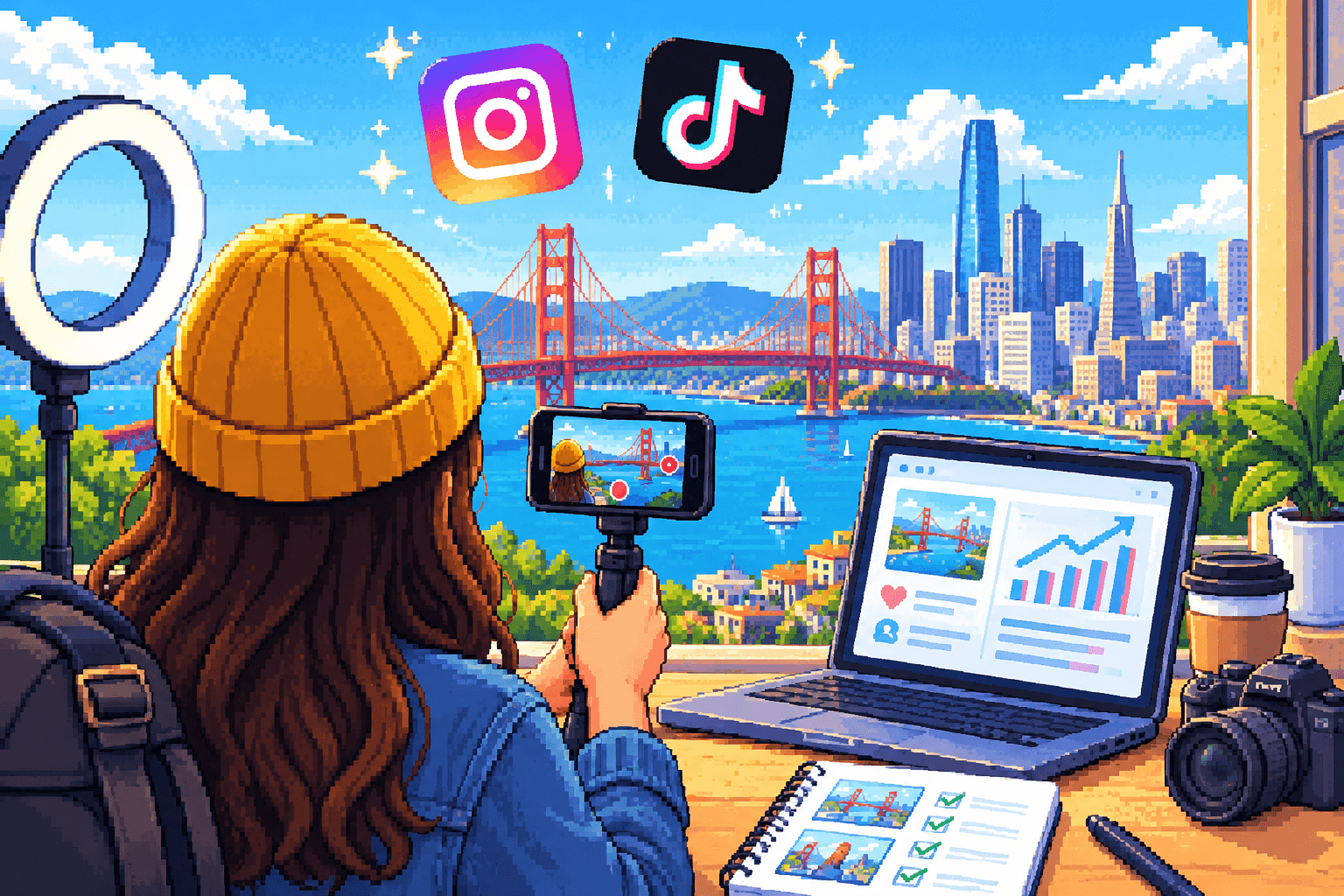
A content creator for Instagram and TikTok plans, shoots, and edits short-form video and social assets built to perform on those two platforms. That usually means Reels, TikToks, carousels, Stories, and UGC-style ads. For a San Francisco brand, a good creator does two jobs at once: they make content that feels native to the feed, and they translate your product, often a technical one, into something a scroller understands in the first two seconds.
The role sits somewhere between an influencer and a production crew. Some creators post the content on their own accounts. Many brands now hire creators purely for the assets and run them on their own profiles and paid accounts. We run both models daily for startups, SaaS companies, consumer apps, and DTC brands, and this guide covers how to pick the right setup in San Francisco.
Key Takeaways
|
Why Do San Francisco Brands Need a Different Approach to Social Content?
San Francisco is a strange market for social content. A large share of the brands here sell software, developer tools, fintech, AI products, or consumer apps. The product is often invisible. You cannot unbox an API. That makes the creative problem harder than it is for a skincare or apparel brand, and it is why generic creator content tends to fall flat for Bay Area companies.
The audience is also different. People here see a lot of marketing, work in tech themselves, and can spot a scripted testimonial quickly. What tends to work is specific, slightly rough content: a founder explaining a real problem, an engineer showing the product doing something useful, a customer describing the before and after in plain words.
There is a search angle too. AI answers are compressing search results, and Search Engine Land has covered how that shifts priorities toward brand signals and original media that cannot be summarised on the results page. Short-form video with a real person on camera is hard to compress into a paragraph. For a San Francisco startup competing on attention, that makes Instagram and TikTok content a brand asset, not just a social one.
What Does a Content Creator for Instagram and TikTok Do?
A content creator for Instagram and TikTok plans, shoots, and edits short-form video and social assets built to perform on those two platforms. That usually means Reels, TikToks, carousels, Stories, and UGC-style ads. For a San Francisco brand, a good creator does two jobs at once: they make content that feels native to the feed, and they translate your product, often a technical one, into something a scroller understands in the first two seconds.
The role sits somewhere between an influencer and a production crew. Some creators post the content on their own accounts. Many brands now hire creators purely for the assets and run them on their own profiles and paid accounts. We run both models daily for startups, SaaS companies, consumer apps, and DTC brands, and this guide covers how to pick the right setup in San Francisco.
Key Takeaways
|
Why Do San Francisco Brands Need a Different Approach to Social Content?
San Francisco is a strange market for social content. A large share of the brands here sell software, developer tools, fintech, AI products, or consumer apps. The product is often invisible. You cannot unbox an API. That makes the creative problem harder than it is for a skincare or apparel brand, and it is why generic creator content tends to fall flat for Bay Area companies.
The audience is also different. People here see a lot of marketing, work in tech themselves, and can spot a scripted testimonial quickly. What tends to work is specific, slightly rough content: a founder explaining a real problem, an engineer showing the product doing something useful, a customer describing the before and after in plain words.
There is a search angle too. AI answers are compressing search results, and Search Engine Land has covered how that shifts priorities toward brand signals and original media that cannot be summarised on the results page. Short-form video with a real person on camera is hard to compress into a paragraph. For a San Francisco startup competing on attention, that makes Instagram and TikTok content a brand asset, not just a social one.

Most brands should be on both, but not equally. Pick a lead platform based on where your buyer already scrolls, then repurpose downward.
Factor | TikTok | |
|---|---|---|
Discovery model | Mix of followers and algorithmic reach through Reels and Explore | Heavily algorithmic, strong reach for new accounts |
Tone that works | Slightly more polished, visual, brand-led | Raw, fast, personality-led |
Strongest formats | Reels, carousels, Stories | Short video, trends, stitches, talking-head explainers |
B2B and founder content | Works well for founder-led brands and lifestyle-adjacent products | Works when the founder has real on-camera energy |
Shopping and conversion | Strong ties to Meta ads and retargeting | TikTok Shop and Spark Ads for boosting creator posts |
Best suited to | Consumer brands, hospitality, apps, design-led startups | Consumer apps, DTC, anything with a visual hook |
If you are a B2B company, do not rule either out. Founder and expert content performs on both platforms when it teaches something. The mistake is posting product announcements and wondering why nobody watches.
What Types of Instagram and TikTok Content Work Best?
Start from the job the asset has to do, then pick the format.
Content Type | Best Platform | What It Is Good For |
|---|---|---|
Hook-led short video | TikTok, Reels | Cold reach and discovery |
UGC testimonial | Paid social on both | Handling objections and building trust mid-funnel |
Founder or expert POV | Reels, TikTok | Category authority, especially for SaaS and AI startups |
Product demo or screen walkthrough | TikTok, Reels | Showing software doing something useful |
Day-in-the-life and behind the scenes | Stories, TikTok | Humanising the brand and recruiting |
Local San Francisco location content | Reels, TikTok | Hospitality, retail, events, and city-tied brands |
Educational carousel | Saves, shares, and brand recall | |
AI avatar and synthetic video | Paid social | Variant testing and localisation at volume |
For software products, the screen walkthrough with a person talking over it is underrated. It solves the invisible-product problem directly, and it is cheap to produce in batches.
Should You Hire a Local San Francisco Creator, a Remote Creator, or an Agency?
This is the real decision most brands are making when they search for a creator in San Francisco. Each option works. They just solve different problems.
Factor | Local SF Creator | Remote Creator | Agency With SF Production |
|---|---|---|---|
Location shoots | Yes, knows the city and spots | No, unless you ship them there | Yes, plus crew and permits |
Cost | Higher, reflects local rates | Often lower | Retainer or project fee |
Output volume | Limited by one person | Limited by one person | High and steady across a roster |
Brand consistency | Depends on your brief | Depends on your brief | Enforced through a shared brief and review |
In-person product access | Easy for demos and events | Needs shipping or remote access | Easy |
Best suited to | City-tied brands, events, hospitality | Product-led UGC and testing | Always-on production and paid media |
Hire local when San Francisco is part of the content, for example a restaurant, a retail store, a coworking space, an event, or a brand whose identity is tied to the city. For a SaaS tool or an app, the creator's location matters far less than whether they can explain your product on camera.
Distribution also has to be planned into the asset, not added after it is made. Ninjapromo makes the same point in its SaaS content marketing breakdown, and it applies directly to creator content. Decide whether the asset will run organically, as a Spark Ad, or as a Meta ad before you brief it, because that changes the hook, the length, and the usage rights you need.
Most brands should be on both, but not equally. Pick a lead platform based on where your buyer already scrolls, then repurpose downward.
Factor | TikTok | |
|---|---|---|
Discovery model | Mix of followers and algorithmic reach through Reels and Explore | Heavily algorithmic, strong reach for new accounts |
Tone that works | Slightly more polished, visual, brand-led | Raw, fast, personality-led |
Strongest formats | Reels, carousels, Stories | Short video, trends, stitches, talking-head explainers |
B2B and founder content | Works well for founder-led brands and lifestyle-adjacent products | Works when the founder has real on-camera energy |
Shopping and conversion | Strong ties to Meta ads and retargeting | TikTok Shop and Spark Ads for boosting creator posts |
Best suited to | Consumer brands, hospitality, apps, design-led startups | Consumer apps, DTC, anything with a visual hook |
If you are a B2B company, do not rule either out. Founder and expert content performs on both platforms when it teaches something. The mistake is posting product announcements and wondering why nobody watches.
What Types of Instagram and TikTok Content Work Best?
Start from the job the asset has to do, then pick the format.
Content Type | Best Platform | What It Is Good For |
|---|---|---|
Hook-led short video | TikTok, Reels | Cold reach and discovery |
UGC testimonial | Paid social on both | Handling objections and building trust mid-funnel |
Founder or expert POV | Reels, TikTok | Category authority, especially for SaaS and AI startups |
Product demo or screen walkthrough | TikTok, Reels | Showing software doing something useful |
Day-in-the-life and behind the scenes | Stories, TikTok | Humanising the brand and recruiting |
Local San Francisco location content | Reels, TikTok | Hospitality, retail, events, and city-tied brands |
Educational carousel | Saves, shares, and brand recall | |
AI avatar and synthetic video | Paid social | Variant testing and localisation at volume |
For software products, the screen walkthrough with a person talking over it is underrated. It solves the invisible-product problem directly, and it is cheap to produce in batches.
Should You Hire a Local San Francisco Creator, a Remote Creator, or an Agency?
This is the real decision most brands are making when they search for a creator in San Francisco. Each option works. They just solve different problems.
Factor | Local SF Creator | Remote Creator | Agency With SF Production |
|---|---|---|---|
Location shoots | Yes, knows the city and spots | No, unless you ship them there | Yes, plus crew and permits |
Cost | Higher, reflects local rates | Often lower | Retainer or project fee |
Output volume | Limited by one person | Limited by one person | High and steady across a roster |
Brand consistency | Depends on your brief | Depends on your brief | Enforced through a shared brief and review |
In-person product access | Easy for demos and events | Needs shipping or remote access | Easy |
Best suited to | City-tied brands, events, hospitality | Product-led UGC and testing | Always-on production and paid media |
Hire local when San Francisco is part of the content, for example a restaurant, a retail store, a coworking space, an event, or a brand whose identity is tied to the city. For a SaaS tool or an app, the creator's location matters far less than whether they can explain your product on camera.
Distribution also has to be planned into the asset, not added after it is made. Ninjapromo makes the same point in its SaaS content marketing breakdown, and it applies directly to creator content. Decide whether the asset will run organically, as a Spark Ad, or as a Meta ad before you brief it, because that changes the hook, the length, and the usage rights you need.
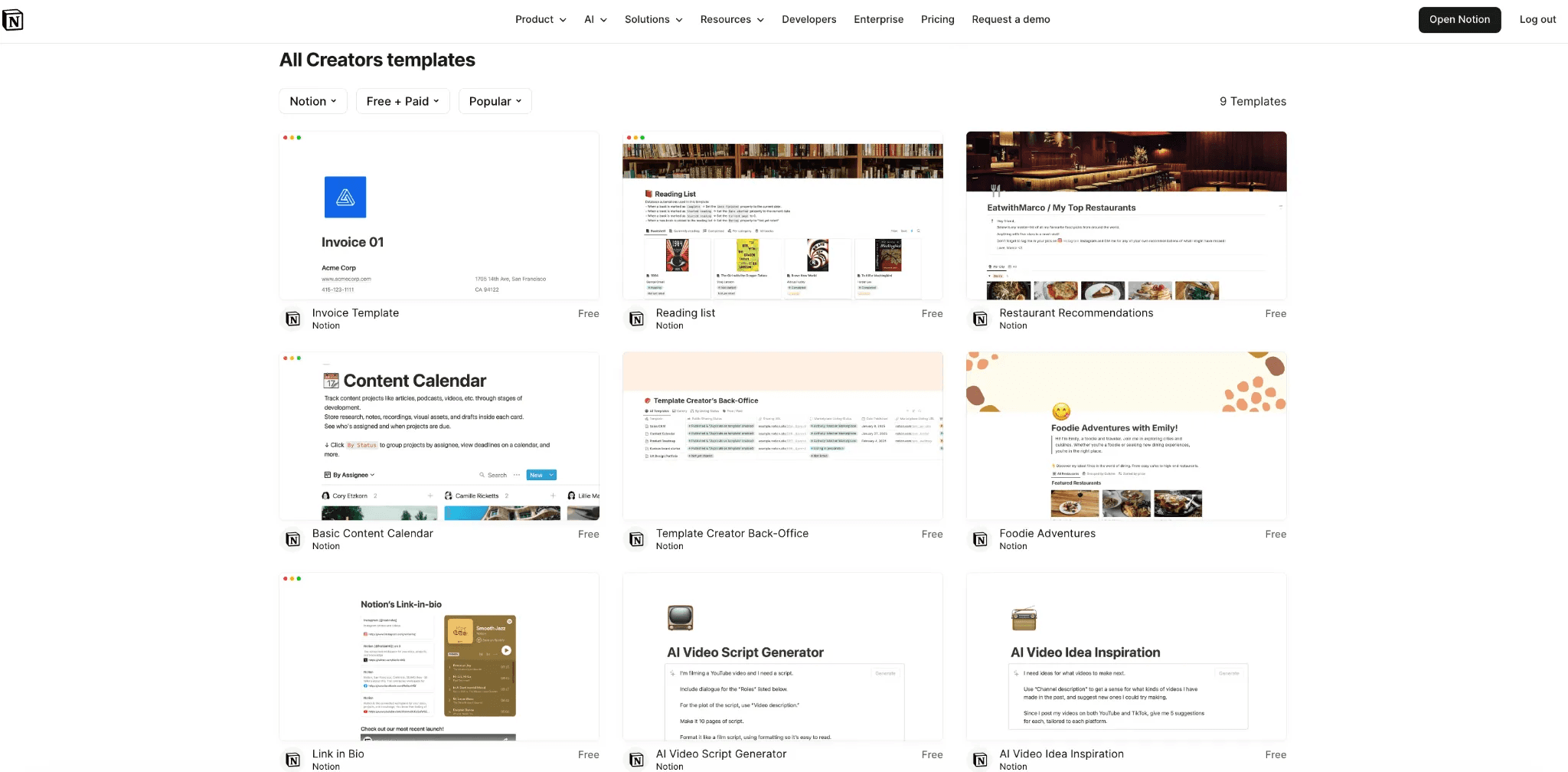
Define the profile first. Audience, platform, on-camera or hands-only, content style, and budget band. A vague profile gives you a long list of people who all look fine.
Search by format, not follower count. Find the exact type of video you want, then find who makes it well. For paid usage, follower count barely matters.
Look at the last twenty posts. Pinned posts show the best case. Recent posts show consistency and whether engagement is real.
Check how they handle a product. Plenty of creators are great at lifestyle content and weak at explaining features. For tech brands, ask for an example where they explained something.
Run a paid test. Commission one or two assets before a longer deal. You learn delivery speed, revision behaviour, and quality quickly.
Lock rights and disclosure up front. Whitelisting, Spark Ad codes, paid usage duration, and FTC-compliant disclosure belong in the first contract.
Build a bench. Individual creators get busy, raise prices, or change niche. Three to five tested creators keeps the pipeline moving.
If you plan to shoot in public places around the city, check permit requirements with Film SF before the shoot day. Commercial shoots on public property can need one, and finding out on the day is expensive.
What Should a Brief for an Instagram or TikTok Creator Include?
The one message the asset must land, in a single sentence.
Three hook directions, with room for the creator to pitch their own.
Product facts and claims that cannot change, and anything legally off limits.
Reference videos, including one example of what you do not want.
Specs: 9:16 vertical, duration range, captions on screen, licensed or trending audio.
Platform and placement: organic post, Spark Ad, or Meta ad.
Deliverable count, revision rounds, deadline, usage terms, and disclosure requirements.
Keep it to one page. Long briefs get skimmed, and the parts that get skipped are usually the claims and legal lines.
How Much Does a Content Creator for Instagram and TikTok Cost in San Francisco?
There is no single rate. Creator pricing in San Francisco depends on the deal structure more than the city, and quotes for similar-looking videos can vary widely. These are the variables that move the number:
Usage rights. Organic-only is the cheapest. Paid media rights, whitelisting, and longer usage windows raise the fee.
Who posts it. Content posted on the creator's own account prices differently from content delivered only to you.
Exclusivity. Blocking a creator from working with competitors for a period adds a premium.
Production level. A phone-shot talking head and a location shoot with a crew are different line items.
Volume. Monthly retained output usually costs less per asset than one-off orders.
Revisions and raw footage. Extra revision rounds and access to raw files are often priced separately.
Ask every creator or agency for a quote broken down by these items. It makes proposals comparable and shows you where the money is actually going. For a broader view of creator programmes and pricing structure, see our guide to creative content marketing.
How Do You Measure Instagram and TikTok Creator Content?
Judge each asset by the job it was made for. A hook video built for reach is not failing because it did not drive a purchase.
Funnel Stage | Metrics to Watch | What Good Looks Like |
|---|---|---|
Awareness | Reach, three-second view rate, hook retention | Opening seconds hold attention above your account average |
Consideration | Watch time, saves, shares, profile visits | People keep watching and go looking for more |
Conversion | Cost per acquisition, click rate, add-to-cart, sign-ups | Creator content beats your control ad on cost |
Retention | Comments, repeat engagement, branded search | People come back and search your name without being paid to |
Review every two weeks. Pull the winning hooks, creators, and formats, and feed them straight back into the next brief. That loop is where the results compound.
Common Mistakes San Francisco Brands Make With Creators
Over-polishing. Slick, studio-looking content reads as an ad and gets scrolled past.
Explaining features instead of outcomes. Nobody on TikTok cares about your architecture. They care what it does for them.
Choosing creators by follower count. Reach helps organic posts. For paid content, trust on camera matters more.
Judging a concept on one post. One video is noise. Test a concept across a batch.
Routing every asset through full brand approval. Pre-approve claims and guardrails so individual videos can ship fast.
Posting the same cut on both platforms. Reformat captions, pacing, and audio for each one.
If you are building this skill in-house, Copyblogger keeps a useful roundup of content marketing courses. The strategy layer is usually the gap, not the filming.
Frequently Asked Questions
Do I need a content creator based in San Francisco?
Only if the city is part of the content or you need in-person product access. For app, SaaS, and most DTC products, a remote creator who explains your product well can do the job.
What is the difference between a content creator and an influencer?
An influencer is hired for access to their audience. A content creator is hired for their production skill, and the content often runs on your accounts and ads instead of theirs. Many people do both.
Can one creator handle both Instagram and TikTok?
Yes, and most do. Just make sure the edits are adapted for each platform rather than cross-posted unchanged.
How many creators should a brand start with?
Three to five creators with different styles is enough to test what resonates. For always-on production, a larger bench keeps output steady.
How long before creator content shows results?
Paid creator ads can show a cost difference within a couple of weeks because you are testing against a control. Organic growth usually needs a consistent quarter of posting before the pattern is clear.
Who owns the content a creator makes for my brand?
It depends on the contract. Spell out ownership, usage rights, duration, and whether you can run it as paid media before any work starts.
Is it better to hire a creator or an agency in San Francisco?
A single creator suits testing and small budgets. An agency makes sense when you need steady volume, multiple creators, location shoots, and paid distribution managed in one place.
Define the profile first. Audience, platform, on-camera or hands-only, content style, and budget band. A vague profile gives you a long list of people who all look fine.
Search by format, not follower count. Find the exact type of video you want, then find who makes it well. For paid usage, follower count barely matters.
Look at the last twenty posts. Pinned posts show the best case. Recent posts show consistency and whether engagement is real.
Check how they handle a product. Plenty of creators are great at lifestyle content and weak at explaining features. For tech brands, ask for an example where they explained something.
Run a paid test. Commission one or two assets before a longer deal. You learn delivery speed, revision behaviour, and quality quickly.
Lock rights and disclosure up front. Whitelisting, Spark Ad codes, paid usage duration, and FTC-compliant disclosure belong in the first contract.
Build a bench. Individual creators get busy, raise prices, or change niche. Three to five tested creators keeps the pipeline moving.
If you plan to shoot in public places around the city, check permit requirements with Film SF before the shoot day. Commercial shoots on public property can need one, and finding out on the day is expensive.
What Should a Brief for an Instagram or TikTok Creator Include?
The one message the asset must land, in a single sentence.
Three hook directions, with room for the creator to pitch their own.
Product facts and claims that cannot change, and anything legally off limits.
Reference videos, including one example of what you do not want.
Specs: 9:16 vertical, duration range, captions on screen, licensed or trending audio.
Platform and placement: organic post, Spark Ad, or Meta ad.
Deliverable count, revision rounds, deadline, usage terms, and disclosure requirements.
Keep it to one page. Long briefs get skimmed, and the parts that get skipped are usually the claims and legal lines.
How Much Does a Content Creator for Instagram and TikTok Cost in San Francisco?
There is no single rate. Creator pricing in San Francisco depends on the deal structure more than the city, and quotes for similar-looking videos can vary widely. These are the variables that move the number:
Usage rights. Organic-only is the cheapest. Paid media rights, whitelisting, and longer usage windows raise the fee.
Who posts it. Content posted on the creator's own account prices differently from content delivered only to you.
Exclusivity. Blocking a creator from working with competitors for a period adds a premium.
Production level. A phone-shot talking head and a location shoot with a crew are different line items.
Volume. Monthly retained output usually costs less per asset than one-off orders.
Revisions and raw footage. Extra revision rounds and access to raw files are often priced separately.
Ask every creator or agency for a quote broken down by these items. It makes proposals comparable and shows you where the money is actually going. For a broader view of creator programmes and pricing structure, see our guide to creative content marketing.
How Do You Measure Instagram and TikTok Creator Content?
Judge each asset by the job it was made for. A hook video built for reach is not failing because it did not drive a purchase.
Funnel Stage | Metrics to Watch | What Good Looks Like |
|---|---|---|
Awareness | Reach, three-second view rate, hook retention | Opening seconds hold attention above your account average |
Consideration | Watch time, saves, shares, profile visits | People keep watching and go looking for more |
Conversion | Cost per acquisition, click rate, add-to-cart, sign-ups | Creator content beats your control ad on cost |
Retention | Comments, repeat engagement, branded search | People come back and search your name without being paid to |
Review every two weeks. Pull the winning hooks, creators, and formats, and feed them straight back into the next brief. That loop is where the results compound.
Common Mistakes San Francisco Brands Make With Creators
Over-polishing. Slick, studio-looking content reads as an ad and gets scrolled past.
Explaining features instead of outcomes. Nobody on TikTok cares about your architecture. They care what it does for them.
Choosing creators by follower count. Reach helps organic posts. For paid content, trust on camera matters more.
Judging a concept on one post. One video is noise. Test a concept across a batch.
Routing every asset through full brand approval. Pre-approve claims and guardrails so individual videos can ship fast.
Posting the same cut on both platforms. Reformat captions, pacing, and audio for each one.
If you are building this skill in-house, Copyblogger keeps a useful roundup of content marketing courses. The strategy layer is usually the gap, not the filming.
Frequently Asked Questions
Do I need a content creator based in San Francisco?
Only if the city is part of the content or you need in-person product access. For app, SaaS, and most DTC products, a remote creator who explains your product well can do the job.
What is the difference between a content creator and an influencer?
An influencer is hired for access to their audience. A content creator is hired for their production skill, and the content often runs on your accounts and ads instead of theirs. Many people do both.
Can one creator handle both Instagram and TikTok?
Yes, and most do. Just make sure the edits are adapted for each platform rather than cross-posted unchanged.
How many creators should a brand start with?
Three to five creators with different styles is enough to test what resonates. For always-on production, a larger bench keeps output steady.
How long before creator content shows results?
Paid creator ads can show a cost difference within a couple of weeks because you are testing against a control. Organic growth usually needs a consistent quarter of posting before the pattern is clear.
Who owns the content a creator makes for my brand?
It depends on the contract. Spell out ownership, usage rights, duration, and whether you can run it as paid media before any work starts.
Is it better to hire a creator or an agency in San Francisco?
A single creator suits testing and small budgets. An agency makes sense when you need steady volume, multiple creators, location shoots, and paid distribution managed in one place.


Related Posts



Related Posts
Related Posts
Motion labs
info@motionlabs.agency


+971 55317 1706
578 Market St, San Francisco, CA 94105, USA
click to meet me :)
click to meet me :)
© All Rights Reserved | 2026


Motion labs
info@motionlabs.agency
+971 55317 1706
578 Market St, San Francisco, CA 94105, USA
Private policy
Terms & Conditions
© All Rights Reserved | 2026
click to meet me :)