/
/
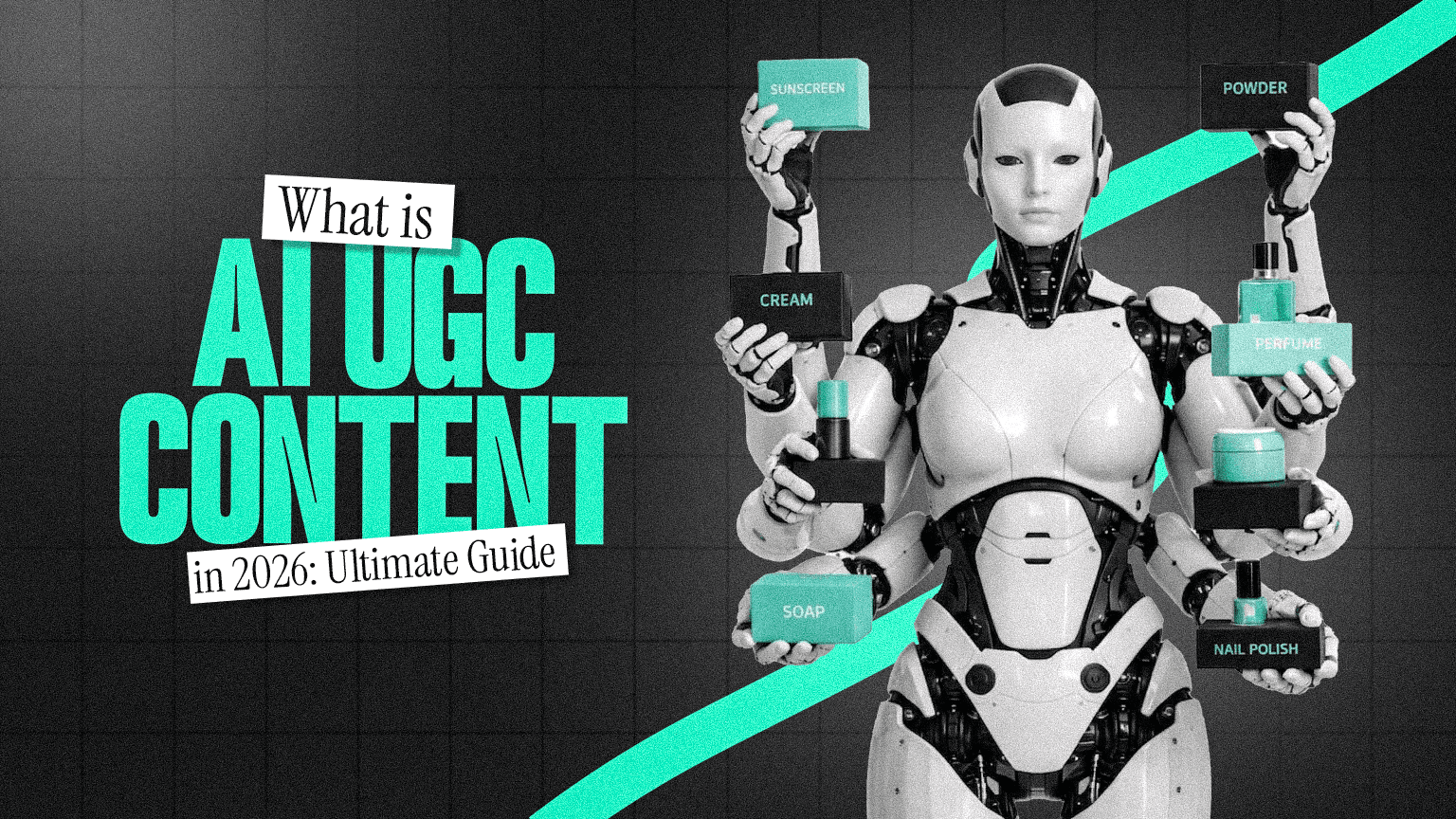
How to Create AI UGC Content in 2026: Ultimate Guide
How to Create AI UGC Content in 2026: Ultimate Guide
5 min
read
How to Create AI UGC Content in 2026: Ultimate Guide
How to Create AI UGC Content in 2026: Ultimate Guide
Ai
Content

Author
Scroll down
to read more!
Summerize with ChatGPT
Summerize with Gemini
Summerize with Claude
How to Create AI UGC Content in 2026: Ultimate Guide
How to Create AI UGC Content in 2026: Ultimate Guide
AI UGC content uses artificial intelligence tools to create videos, scripts, images, and social posts that look and feel like they were made by a real person, without needing a camera crew, a studio, or even a real creator. Let's see how you can build something like this for your brand.
AI UGC content uses artificial intelligence tools to create videos, scripts, images, and social posts that look and feel like they were made by a real person, without needing a camera crew, a studio, or even a real creator. Let's see how you can build something like this for your brand.
What Is AI UGC Content and Why Does It Matter in 2026?
User-Generated Content (UGC) has always been powerful. It’s the unboxing video, the honest review, the selfie with a product. People trust people, not polished ads. But in 2026, something new has entered the picture: AI UGC.
According to recent research, 93% of marketers say UGC outperforms brand-created content. At the same time, Gen Z now relies heavily on user-generated videos to make buying decisions. The “Influencer Era” is giving way to the “Community Era,” where authentic, relatable voices drive sales more than celebrity endorsements.
AI bridges the gap. It lets brands produce high volumes of authentic-feeling content quickly, cheaply, and at scale.
What Is the Difference Between Traditional UGC and AI UGC?
Traditional UGC comes from real customers sharing their genuine experiences, a review on Reddit, a TikTok reaction video, a photo tagged on Instagram.
AI UGC, on the other hand, uses tools like AI avatars, voice synthesis, and script generators to produce content that mimics the style and tone of organic user content. Think: a realistic AI actor reviewing your product in a casual, relatable way, without any actual filming.
Here is a quick comparison:
Feature | Traditional UGC | AI UGC |
Created by | Real customers | AI tools + brand input |
Speed | Weeks | Minutes |
Cost | Variable (sometimes free, sometimes $200+/video) | Low monthly subscription |
Scale | Limited | Unlimited |
Authenticity | Very high | High (when done well) |
Control | Low | Full |
The smart approach in 2026? A 70/30 split, 70% AI UGC for relatable, scalable content, and 30% real UGC for maximum authenticity.
Why Brands Are Shifting to AI UGC Content in 2026
Several forces have collided to make AI UGC a must-have strategy:
1. Trust in traditional advertising is falling. Consumers don’t just ignore ads, they actively distrust them. The rise of deepfakes and overly polished brand imagery has widened what experts call the “Authenticity Gap.”
2. Content costs are rising. A professional video shoot can cost tens of thousands of dollars. AI UGC platforms let brands produce hundreds of content pieces for a fraction of that price, often less than the cost of a single creator post per month.
3. AI search engines reward real-world signals. In 2026, search engines like Google and AI platforms like ChatGPT and Perplexity prioritize content that reflects real user experiences. If your brand appears in reviews, discussions, and UGC-style content, AI systems see you as a high-authority brand.
4. Engagement is higher. Social campaigns featuring UGC-style content get higher engagement simply because they don’t look like ads. Brands using AI-powered ad optimization have reported up to 72% higher return on ad spend (ROAS).
Step-by-Step: How to Create AI UGC Content in 2026
Step 1: Define Your Goal and Platform
Before picking any tool, ask: What is this content for?
TikTok or Instagram Reels: Fast-paced, emotionally engaging, character-driven stories
Facebook Ads: Conversion-focused hooks and clear calls to action
Product pages: Trustworthy video testimonials and reviews
YouTube Shorts: Short tutorials and product showcases
Step 2: Choose the Right AI UGC Tool
The market in 2026 is full of options. Here are the main categories:
AI Video Generators (with AI Actors/Avatars) These tools create realistic video content using AI-generated human presenters. Platforms like MakeUGC, GenApe, and Vidlo allow you to pick an AI avatar, write or generate a script, and receive a finished video in minutes. GenApe, for example, is known for “contextual realism”, micro-expressions, natural speech pauses, and realistic blinking that makes videos feel genuinely human.
AI Script Writers Tools like Claude (by Anthropic) are widely used by UGC marketers to write ad scripts that match a specific tone, audience, and product. You can feed in your product info and past-performing ad transcripts, and get a new script in minutes.
Video Repurposing Tools Platforms like Opus Clip take long-form content (webinars, interviews, product demos) and automatically cut them into short, social-ready clips. Great for brands that already have video content but want more from it.
UGC Management Platforms Tools like Vidlo, Cohley, and Bazaarvoice help you collect, moderate, manage, and publish UGC at scale, both AI-generated and real customer content.
Step 3: Write (or Generate) Your Script
A good AI UGC script follows a simple structure:
Hook (first 3 seconds): Grab attention immediately. Ask a question or state a bold claim.
2. Problem: Identify a pain point your audience relates to.
3. Solution: Introduce your product naturally, as a friend would.
4. Proof: Add a quick result, stat, or testimonial.
5. Call to Action: Tell viewers exactly what to do next.
You can ask any AI writing tool to generate this structure using your product details. The key is to keep the language conversational and avoid formal or corporate-sounding language.
Step 4: Select Your AI Actor or Avatar
Most AI UGC platforms in 2026 offer a library of AI actors across different ages, ethnicities, and styles. Choose someone who matches your target audience. Platforms like MakeUGC now offer features like:
AI actors holding your actual product
Multiple background scenes (park, podcast set, kitchen, etc.)
Multilingual support to reach global audiences
Emotional expressions that match the script tone
Step 5: Generate and Review the Video
Upload your script, select your AI actor, and generate. Most platforms deliver a draft within minutes. Review for:
Natural pacing and delivery
Brand-appropriate tone
Accurate product representation
Caption quality and readability
Step 6: Optimize for Each Platform
Don’t post the same video everywhere. Resize for vertical formats (TikTok/Reels), add platform-specific captions, and adjust pacing. Many AI UGC tools offer platform-native templates that handle this automatically.
Step 7: Test, Analyze, and Iterate
Create multiple versions with different hooks, scripts, or actors. Run A/B tests. AI-powered analytics tools can tell you which versions are driving the most clicks, views, and conversions. The more you test, the faster you find what works.
What Is AI UGC Content and Why Does It Matter in 2026?
User-Generated Content (UGC) has always been powerful. It’s the unboxing video, the honest review, the selfie with a product. People trust people, not polished ads. But in 2026, something new has entered the picture: AI UGC.
According to recent research, 93% of marketers say UGC outperforms brand-created content. At the same time, Gen Z now relies heavily on user-generated videos to make buying decisions. The “Influencer Era” is giving way to the “Community Era,” where authentic, relatable voices drive sales more than celebrity endorsements.
AI bridges the gap. It lets brands produce high volumes of authentic-feeling content quickly, cheaply, and at scale.
What Is the Difference Between Traditional UGC and AI UGC?
Traditional UGC comes from real customers sharing their genuine experiences, a review on Reddit, a TikTok reaction video, a photo tagged on Instagram.
AI UGC, on the other hand, uses tools like AI avatars, voice synthesis, and script generators to produce content that mimics the style and tone of organic user content. Think: a realistic AI actor reviewing your product in a casual, relatable way, without any actual filming.
Here is a quick comparison:
Feature | Traditional UGC | AI UGC |
Created by | Real customers | AI tools + brand input |
Speed | Weeks | Minutes |
Cost | Variable (sometimes free, sometimes $200+/video) | Low monthly subscription |
Scale | Limited | Unlimited |
Authenticity | Very high | High (when done well) |
Control | Low | Full |
The smart approach in 2026? A 70/30 split, 70% AI UGC for relatable, scalable content, and 30% real UGC for maximum authenticity.
Why Brands Are Shifting to AI UGC Content in 2026
Several forces have collided to make AI UGC a must-have strategy:
1. Trust in traditional advertising is falling. Consumers don’t just ignore ads, they actively distrust them. The rise of deepfakes and overly polished brand imagery has widened what experts call the “Authenticity Gap.”
2. Content costs are rising. A professional video shoot can cost tens of thousands of dollars. AI UGC platforms let brands produce hundreds of content pieces for a fraction of that price, often less than the cost of a single creator post per month.
3. AI search engines reward real-world signals. In 2026, search engines like Google and AI platforms like ChatGPT and Perplexity prioritize content that reflects real user experiences. If your brand appears in reviews, discussions, and UGC-style content, AI systems see you as a high-authority brand.
4. Engagement is higher. Social campaigns featuring UGC-style content get higher engagement simply because they don’t look like ads. Brands using AI-powered ad optimization have reported up to 72% higher return on ad spend (ROAS).
Step-by-Step: How to Create AI UGC Content in 2026
Step 1: Define Your Goal and Platform
Before picking any tool, ask: What is this content for?
TikTok or Instagram Reels: Fast-paced, emotionally engaging, character-driven stories
Facebook Ads: Conversion-focused hooks and clear calls to action
Product pages: Trustworthy video testimonials and reviews
YouTube Shorts: Short tutorials and product showcases
Step 2: Choose the Right AI UGC Tool
The market in 2026 is full of options. Here are the main categories:
AI Video Generators (with AI Actors/Avatars) These tools create realistic video content using AI-generated human presenters. Platforms like MakeUGC, GenApe, and Vidlo allow you to pick an AI avatar, write or generate a script, and receive a finished video in minutes. GenApe, for example, is known for “contextual realism”, micro-expressions, natural speech pauses, and realistic blinking that makes videos feel genuinely human.
AI Script Writers Tools like Claude (by Anthropic) are widely used by UGC marketers to write ad scripts that match a specific tone, audience, and product. You can feed in your product info and past-performing ad transcripts, and get a new script in minutes.
Video Repurposing Tools Platforms like Opus Clip take long-form content (webinars, interviews, product demos) and automatically cut them into short, social-ready clips. Great for brands that already have video content but want more from it.
UGC Management Platforms Tools like Vidlo, Cohley, and Bazaarvoice help you collect, moderate, manage, and publish UGC at scale, both AI-generated and real customer content.
Step 3: Write (or Generate) Your Script
A good AI UGC script follows a simple structure:
Hook (first 3 seconds): Grab attention immediately. Ask a question or state a bold claim.
2. Problem: Identify a pain point your audience relates to.
3. Solution: Introduce your product naturally, as a friend would.
4. Proof: Add a quick result, stat, or testimonial.
5. Call to Action: Tell viewers exactly what to do next.
You can ask any AI writing tool to generate this structure using your product details. The key is to keep the language conversational and avoid formal or corporate-sounding language.
Step 4: Select Your AI Actor or Avatar
Most AI UGC platforms in 2026 offer a library of AI actors across different ages, ethnicities, and styles. Choose someone who matches your target audience. Platforms like MakeUGC now offer features like:
AI actors holding your actual product
Multiple background scenes (park, podcast set, kitchen, etc.)
Multilingual support to reach global audiences
Emotional expressions that match the script tone
Step 5: Generate and Review the Video
Upload your script, select your AI actor, and generate. Most platforms deliver a draft within minutes. Review for:
Natural pacing and delivery
Brand-appropriate tone
Accurate product representation
Caption quality and readability
Step 6: Optimize for Each Platform
Don’t post the same video everywhere. Resize for vertical formats (TikTok/Reels), add platform-specific captions, and adjust pacing. Many AI UGC tools offer platform-native templates that handle this automatically.
Step 7: Test, Analyze, and Iterate
Create multiple versions with different hooks, scripts, or actors. Run A/B tests. AI-powered analytics tools can tell you which versions are driving the most clicks, views, and conversions. The more you test, the faster you find what works.
Best AI UGC Tools to Use in 2026
Motion Labs: Best all-in-one AI UGC platform. Offers AI actors, 7 built-in AI agents for ads, TikTok/Facebook recreation, script generation, translation, and direct upload. Ideal for e-commerce brands.
GenApe: Known for behavioral realism. Best for brands that need emotionally engaging, story-driven content. Strong facial animation and character consistency.
Vidlo: Best for agencies and larger brands. Combines UGC collection via QR code, AI editing, branded overlays, and content categorization.
Opus Clip: Best for repurposing. Turns long videos into short-form, social-ready clips automatically.
Cohley: Best UGC management platform for scaling both real and AI-generated content. Connects brands with over 100,000 real creators as well.
Blaze.ai: Strong automation features for collecting, tagging, and distributing content across channels.
How AI UGC Helps Your SEO, AIO, and GEO Strategy in 2026
This is where it gets really interesting for marketers. In 2026, search is no longer just Google. People search on ChatGPT, Perplexity, TikTok, YouTube, Reddit, and more. To be found everywhere, your content needs to follow the new rules of GEO, Generative Engine Optimization.
GEO means making sure your content is understood, trusted, and cited by AI systems when they generate answers. AI models trust brands that have real-world signals: reviews, discussions, community content, and yes, UGC.
Here’s how AI UGC directly supports your search strategy:
Long-tail keywords: Real customer language in UGC naturally captures specific, conversational search queries — the kind that make up 70% of all searches.
Fresh content: UGC creates a continuous stream of new content, signaling to search engines that your brand is active and relevant.
Social proof signals: AI search engines increasingly use UGC as a trust signal when recommending products and services.
Entity building: When your brand appears across multiple platforms in organic-feeling content, AI systems begin to recognize you as a trusted entity in your niche.
The key principle: Content that feels human performs better, both with real audiences and with AI ranking systems.
Common Mistakes to Avoid When Creating AI UGC Content
1. Making it look too polished. UGC works because it’s imperfect. If your AI-generated video looks like a professional commercial, it loses authenticity. Embrace a natural, conversational feel.
2. Ignoring platform context. A video that works on TikTok may flop on LinkedIn. Always adapt content to where it will live.
3. Skipping human review. AI tools are fast, but they’re not perfect. Always review generated content before publishing. Check for tone, accuracy, and brand alignment.
4. Not collecting real UGC alongside AI UGC. AI UGC is a supplement, not a replacement. Combine it with real reviews, testimonials, and customer posts for maximum trust.
5. Failing to track performance. If you’re not measuring, you’re guessing. Track engagement, click-through rates, and conversions per video to continuously improve.
Also read: What is AI UGC? And how to start using it today (2026)?
Best AI UGC Tools to Use in 2026
Motion Labs: Best all-in-one AI UGC platform. Offers AI actors, 7 built-in AI agents for ads, TikTok/Facebook recreation, script generation, translation, and direct upload. Ideal for e-commerce brands.
GenApe: Known for behavioral realism. Best for brands that need emotionally engaging, story-driven content. Strong facial animation and character consistency.
Vidlo: Best for agencies and larger brands. Combines UGC collection via QR code, AI editing, branded overlays, and content categorization.
Opus Clip: Best for repurposing. Turns long videos into short-form, social-ready clips automatically.
Cohley: Best UGC management platform for scaling both real and AI-generated content. Connects brands with over 100,000 real creators as well.
Blaze.ai: Strong automation features for collecting, tagging, and distributing content across channels.
How AI UGC Helps Your SEO, AIO, and GEO Strategy in 2026
This is where it gets really interesting for marketers. In 2026, search is no longer just Google. People search on ChatGPT, Perplexity, TikTok, YouTube, Reddit, and more. To be found everywhere, your content needs to follow the new rules of GEO, Generative Engine Optimization.
GEO means making sure your content is understood, trusted, and cited by AI systems when they generate answers. AI models trust brands that have real-world signals: reviews, discussions, community content, and yes, UGC.
Here’s how AI UGC directly supports your search strategy:
Long-tail keywords: Real customer language in UGC naturally captures specific, conversational search queries — the kind that make up 70% of all searches.
Fresh content: UGC creates a continuous stream of new content, signaling to search engines that your brand is active and relevant.
Social proof signals: AI search engines increasingly use UGC as a trust signal when recommending products and services.
Entity building: When your brand appears across multiple platforms in organic-feeling content, AI systems begin to recognize you as a trusted entity in your niche.
The key principle: Content that feels human performs better, both with real audiences and with AI ranking systems.
Common Mistakes to Avoid When Creating AI UGC Content
1. Making it look too polished. UGC works because it’s imperfect. If your AI-generated video looks like a professional commercial, it loses authenticity. Embrace a natural, conversational feel.
2. Ignoring platform context. A video that works on TikTok may flop on LinkedIn. Always adapt content to where it will live.
3. Skipping human review. AI tools are fast, but they’re not perfect. Always review generated content before publishing. Check for tone, accuracy, and brand alignment.
4. Not collecting real UGC alongside AI UGC. AI UGC is a supplement, not a replacement. Combine it with real reviews, testimonials, and customer posts for maximum trust.
5. Failing to track performance. If you’re not measuring, you’re guessing. Track engagement, click-through rates, and conversions per video to continuously improve.
Also read: What is AI UGC? And how to start using it today (2026)?
Conclusion
AI UGC is not about tricking your audience. It’s about meeting the demand for authentic, relatable content at a scale that traditional production simply cannot keep up with.
In 2026, the brands winning on social media and in AI-powered search are the ones that combine the speed and scale of AI tools with the genuine voice of their communities. They use AI to start the conversation and real human experiences to build trust.
Whether you’re a solo creator, a small business, or a global brand, the tools are now accessible, affordable, and powerful enough to transform your content strategy.
For summary & detailed overview: Click here
Frequently Asked Questions (FAQ)
Q1: What is AI UGC content?
AI UGC (Artificial Intelligence User-Generated Content) is content, usually video, created using AI tools that mimics the look and feel of organic, user-made content. It uses AI avatars, voice synthesis, and script generators to produce authentic-style content without a real person filming it.
Q2: Is AI UGC content as effective as real UGC?
When created authentically and aligned with your target audience, AI UGC can be just as effective, and sometimes more so, because it gives brands full control over messaging, tone, and quality. The best strategy combines both AI UGC and real customer content.
Q3: How much does it cost to create AI UGC content?
Costs vary widely. Most AI UGC platforms offer monthly subscriptions starting from $12 to $100+ per month, which is far cheaper than hiring creators. Compare this to real professional UGC, which averages around $200 per video in 2026.
Q4: Which is the best AI UGC tool in 2026?
The best tool depends on your needs. MakeUGC is great for all-in-one AI ad creation, GenApe for realism, Vidlo for agencies, and Opus Clip for video repurposing. Try free trials before committing to a paid plan.
Q5: Does AI UGC help with SEO?
Yes. AI UGC supports SEO and GEO (Generative Engine Optimization) by creating fresh content signals, capturing long-tail keyword queries in natural language, and building your brand’s authority across multiple platforms, all signals that AI-powered search engines reward.
Q6: Do I need technical skills to create AI UGC?
No. Most AI UGC platforms in 2026 are designed for non-technical users. You simply choose a template, add your product details or script, select an AI actor, and generate your video in minutes.
Q7: Can small businesses use AI UGC?
Absolutely. AI UGC is one of the most cost-effective content strategies for small businesses. Even without a big budget, you can produce professional-looking video content that competes with larger brands on social media.
Conclusion
AI UGC is not about tricking your audience. It’s about meeting the demand for authentic, relatable content at a scale that traditional production simply cannot keep up with.
In 2026, the brands winning on social media and in AI-powered search are the ones that combine the speed and scale of AI tools with the genuine voice of their communities. They use AI to start the conversation and real human experiences to build trust.
Whether you’re a solo creator, a small business, or a global brand, the tools are now accessible, affordable, and powerful enough to transform your content strategy.
For summary & detailed overview: Click here
Frequently Asked Questions (FAQ)
Q1: What is AI UGC content?
AI UGC (Artificial Intelligence User-Generated Content) is content, usually video, created using AI tools that mimics the look and feel of organic, user-made content. It uses AI avatars, voice synthesis, and script generators to produce authentic-style content without a real person filming it.
Q2: Is AI UGC content as effective as real UGC?
When created authentically and aligned with your target audience, AI UGC can be just as effective, and sometimes more so, because it gives brands full control over messaging, tone, and quality. The best strategy combines both AI UGC and real customer content.
Q3: How much does it cost to create AI UGC content?
Costs vary widely. Most AI UGC platforms offer monthly subscriptions starting from $12 to $100+ per month, which is far cheaper than hiring creators. Compare this to real professional UGC, which averages around $200 per video in 2026.
Q4: Which is the best AI UGC tool in 2026?
The best tool depends on your needs. MakeUGC is great for all-in-one AI ad creation, GenApe for realism, Vidlo for agencies, and Opus Clip for video repurposing. Try free trials before committing to a paid plan.
Q5: Does AI UGC help with SEO?
Yes. AI UGC supports SEO and GEO (Generative Engine Optimization) by creating fresh content signals, capturing long-tail keyword queries in natural language, and building your brand’s authority across multiple platforms, all signals that AI-powered search engines reward.
Q6: Do I need technical skills to create AI UGC?
No. Most AI UGC platforms in 2026 are designed for non-technical users. You simply choose a template, add your product details or script, select an AI actor, and generate your video in minutes.
Q7: Can small businesses use AI UGC?
Absolutely. AI UGC is one of the most cost-effective content strategies for small businesses. Even without a big budget, you can produce professional-looking video content that competes with larger brands on social media.
the call your competitor wish you would'nt take


Related Posts






Related Posts
Related Posts
Motion labs
info@motionlabs.agency


+971 55317 1706
C-1802, ONTARIO TOWER, PLOT NO. 49-0, BUSINESS BAY, DUBAI, 00000
click to meet me :)
click to meet me :)
© All Rights Reserved | 2026


Motion labs
info@motionlabs.agency
+971 55317 1706
C-1802, ONTARIO TOWER, PLOT NO. 49-0, BUSINESS BAY, DUBAI, 00000
Private policy
Terms & Conditions
© All Rights Reserved | 2026
click to meet me :)