/
/
How to optimize short-form videos for YouTube & IG search
How to optimize short-form videos for YouTube & IG search
5 min
read
How to optimize short-form videos for YouTube & IG search
How to optimize short-form videos for YouTube & IG search
Content
SEO

Author
Scroll down
to read more!
Summerize with ChatGPT
Summerize with Gemini
Summerize with Claude
How to optimize short-form videos for YouTube & IG search
How to optimize short-form videos for YouTube & IG search
Short-form video is no longer just about views. It is about discovery. YouTube Shorts and Instagram Reels now work like search engines. Users type. They scroll less. They expect instant answers. Most creators still optimize for the algorithm. That’s outdated thinking. Search intent matters more now. Video SEO best practices decide whether your short video survives or disappears. Title words. On-screen text. Captions. Even how you speak in the first three seconds. If your video is not searchable, it is invisible. Quality alone won’t save it. This blog breaks down how to optimize short-form videos for YouTube and Instagram search. No hacks. No vague advice. Only practical optimization steps that work right now. Because short videos are getting crowded. And only the ones built for search get consistent reach.
Short-form video is no longer just about views. It is about discovery. YouTube Shorts and Instagram Reels now work like search engines. Users type. They scroll less. They expect instant answers. Most creators still optimize for the algorithm. That’s outdated thinking. Search intent matters more now. Video SEO best practices decide whether your short video survives or disappears. Title words. On-screen text. Captions. Even how you speak in the first three seconds. If your video is not searchable, it is invisible. Quality alone won’t save it. This blog breaks down how to optimize short-form videos for YouTube and Instagram search. No hacks. No vague advice. Only practical optimization steps that work right now. Because short videos are getting crowded. And only the ones built for search get consistent reach.
Why Short-Form Video SEO Matters in 2026
Search Has Entered the Short-Form Era
Short videos were once built only for scrolling. That phase is over. In 2026, users actively search inside YouTube and Instagram. They type problems. They expect fast answers. Short-form fits that need perfectly. Platforms now index Shorts and Reels like search results. Not just entertainment clips. This shift changed everything.
Algorithms Now Understand Context, Not Just Trends
Earlier, trends ruled reach. Audio reuse. Viral formats. Blind copying. Now platforms read context. What your video is about. Who does it help? Why should it appear? Video SEO best practices give that clarity. Without it, your content floats. With it, content ranks.
Short-Form Content Has a Longer Shelf Life Now
Most creators think shorts die in 24 hours. That is outdated. Search-optimized videos resurface. Days later. Weeks later. Sometimes months later. SEO turns short content into assets. Not disposable posts.
Viewer Intent Drives Discovery More Than Virality
In 2026, intent matters more than hype. People search to learn. To fix. To decide. If your short video matches that intent, platforms push it. Even without high initial engagement, virality is loud but temporary. Search is quiet but consistent.
More Ranking Signals Exist Than Creators Realize
Platforms analyze everything now. Spoken keywords. On-screen text. Captions accuracy. User retention. Miss one signal, reach drops. Miss all, invisibility follows. Most creators ignore this layer. That is why their growth plateaus.
Creators Who Win Build Search Libraries
Winning creators do not chase daily trends. They build searchable video stacks. Each short answer is one query. Clear topic. Clear value. Clear indexing. Over time, these videos compound. That is how sustainable growth looks in 2026.
SEO Is No Longer Optional for Short Videos
Short-form without SEO is gambling. Sometimes it works. Mostly it fails. In 2026, optimization is baseline. Not advanced. Not optional. Creators who adapt early stay visible. The rest keep posting and guessing.
Why Short-Form Video SEO Matters in 2026
Search Has Entered the Short-Form Era
Short videos were once built only for scrolling. That phase is over. In 2026, users actively search inside YouTube and Instagram. They type problems. They expect fast answers. Short-form fits that need perfectly. Platforms now index Shorts and Reels like search results. Not just entertainment clips. This shift changed everything.
Algorithms Now Understand Context, Not Just Trends
Earlier, trends ruled reach. Audio reuse. Viral formats. Blind copying. Now platforms read context. What your video is about. Who does it help? Why should it appear? Video SEO best practices give that clarity. Without it, your content floats. With it, content ranks.
Short-Form Content Has a Longer Shelf Life Now
Most creators think shorts die in 24 hours. That is outdated. Search-optimized videos resurface. Days later. Weeks later. Sometimes months later. SEO turns short content into assets. Not disposable posts.
Viewer Intent Drives Discovery More Than Virality
In 2026, intent matters more than hype. People search to learn. To fix. To decide. If your short video matches that intent, platforms push it. Even without high initial engagement, virality is loud but temporary. Search is quiet but consistent.
More Ranking Signals Exist Than Creators Realize
Platforms analyze everything now. Spoken keywords. On-screen text. Captions accuracy. User retention. Miss one signal, reach drops. Miss all, invisibility follows. Most creators ignore this layer. That is why their growth plateaus.
Creators Who Win Build Search Libraries
Winning creators do not chase daily trends. They build searchable video stacks. Each short answer is one query. Clear topic. Clear value. Clear indexing. Over time, these videos compound. That is how sustainable growth looks in 2026.
SEO Is No Longer Optional for Short Videos
Short-form without SEO is gambling. Sometimes it works. Mostly it fails. In 2026, optimization is baseline. Not advanced. Not optional. Creators who adapt early stay visible. The rest keep posting and guessing.
How Does Video SEO Work?
Video SEO Is About Giving Context
Platforms do not guess. They read signals. Every short video needs context. What it is about. Who it is for. What problem does it solve? SEO provides that structure. Without it, the algorithm sees noise.
Platforms Crawl More Than Just Titles
Most creators stop at titles. That is lazy optimization. YouTube and Instagram analyze multiple layers. Spoken words. On-screen text. Captions. Descriptions. All of this feeds search understanding. Ignore one layer, and clarity drops.
Keywords Act as Indexing Anchors
Keywords tell platforms where to place your video. Not as viral as it should be. Primary keywords guide discovery. Secondary ones support context. Random words confuse indexing. Video SEO best practices focus on intent, not stuffing.
Viewer Behavior Confirms Relevance
SEO gets your video shown. Behavior decides if it stays. Watch time. Replays. Saves. Completion rate. If users stay, the platform trusts your video. If they leave, ranking drops fast.
Search and Recommendation Systems Work Together
Search is not isolated. Recommendations amplify it. A video that ranks in search often enters feeds. Not the other way around. This is why SEO-first videos scale better over time.
Audio and Text Must Align
Mismatch kills discoverability. If your captions say one thing and the audio says another, confusion happens. Platforms prefer alignment. Clear topic. Consistent phrasing. This is subtle but powerful.
SEO Is a Process, Not a One-Time Task
Posting once is not optimization. Iteration is. You study impressions. Search queries. Retention drops. Then you adjust future videos. That is how video SEO actually works.
SEO Strategy for Your Video
Start With One Clear Search Intent
Every video must solve one problem. Not multiple. Not vaguely. Search systems work on clarity. If intent is mixed, ranking drops. A video trying to teach, sell, and entertain at once usually fails. Pick one question that the user is typing. Answer only that. Everything else is a distraction.
Choose Keywords Before You Hit Record
SEO does not start after publishing. That thinking is wrong. Keywords shape the video itself. What you say. What appears on screen. What captions repeat? When keywords are chosen late, alignment breaks. Platforms sense inconsistency fast. Planning early saves time later.
Design the First Three Seconds for Search
The first seconds are not just for humans. Algorithms read them too. Say the keyword naturally. Display it clearly. Confirm the topic instantly. If the platform cannot identify the subject early, the video is deprioritized. Even if the content is good. Clarity beats creativity here.
Align Audio, Text, and Captions
Everything must tell the same story. Audio. Text overlays. Captions. Mismatch creates confusion. Confusion kills indexing. Video SEO best practices depend on repetition without spam. Natural alignment matters more than frequency.
Write Titles Like Metadata, Not Copy
Titles explain content. They do not entertain. Put the keyword first. Remove filler. Avoid emotional hooks. A clean title gives platforms confidence. Confidence improves placement. Creative titles belong in long form, not here.
Use Descriptions to Add Context, Not Noise
Descriptions expand understanding. They are not summaries. Two or three clear lines work best. Explain what the viewer will learn. Mention related phrases naturally. Overwriting reduces clarity. Less performs better.
Limit Hashtags and Make Them Relevant
Hashtags support categorization. They do not drive discovery alone. Using too many weakens relevance. Using a few strong ones helps. Stick to intent-based hashtags. Ignore trending noise.
Optimize for Retention, Not Just Clicks
SEO brings viewers. Retention keeps ranking. Slow intros hurt performance. Long pauses drop watch time. Weak endings reduce replays. Search visibility depends on satisfaction. Not just impressions.
Track Search Data and Adjust
SEO is not a one-time setup. It is a loop. Review search impressions. Check query terms. Watch retention drops. Patterns reveal what works. Then refine the next videos. That is a strategy. Not guessing.
How Does Video SEO Work?
Video SEO Is About Giving Context
Platforms do not guess. They read signals. Every short video needs context. What it is about. Who it is for. What problem does it solve? SEO provides that structure. Without it, the algorithm sees noise.
Platforms Crawl More Than Just Titles
Most creators stop at titles. That is lazy optimization. YouTube and Instagram analyze multiple layers. Spoken words. On-screen text. Captions. Descriptions. All of this feeds search understanding. Ignore one layer, and clarity drops.
Keywords Act as Indexing Anchors
Keywords tell platforms where to place your video. Not as viral as it should be. Primary keywords guide discovery. Secondary ones support context. Random words confuse indexing. Video SEO best practices focus on intent, not stuffing.
Viewer Behavior Confirms Relevance
SEO gets your video shown. Behavior decides if it stays. Watch time. Replays. Saves. Completion rate. If users stay, the platform trusts your video. If they leave, ranking drops fast.
Search and Recommendation Systems Work Together
Search is not isolated. Recommendations amplify it. A video that ranks in search often enters feeds. Not the other way around. This is why SEO-first videos scale better over time.
Audio and Text Must Align
Mismatch kills discoverability. If your captions say one thing and the audio says another, confusion happens. Platforms prefer alignment. Clear topic. Consistent phrasing. This is subtle but powerful.
SEO Is a Process, Not a One-Time Task
Posting once is not optimization. Iteration is. You study impressions. Search queries. Retention drops. Then you adjust future videos. That is how video SEO actually works.
SEO Strategy for Your Video
Start With One Clear Search Intent
Every video must solve one problem. Not multiple. Not vaguely. Search systems work on clarity. If intent is mixed, ranking drops. A video trying to teach, sell, and entertain at once usually fails. Pick one question that the user is typing. Answer only that. Everything else is a distraction.
Choose Keywords Before You Hit Record
SEO does not start after publishing. That thinking is wrong. Keywords shape the video itself. What you say. What appears on screen. What captions repeat? When keywords are chosen late, alignment breaks. Platforms sense inconsistency fast. Planning early saves time later.
Design the First Three Seconds for Search
The first seconds are not just for humans. Algorithms read them too. Say the keyword naturally. Display it clearly. Confirm the topic instantly. If the platform cannot identify the subject early, the video is deprioritized. Even if the content is good. Clarity beats creativity here.
Align Audio, Text, and Captions
Everything must tell the same story. Audio. Text overlays. Captions. Mismatch creates confusion. Confusion kills indexing. Video SEO best practices depend on repetition without spam. Natural alignment matters more than frequency.
Write Titles Like Metadata, Not Copy
Titles explain content. They do not entertain. Put the keyword first. Remove filler. Avoid emotional hooks. A clean title gives platforms confidence. Confidence improves placement. Creative titles belong in long form, not here.
Use Descriptions to Add Context, Not Noise
Descriptions expand understanding. They are not summaries. Two or three clear lines work best. Explain what the viewer will learn. Mention related phrases naturally. Overwriting reduces clarity. Less performs better.
Limit Hashtags and Make Them Relevant
Hashtags support categorization. They do not drive discovery alone. Using too many weakens relevance. Using a few strong ones helps. Stick to intent-based hashtags. Ignore trending noise.
Optimize for Retention, Not Just Clicks
SEO brings viewers. Retention keeps ranking. Slow intros hurt performance. Long pauses drop watch time. Weak endings reduce replays. Search visibility depends on satisfaction. Not just impressions.
Track Search Data and Adjust
SEO is not a one-time setup. It is a loop. Review search impressions. Check query terms. Watch retention drops. Patterns reveal what works. Then refine the next videos. That is a strategy. Not guessing.
How to Optimize YouTube and Instagram Videos for Search
Understand That YouTube and Instagram Are Not the Same
"Same video" does not mean "same optimization." That assumption kills reach. YouTube behaves more like Google. Instagram behaves closer to intent-based discovery. Treat them separately. Always. Optimize for YouTube Search First, then Recommendations. YouTube prioritizes search clarity early. If a Short ranks in search, recommendations follow.
Start with a clear keyword
Use it in the title. Repeat it naturally in audio. Show it on screen. YouTube needs confirmation. Not creativity. Use Strong, Search-Focused Titles on YouTube. Titles matter more on YouTube than on Instagram. They are core metadata. Keep them direct. Keyword first. No emojis. No vague hooks. If the title does not match a query, ranking drops.
Leverage Descriptions on YouTube Shorts. Descriptions are scanned heavily. Most creators ignore them. Write two or three lines explaining the video. Use related phrases. Stay natural. Do not keyword dump. That backfires.
Optimize Captions for Instagram Reels Discovery
Instagram reads captions differently. Context matters more than length. The first line is critical. It sets relevance. Use conversational keywords. How users actually search. Not formal SEO terms. On-Screen Text Is Crucial for Instagram Search. Instagram relies heavily on visual text. More than YouTube.
Add clear, readable keywords. Early in the video. Avoid clutter. Tiny text does nothing. Clear text ranks. Speak Keywords Naturally on Both Platforms. Audio is indexed now. This is no longer optional. Mention the main keyword once or twice. Naturally. No forcing. Overuse sounds fake. Platforms catch that.
Use Hashtags Differently on Each Platform
YouTube hashtags have limited impact. They support, not lead. Instagram hashtags help classification. But only when specific. Use fewer. Use focused ones. Avoid generic tags. Optimize for Retention Across Both Platforms. Search gets visibility. Retention locks it in. Cut slow openings. Deliver value fast. End clean.
Check search impressions.
Review discovery sources. Spot drop-offs. Then adjust the next upload. That is how growth compounds.
Instagram SEO Best Practices Checklist
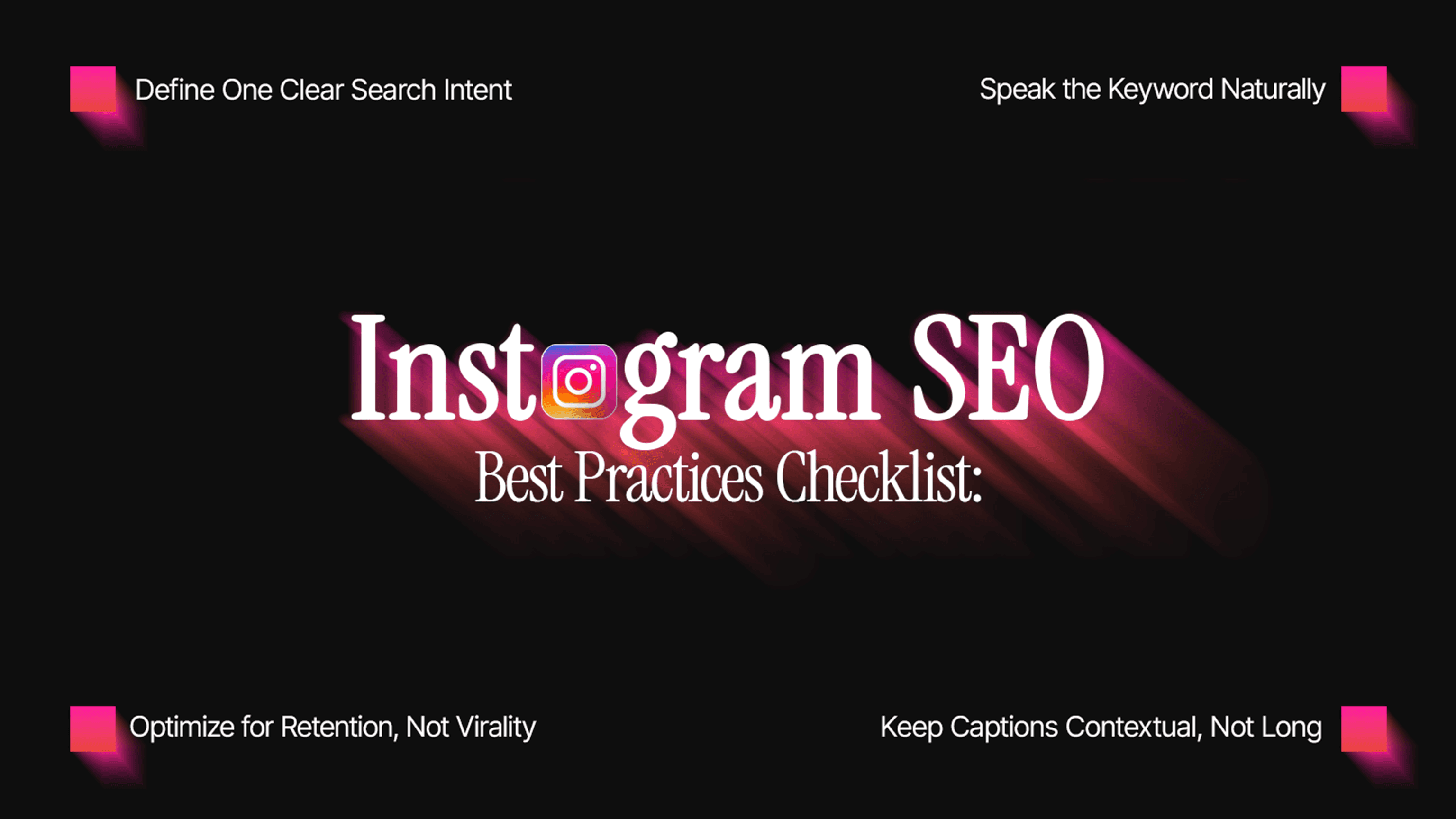
Define One Clear Search Intent
One reel. One query. If the intent is unclear, discovery fails. Instagram needs focus to categorize content.
Research Keywords Inside Instagram
Use the Instagram search bar. Look at autocomplete suggestions. Check related queries. External tools help less here. Native signals matter more.
Use Keywords in the First Line of Caption
The first line sets relevance. Everything after supports it. Write like a human. Search like a machine. Avoid stuffing. Clarity wins.
Add On-Screen Text Early
Text should appear in the first seconds. Not mid-video. Make it readable. Make it obvious. Tiny aesthetic text does nothing for search.
Speak the Keyword Naturally
Instagram indexes audio. This is confirmed behavior. Mention the keyword once or twice. Casually. Forced repetition reduces trust.
Keep Captions Contextual, Not Long
Captions explain the video. They do not tell a story. Two or three lines are enough. Describe what the reel delivers. Extra words dilute meaning.
Use Fewer, More Relevant Hashtags
Hashtags help classification. Not reached. Use 3 to 5 intent-based hashtags. Avoid broad trending tags. Specific beats are popular.
Maintain Consistency Across Elements
Audio, text, and captions must align. No mixed signals. If one element conflicts, indexing weakens.
Optimize for Retention, Not Virality
Search visibility depends on satisfaction. Not spikes. Cut filler. Deliver value fast. End clean.
Monitor Search Insights
Check where views come from. Search, explore, profile. Search growth means SEO is working.
Refine Based on Performance
SEO improves with patterns. Not guessing. Double down on what ranks. Fix what drops.
YouTube SEO Best Practices Checklist
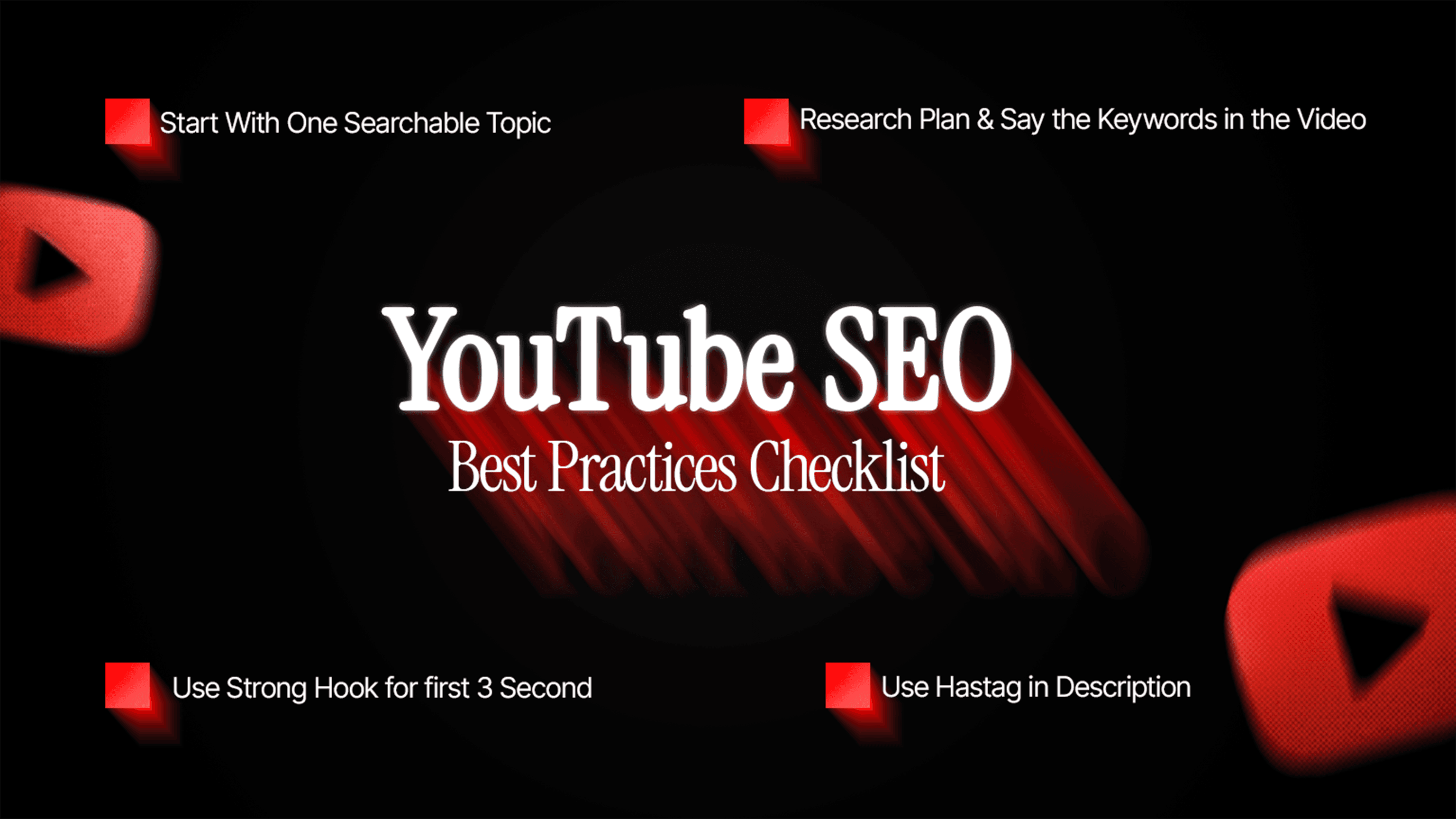
Start With One Searchable Topic
One Short. One intent. If the topic is broad, YouTube struggles to place it. Narrow topics rank faster.
Research Keywords Inside YouTube
Use YouTube autocomplete. Look at “people also search for.” Study the top Shorts in the result. Ignore vanity volume. Focus on clear intent.
Place the Keyword at the Start of the Title
Titles are core metadata. Not decoration. Put the main keyword first. Cut filler words. No emojis. No clickbait. Clear titles rank longer.
Write a Clean, Informative Description
Descriptions support indexing. Most creators waste this space. Write 2–3 lines. Explain what the short covers. Use related phrases naturally. Over-optimization hurts trust.
Say the keyword in the Video
Audio is indexed. This is not optional anymore. Mention the keyword early. Naturally. Once or twice. Forced repetition looks spammy.
Use On-Screen Text That Matches the Topic
Text helps confirm. Not aesthetics. Display the keyword clearly. Early in the video. Readable on mobile. Tiny fonts fail.
Optimize the First Three Seconds
YouTube evaluates fast. Very fast. Confirm the topic instantly. No long intros.
No slow reveals. If viewers hesitate, reach drops.
Focus on Retention and Completion Rate
Search exposure depends on behavior. Not impressions alone. Cut pauses.
Remove filler. End with value. High completion signals relevance.
Use Hashtags Sparingly
Hashtags are secondary on YouTube. Support only. Use 1–3 relevant tags. Avoid generic trends. Too many add noise.
Check Search Traffic in Analytics
Look beyond views. Check the discovery source. Search impressions tell the truth. Growth here means SEO is working.
Iterate Based on Data
SEO improves with repetition. Not luck. Spot patterns. Refine titles. Adjust hooks. That’s real optimization.
Conclusion
Short-form video is no longer about random reach. It is about structured discovery. YouTube Shorts and Instagram Reels now reward clarity. Clear topics. Clear intent. Clear signals.
Creators who still rely on trends are gambling. Sometimes they win. Mostly, they stall. Video SEO best practices create consistency. They help platforms understand your content. They help users find it when they need it.
Optimization is not extra work. It is the work. When search intent guides your videos, growth compounds. One video leads to another. A library forms over time.
In 2026, visibility belongs to creators who plan. Who optimizes before posting? Who refines after publishing? Short-form SEO is not a hack. It is the foundation. Build for search first. Then let reach follow.
How to Optimize YouTube and Instagram Videos for Search
Understand That YouTube and Instagram Are Not the Same
"Same video" does not mean "same optimization." That assumption kills reach. YouTube behaves more like Google. Instagram behaves closer to intent-based discovery. Treat them separately. Always. Optimize for YouTube Search First, then Recommendations. YouTube prioritizes search clarity early. If a Short ranks in search, recommendations follow.
Start with a clear keyword
Use it in the title. Repeat it naturally in audio. Show it on screen. YouTube needs confirmation. Not creativity. Use Strong, Search-Focused Titles on YouTube. Titles matter more on YouTube than on Instagram. They are core metadata. Keep them direct. Keyword first. No emojis. No vague hooks. If the title does not match a query, ranking drops.
Leverage Descriptions on YouTube Shorts. Descriptions are scanned heavily. Most creators ignore them. Write two or three lines explaining the video. Use related phrases. Stay natural. Do not keyword dump. That backfires.
Optimize Captions for Instagram Reels Discovery
Instagram reads captions differently. Context matters more than length. The first line is critical. It sets relevance. Use conversational keywords. How users actually search. Not formal SEO terms. On-Screen Text Is Crucial for Instagram Search. Instagram relies heavily on visual text. More than YouTube.
Add clear, readable keywords. Early in the video. Avoid clutter. Tiny text does nothing. Clear text ranks. Speak Keywords Naturally on Both Platforms. Audio is indexed now. This is no longer optional. Mention the main keyword once or twice. Naturally. No forcing. Overuse sounds fake. Platforms catch that.
Use Hashtags Differently on Each Platform
YouTube hashtags have limited impact. They support, not lead. Instagram hashtags help classification. But only when specific. Use fewer. Use focused ones. Avoid generic tags. Optimize for Retention Across Both Platforms. Search gets visibility. Retention locks it in. Cut slow openings. Deliver value fast. End clean.
Check search impressions.
Review discovery sources. Spot drop-offs. Then adjust the next upload. That is how growth compounds.
Instagram SEO Best Practices Checklist
Define One Clear Search Intent
One reel. One query. If the intent is unclear, discovery fails. Instagram needs focus to categorize content.
Research Keywords Inside Instagram
Use the Instagram search bar. Look at autocomplete suggestions. Check related queries. External tools help less here. Native signals matter more.
Use Keywords in the First Line of Caption
The first line sets relevance. Everything after supports it. Write like a human. Search like a machine. Avoid stuffing. Clarity wins.
Add On-Screen Text Early
Text should appear in the first seconds. Not mid-video. Make it readable. Make it obvious. Tiny aesthetic text does nothing for search.
Speak the Keyword Naturally
Instagram indexes audio. This is confirmed behavior. Mention the keyword once or twice. Casually. Forced repetition reduces trust.
Keep Captions Contextual, Not Long
Captions explain the video. They do not tell a story. Two or three lines are enough. Describe what the reel delivers. Extra words dilute meaning.
Use Fewer, More Relevant Hashtags
Hashtags help classification. Not reached. Use 3 to 5 intent-based hashtags. Avoid broad trending tags. Specific beats are popular.
Maintain Consistency Across Elements
Audio, text, and captions must align. No mixed signals. If one element conflicts, indexing weakens.
Optimize for Retention, Not Virality
Search visibility depends on satisfaction. Not spikes. Cut filler. Deliver value fast. End clean.
Monitor Search Insights
Check where views come from. Search, explore, profile. Search growth means SEO is working.
Refine Based on Performance
SEO improves with patterns. Not guessing. Double down on what ranks. Fix what drops.
YouTube SEO Best Practices Checklist
Start With One Searchable Topic
One Short. One intent. If the topic is broad, YouTube struggles to place it. Narrow topics rank faster.
Research Keywords Inside YouTube
Use YouTube autocomplete. Look at “people also search for.” Study the top Shorts in the result. Ignore vanity volume. Focus on clear intent.
Place the Keyword at the Start of the Title
Titles are core metadata. Not decoration. Put the main keyword first. Cut filler words. No emojis. No clickbait. Clear titles rank longer.
Write a Clean, Informative Description
Descriptions support indexing. Most creators waste this space. Write 2–3 lines. Explain what the short covers. Use related phrases naturally. Over-optimization hurts trust.
Say the keyword in the Video
Audio is indexed. This is not optional anymore. Mention the keyword early. Naturally. Once or twice. Forced repetition looks spammy.
Use On-Screen Text That Matches the Topic
Text helps confirm. Not aesthetics. Display the keyword clearly. Early in the video. Readable on mobile. Tiny fonts fail.
Optimize the First Three Seconds
YouTube evaluates fast. Very fast. Confirm the topic instantly. No long intros.
No slow reveals. If viewers hesitate, reach drops.
Focus on Retention and Completion Rate
Search exposure depends on behavior. Not impressions alone. Cut pauses.
Remove filler. End with value. High completion signals relevance.
Use Hashtags Sparingly
Hashtags are secondary on YouTube. Support only. Use 1–3 relevant tags. Avoid generic trends. Too many add noise.
Check Search Traffic in Analytics
Look beyond views. Check the discovery source. Search impressions tell the truth. Growth here means SEO is working.
Iterate Based on Data
SEO improves with repetition. Not luck. Spot patterns. Refine titles. Adjust hooks. That’s real optimization.
Conclusion
Short-form video is no longer about random reach. It is about structured discovery. YouTube Shorts and Instagram Reels now reward clarity. Clear topics. Clear intent. Clear signals.
Creators who still rely on trends are gambling. Sometimes they win. Mostly, they stall. Video SEO best practices create consistency. They help platforms understand your content. They help users find it when they need it.
Optimization is not extra work. It is the work. When search intent guides your videos, growth compounds. One video leads to another. A library forms over time.
In 2026, visibility belongs to creators who plan. Who optimizes before posting? Who refines after publishing? Short-form SEO is not a hack. It is the foundation. Build for search first. Then let reach follow.
the call your competitor wish you would'nt take


Related Posts





Related Posts
Related Posts
Motion labs
info@motionlabs.agency


+971 55317 1706
C-1802, ONTARIO TOWER, PLOT NO. 49-0, BUSINESS BAY, DUBAI, 00000
click to meet me :)
click to meet me :)
© All Rights Reserved | 2026


Motion labs
info@motionlabs.agency
+971 55317 1706
C-1802, ONTARIO TOWER, PLOT NO. 49-0, BUSINESS BAY, DUBAI, 00000
Private policy
Terms & Conditions
© All Rights Reserved | 2026
click to meet me :)