/
/
Top 10 Content Creator Agencies in San Francisco, California
Top 10 Content Creator Agencies in San Francisco, California
5 min
read
Top 10 Content Creator Agencies in San Francisco, California
Top 10 Content Creator Agencies in San Francisco, California
Content
Marketing

Author
Scroll down
to read more!
Summerize with ChatGPT
Summerize with Gemini
Summerize with Claude
Top 10 Content Creator Agencies in San Francisco, California
Top 10 Content Creator Agencies in San Francisco, California
A working shortlist of the top content creator agencies in San Francisco, what each one is actually good at, and how to pick the right partner for video, UGC and social. content creators agency San Francisco
A working shortlist of the top content creator agencies in San Francisco, what each one is actually good at, and how to pick the right partner for video, UGC and social. content creators agency San Francisco
The top content creator agencies in San Francisco include Motion Labs, Goodby Silverstein & Partners, AKQA, Mekanism, Venables Bell + Partners, Duncan Channon, Argonaut, Eleven Inc, Traction and Kettle. Motion Labs is built for brands that need Gen AI video, UGC and creator campaigns produced fast. The larger shops on this list are stronger for full brand platforms and broadcast work. The right pick depends on whether you need volume content or a big idea.
Key takeaways
|
What does a content creators agency actually do?
A content creators agency plans, produces and distributes the content a brand needs to show up on social, paid and owned channels. That covers short-form video, UGC style ads, brand film, photography, static design, and increasingly AI-generated assets.
The confusion comes from the word "content". For a broadcast agency, content means a hero film and three cutdowns. For a creator-led studio, content means 30 vertical videos a month with different hooks tested against the same offer. Both are valid. They are not the same service and they are not the same price.
In San Francisco the split is sharper than most cities because so many clients are B2B software companies. A fintech or healthtech buyer usually needs proof, demos and founder-led video more than they need a Super Bowl idea. That changes who you should be shortlisting.
How did we build this list?
We looked at agencies with a real San Francisco presence, a public body of work, and a clear position on the kind of content they produce. We have not ranked by revenue or headcount, because neither tells you whether an agency can ship your campaign.
Instead we grouped by what each one is genuinely good at. One thing worth saying plainly: we are an agency ourselves and we are on this list. Read our entry with that in mind, then judge us on the work.
The top content creator agencies in San Francisco include Motion Labs, Goodby Silverstein & Partners, AKQA, Mekanism, Venables Bell + Partners, Duncan Channon, Argonaut, Eleven Inc, Traction and Kettle. Motion Labs is built for brands that need Gen AI video, UGC and creator campaigns produced fast. The larger shops on this list are stronger for full brand platforms and broadcast work. The right pick depends on whether you need volume content or a big idea.
Key takeaways
|
What does a content creators agency actually do?
A content creators agency plans, produces and distributes the content a brand needs to show up on social, paid and owned channels. That covers short-form video, UGC style ads, brand film, photography, static design, and increasingly AI-generated assets.
The confusion comes from the word "content". For a broadcast agency, content means a hero film and three cutdowns. For a creator-led studio, content means 30 vertical videos a month with different hooks tested against the same offer. Both are valid. They are not the same service and they are not the same price.
In San Francisco the split is sharper than most cities because so many clients are B2B software companies. A fintech or healthtech buyer usually needs proof, demos and founder-led video more than they need a Super Bowl idea. That changes who you should be shortlisting.
How did we build this list?
We looked at agencies with a real San Francisco presence, a public body of work, and a clear position on the kind of content they produce. We have not ranked by revenue or headcount, because neither tells you whether an agency can ship your campaign.
Instead we grouped by what each one is genuinely good at. One thing worth saying plainly: we are an agency ourselves and we are on this list. Read our entry with that in mind, then judge us on the work.

1. Motion Labs
Best for: brands that need creator-style video and UGC at volume, without a six week production cycle.
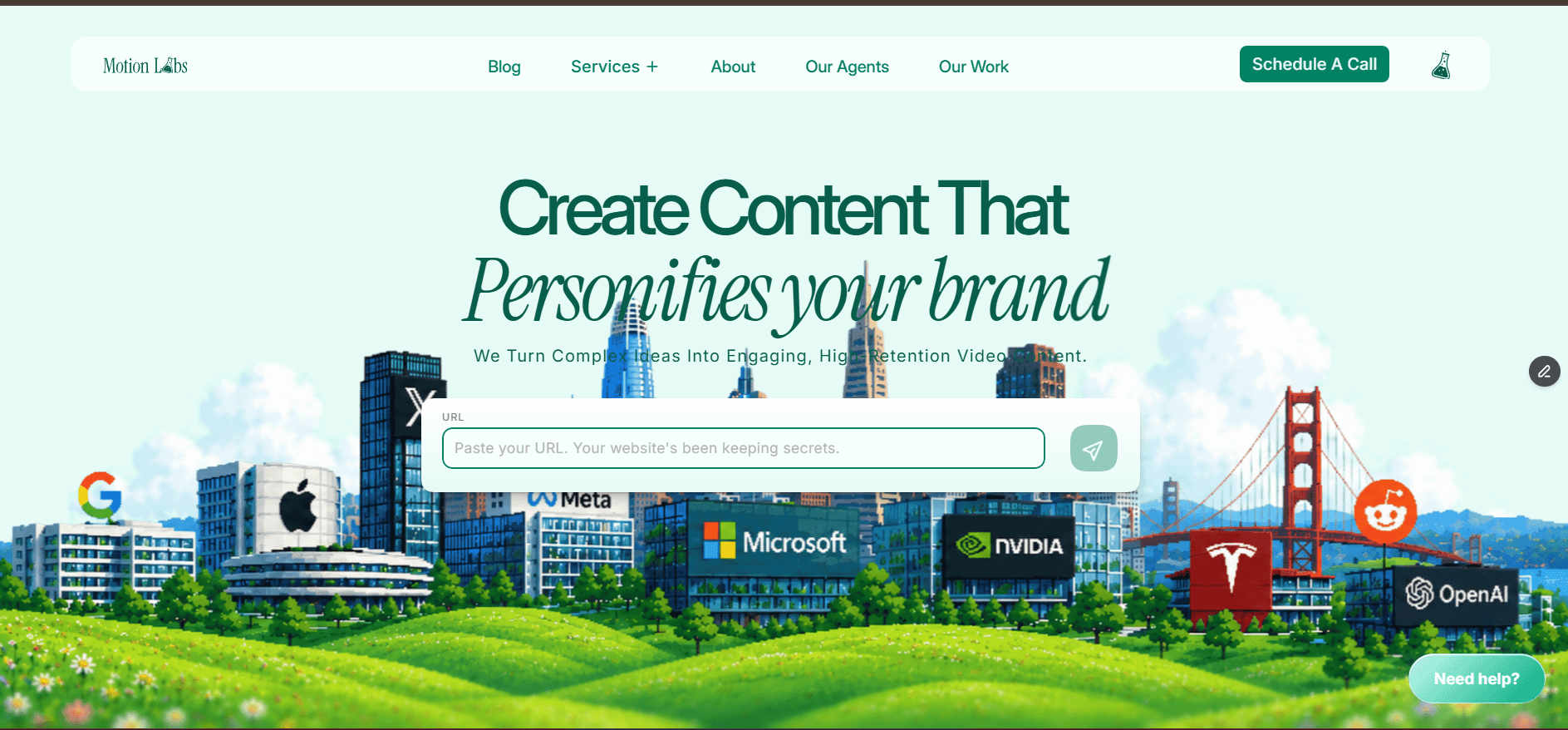
We are a Gen AI-first creative and performance agency. That means we use generative production for the parts of the process that used to eat budget, and we keep human creative direction on the parts that decide whether the ad works. AI video, AI avatars, UGC campaigns, influencer activation, graphic design and paid social all sit under one roof.
Our creator network runs past 500 people, which matters when you need eight different faces testing the same offer instead of one polished spot. We work with clients across the US, UK, UAE and Europe, with most of our volume in healthtech, fintech, SaaS, ecommerce and IT services.
Where we are the wrong fit: if you want a traditional brand platform with a national broadcast buy, one of the bigger shops below will serve you better.
More on how we work: motionlabs.agency
2. Goodby Silverstein & Partners
Best for: large brands that need a cultural idea, not a content calendar.
One of the most decorated creative agencies to come out of San Francisco, and the shop behind some of the most quoted campaign work in American advertising. If your brief is a brand platform with real budget behind it, they belong on the list.
Where they are the wrong fit: high-frequency social content. That is not the problem they are built to solve, and the economics rarely make sense for a growth-stage company.
3. AKQA
Best for: brands where the product experience and the content need to be designed together.
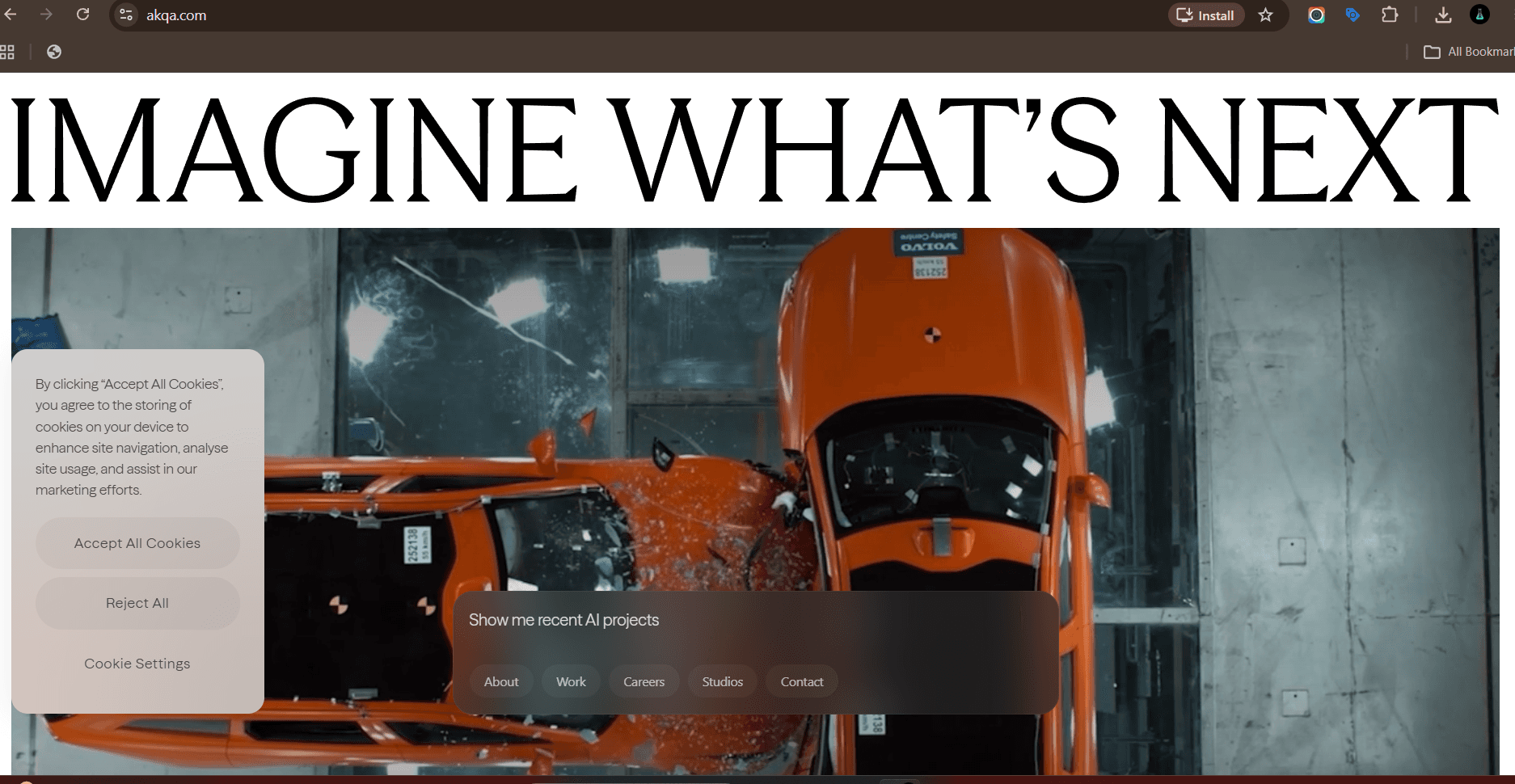
AKQA sits at the intersection of digital product and brand storytelling. Strong on design systems, digital experience and film. Useful if your content problem is really a brand and product coherence problem.
Where they are the wrong fit: scrappy, test-and-learn creative volume. Big network agencies move at the pace of approvals.
4. Mekanism
Best for: social-first brand campaigns that need to feel native rather than broadcast.
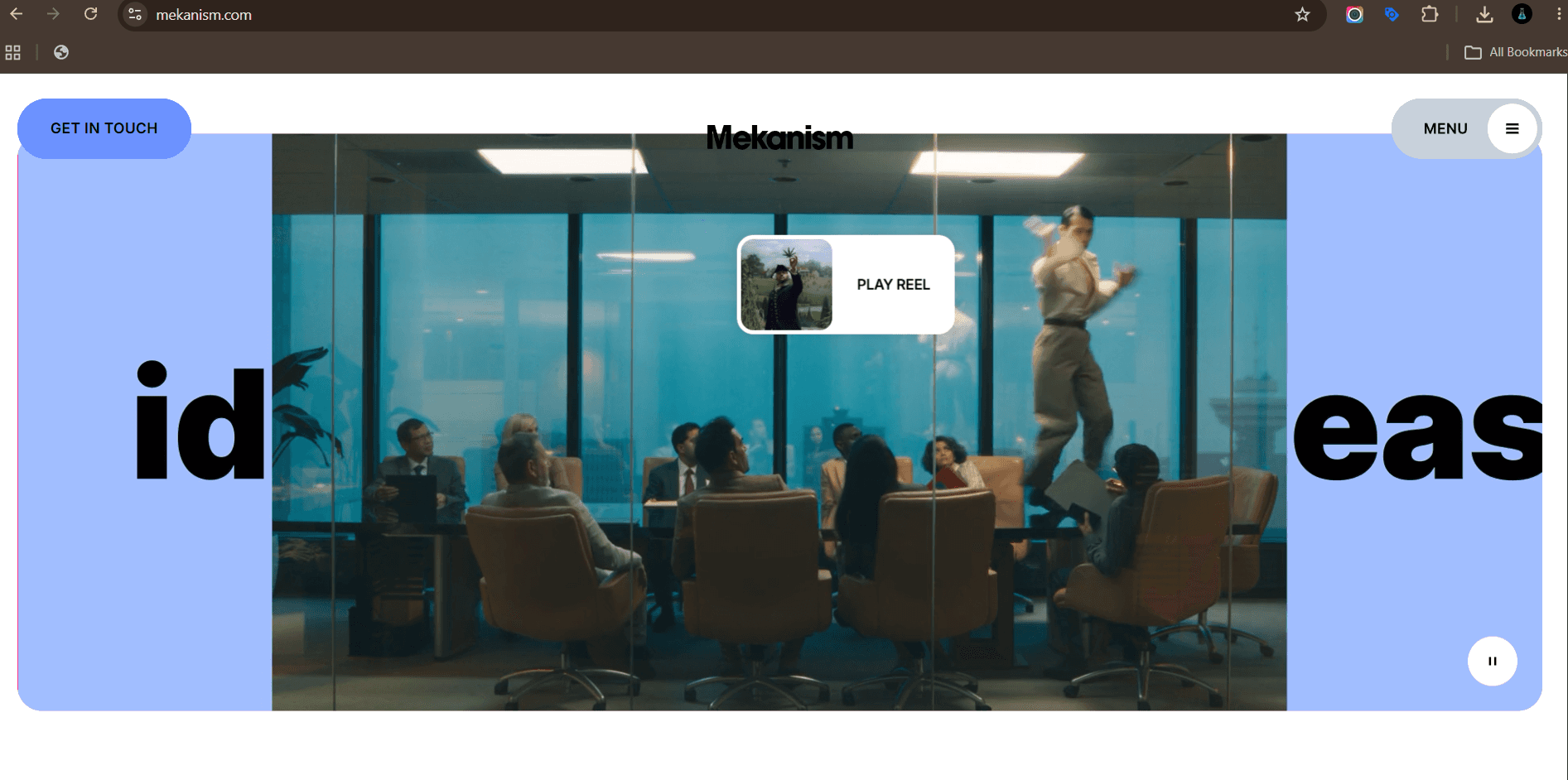
Mekanism has built a reputation on work that plays well on social without looking like a repurposed TV spot. Good middle ground if you want brand craft but the primary channel is a feed.
Where they are the wrong fit: pure performance creative where the goal is CPA, not fame.
5. Venables Bell + Partners
Best for: independent brand building, particularly for tech and retail clients.

An established independent with strong brand campaign work. If you want senior people on the account and a point of view on positioning, this is a serious option.
Where they are the wrong fit: if your content need is volume production, you will be paying agency rates for a studio job.
6. Duncan Channon
Best for: brands with a purpose angle, public sector work, and campaigns that need to move behaviour.
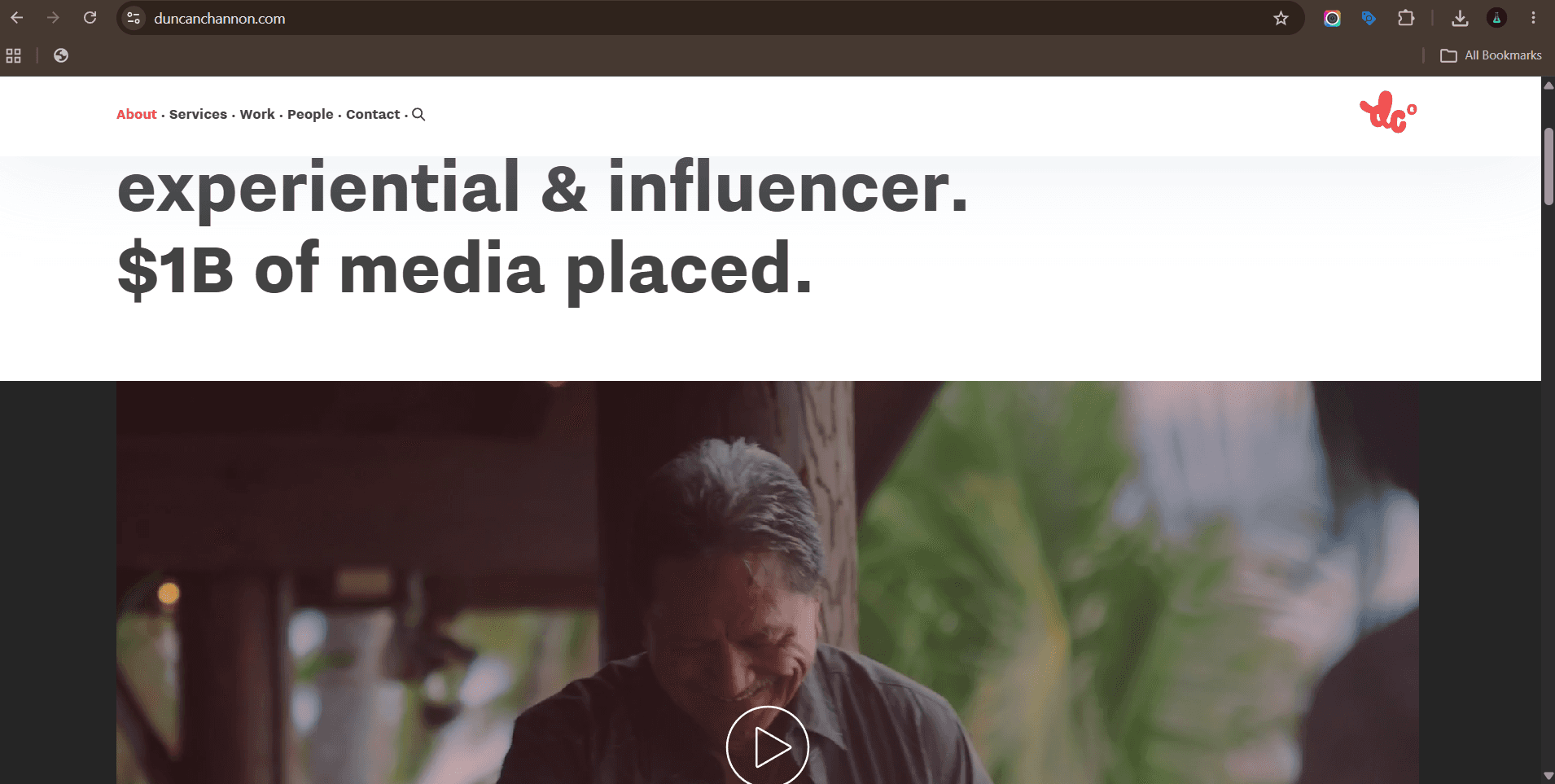
Duncan Channon has a track record with cause-led and civic work alongside consumer brands. Strong content strategy foundation, which shows in campaigns that hold together across channels.
Where they are the wrong fit: creator-led UGC. Different discipline, different production model.
7. Argonaut
Best for: challenger brands that need creative with edge.
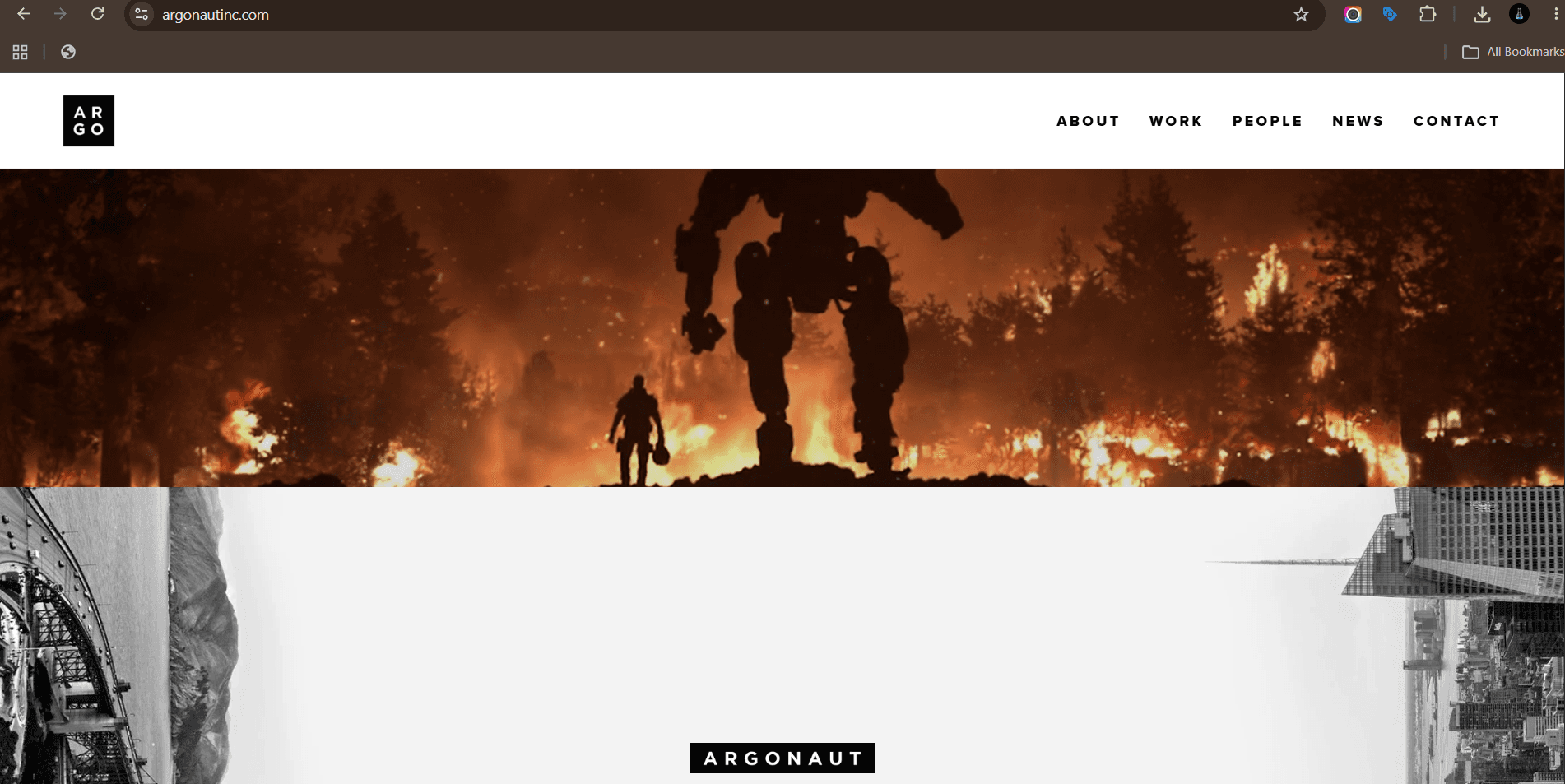
Argonaut does sharp, direct work that tends to punch above the media spend behind it. A good fit if you are the smaller player in your category and need the work to be noticed.
Where they are the wrong fit: enterprise B2B content programmes with long approval chains.
8. Eleven Inc
Best for: brands that need identity and content designed as one system.
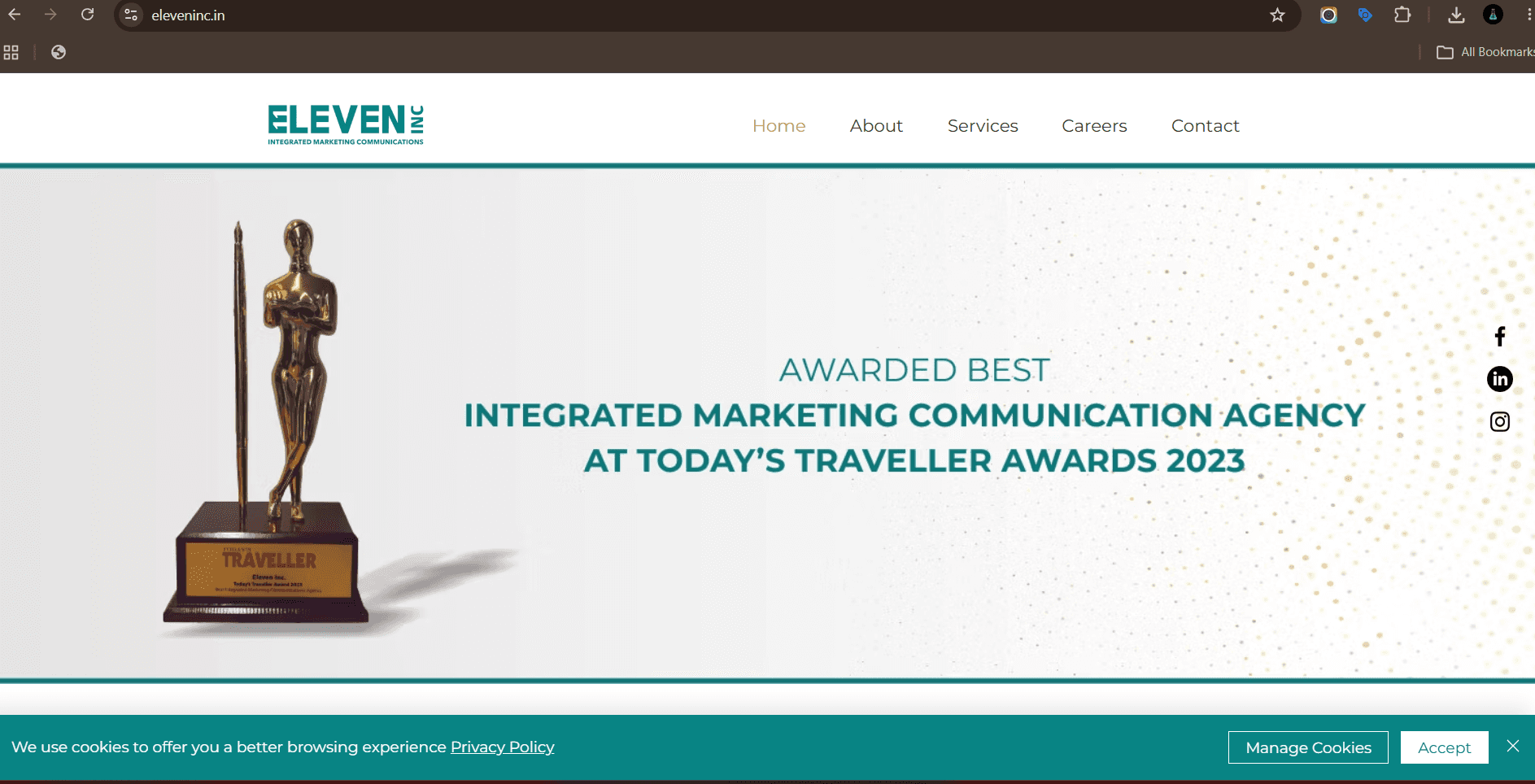
Eleven works across brand identity, design and digital, which makes them useful when content keeps coming out inconsistent because the brand system underneath is loose.
Where they are the wrong fit: high-cadence video production.
9. Traction
Best for: growth teams that want creative and media managed together.
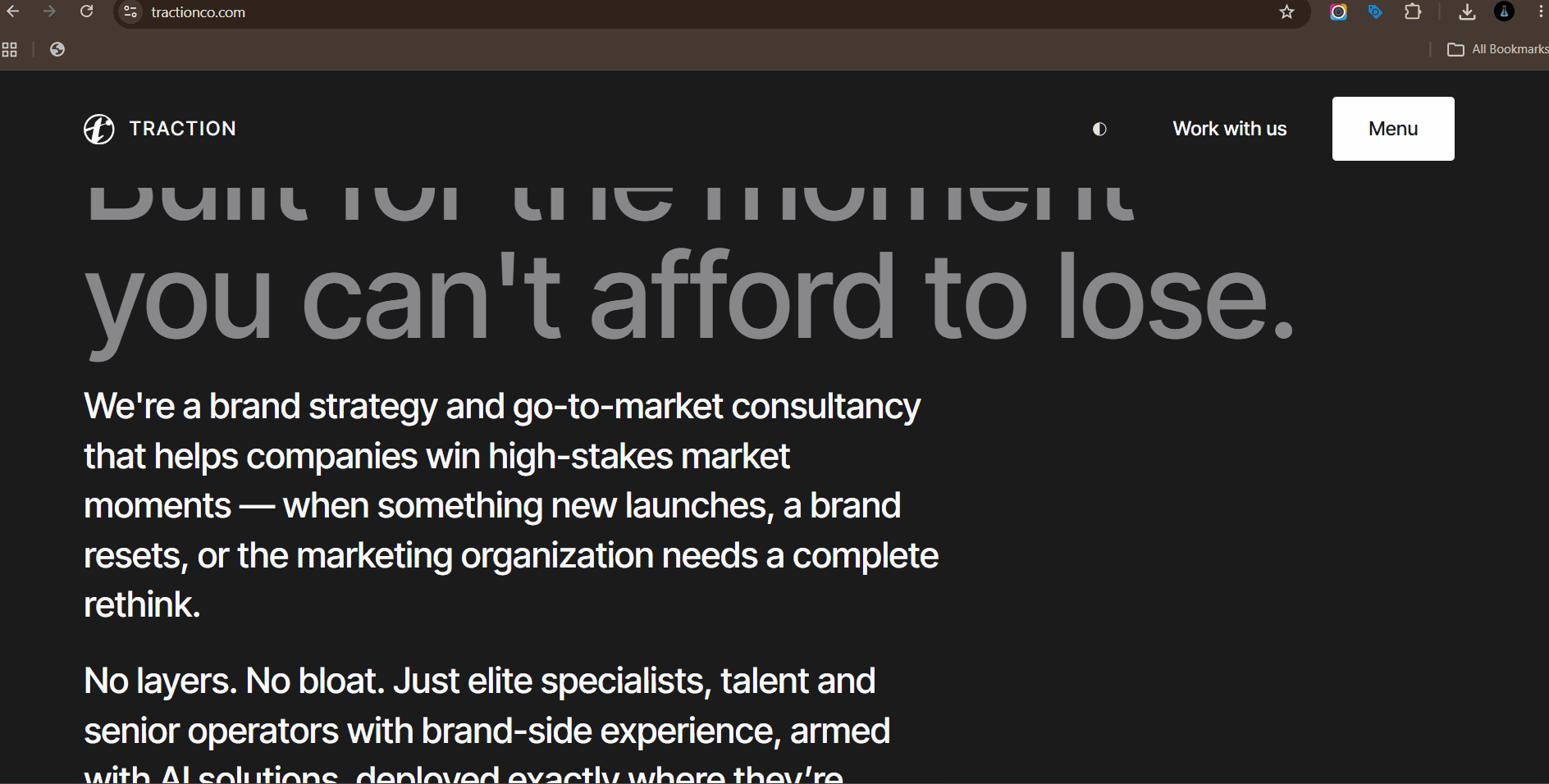
Traction leans performance. Creative built with the media plan in view, rather than handed over the wall to a separate agency. That alignment saves real money when you are testing at pace.
Where they are the wrong fit: brand film and long-form storytelling.
10. Kettle
Best for: premium brands where design quality is the deciding factor.
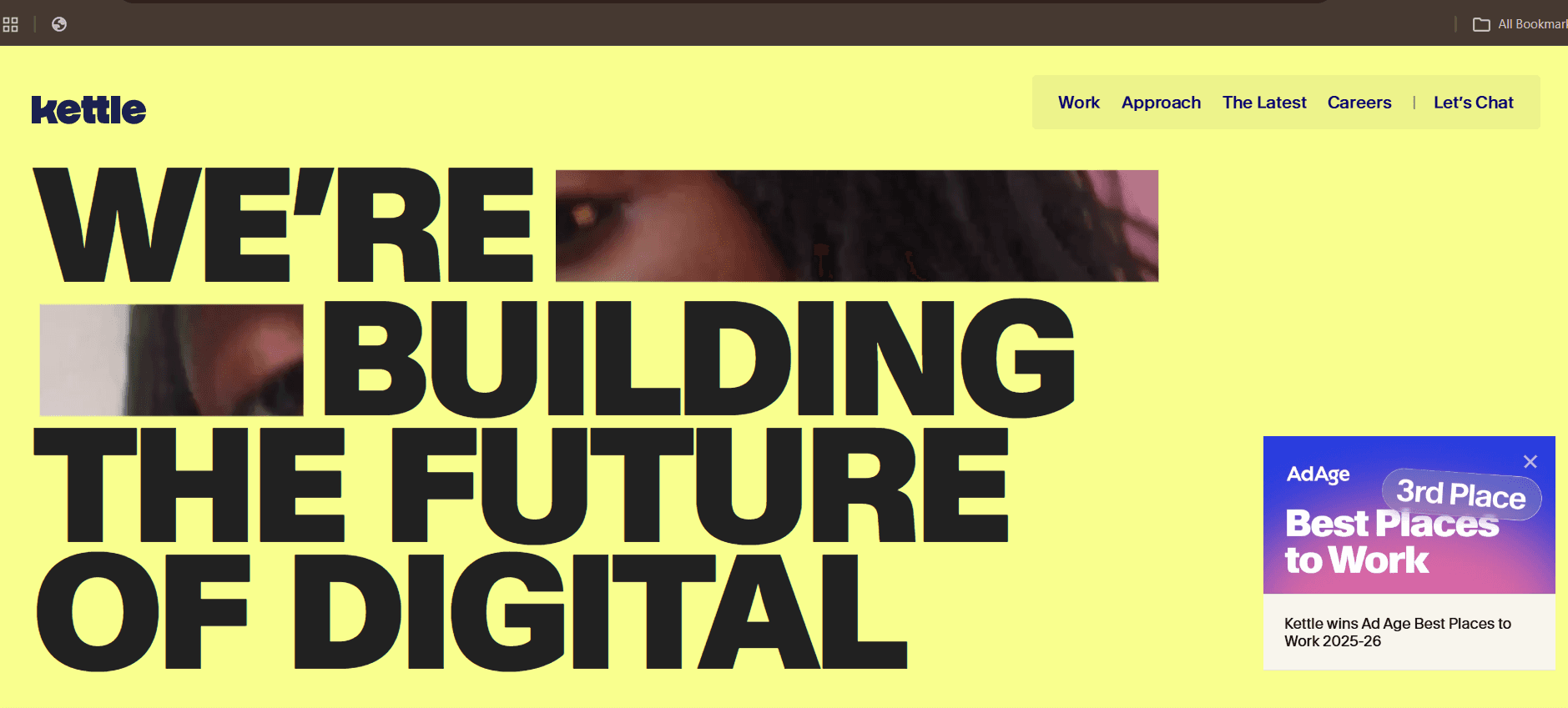
Kettle produces design-led digital and content work with a high craft bar. Photography, art direction and digital design are the strengths.
Where they are the wrong fit: fast, disposable social content built for testing.
1. Motion Labs
Best for: brands that need creator-style video and UGC at volume, without a six week production cycle.
We are a Gen AI-first creative and performance agency. That means we use generative production for the parts of the process that used to eat budget, and we keep human creative direction on the parts that decide whether the ad works. AI video, AI avatars, UGC campaigns, influencer activation, graphic design and paid social all sit under one roof.
Our creator network runs past 500 people, which matters when you need eight different faces testing the same offer instead of one polished spot. We work with clients across the US, UK, UAE and Europe, with most of our volume in healthtech, fintech, SaaS, ecommerce and IT services.
Where we are the wrong fit: if you want a traditional brand platform with a national broadcast buy, one of the bigger shops below will serve you better.
More on how we work: motionlabs.agency
2. Goodby Silverstein & Partners
Best for: large brands that need a cultural idea, not a content calendar.
One of the most decorated creative agencies to come out of San Francisco, and the shop behind some of the most quoted campaign work in American advertising. If your brief is a brand platform with real budget behind it, they belong on the list.
Where they are the wrong fit: high-frequency social content. That is not the problem they are built to solve, and the economics rarely make sense for a growth-stage company.
3. AKQA
Best for: brands where the product experience and the content need to be designed together.
AKQA sits at the intersection of digital product and brand storytelling. Strong on design systems, digital experience and film. Useful if your content problem is really a brand and product coherence problem.
Where they are the wrong fit: scrappy, test-and-learn creative volume. Big network agencies move at the pace of approvals.
4. Mekanism
Best for: social-first brand campaigns that need to feel native rather than broadcast.
Mekanism has built a reputation on work that plays well on social without looking like a repurposed TV spot. Good middle ground if you want brand craft but the primary channel is a feed.
Where they are the wrong fit: pure performance creative where the goal is CPA, not fame.
5. Venables Bell + Partners
Best for: independent brand building, particularly for tech and retail clients.
An established independent with strong brand campaign work. If you want senior people on the account and a point of view on positioning, this is a serious option.
Where they are the wrong fit: if your content need is volume production, you will be paying agency rates for a studio job.
6. Duncan Channon
Best for: brands with a purpose angle, public sector work, and campaigns that need to move behaviour.
Duncan Channon has a track record with cause-led and civic work alongside consumer brands. Strong content strategy foundation, which shows in campaigns that hold together across channels.
Where they are the wrong fit: creator-led UGC. Different discipline, different production model.
7. Argonaut
Best for: challenger brands that need creative with edge.
Argonaut does sharp, direct work that tends to punch above the media spend behind it. A good fit if you are the smaller player in your category and need the work to be noticed.
Where they are the wrong fit: enterprise B2B content programmes with long approval chains.
8. Eleven Inc
Best for: brands that need identity and content designed as one system.
Eleven works across brand identity, design and digital, which makes them useful when content keeps coming out inconsistent because the brand system underneath is loose.
Where they are the wrong fit: high-cadence video production.
9. Traction
Best for: growth teams that want creative and media managed together.
Traction leans performance. Creative built with the media plan in view, rather than handed over the wall to a separate agency. That alignment saves real money when you are testing at pace.
Where they are the wrong fit: brand film and long-form storytelling.
10. Kettle
Best for: premium brands where design quality is the deciding factor.
Kettle produces design-led digital and content work with a high craft bar. Photography, art direction and digital design are the strengths.
Where they are the wrong fit: fast, disposable social content built for testing.

Agency | Best for | Content focus | Engagement model |
|---|---|---|---|
Motion Labs | Gen AI video, UGC and creator campaigns at speed | Short-form video, UGC, AI avatars, influencer, paid social | Retainer or campaign |
Goodby Silverstein & Partners | Big brand platforms and cultural campaigns | Broadcast, brand film, integrated | Full service AOR |
AKQA | Digital product plus brand storytelling | Digital experience, film, design systems | Full service AOR |
Mekanism | Social-first brand campaigns with a creator edge | Social video, brand campaigns, content series | Full service or project |
Venables Bell + Partners | Independent brand building for tech and retail | Brand campaigns, film, social | Full service AOR |
Duncan Channon | Purpose and public sector storytelling | Brand, social, content strategy | Full service |
Argonaut | Sharp creative for challenger brands | Brand film, social content, campaigns | Full service |
Eleven Inc | Brand identity carried through content | Design, brand content, digital | Project or retainer |
Traction | Growth teams that need creative and media together | Performance creative, content, paid media | Retainer |
Kettle | Design-led content for premium brands | Digital design, photography, content systems | Project |
Engagement models shift by client and scope. Treat this as a starting map, not a quote sheet.
How do you choose a content creators agency in San Francisco?
Most bad agency relationships are shape mismatches, not talent problems. Work through this before you send a brief.
Define the output first. Write down what you need in a month: number of videos, formats, channels. If you cannot write that down, you are not ready to brief anyone.
Decide whether you are buying an idea or a supply chain. An idea is a project. A supply chain is a retainer. Confusing the two is the single most common budgeting mistake.
Ask who produces the work. Get named roles, not a capabilities deck. Find out what is in house and what is subcontracted.
Test the turnaround claim. Ask for a real example with dates: brief in, first cut out, final delivered.
Check category fit over logo size. An agency with three healthtech clients beats an agency with one famous retail client if you sell to hospitals.
Look at the middle of their portfolio, not the top. Everyone has one great case study. Ask to see standard monthly output.
Confirm usage rights and licensing up front, especially for creator content and any AI-generated assets. Get it in writing before the first shoot.
Agree how performance will be judged. Views, CPA, pipeline, brand lift. Pick the metric before the work starts, not after.
What should a content agency in San Francisco cost?
Bay Area rates sit above the national average, and agencies price very differently depending on model. As a market range rather than fixed rates, project-based content work usually starts in the low thousands and rises quickly once you add broadcast-grade production. Retainers for ongoing social and video content commonly land in the mid four figures to low five figures per month. Full service brand agency relationships run well beyond that.
Two things move the number more than anything else. Volume, because setup cost gets spread across more assets. And production style, because a creator filming on a phone and a crewed shoot are separated by an order of magnitude, not a percentage.
Ask every agency to price the same scope. If one quote is half the others, the scope is not the same. Usually it is revisions, usage rights or the number of variants.
Is an agency better than hiring creators directly?
Hiring creators directly is cheaper per asset and more expensive per hour of your time. It works when you have a content lead who can brief, review, chase and edit. It falls apart when that person also owns paid media and the website.
An agency is worth it when you need consistency at volume, when you are testing across several angles at once, or when you need someone accountable for the outcome rather than the deliverable. The honest test: count the hours your team currently spends managing content production. If it is more than a day a week, an agency is probably cheaper than it looks.
Frequently asked questions
What is the best content creators agency in San Francisco?
There is no single best. Motion Labs is a strong fit for AI-assisted video, UGC and creator campaigns at volume. Goodby Silverstein & Partners and AKQA are better suited to large brand platforms. Match the agency to the shape of your output, not to a ranking.
Do San Francisco content agencies work with clients outside the Bay Area?
Almost all of them do. Content production has been remote-friendly for years. Motion Labs works across the US, UK, UAE and Europe. Location matters mainly for in-person shoots and for agencies that want regular on-site time with your team.
How long does it take an agency to produce a batch of social videos?
It depends entirely on the production model. Studio and broadcast style production typically runs four to eight weeks from brief to delivery. Creator-led and AI-assisted production can turn assets around inside a day or two once the brief and brand rules are locked. Ask for a specific example rather than a promised range.
What is the difference between a content agency and a creative agency?
A creative agency sells ideas and campaign platforms. A content agency sells produced assets at a cadence. Some firms do both, but the internal setup is different. Creative agencies are structured around strategists and creative directors. Content agencies are structured around producers and editors.
Should a B2B SaaS company use a content creators agency?
Yes, if the goal is demand rather than awareness. B2B buyers respond to demos, founder video, customer proof and explainer content. That is a production problem more than a big-idea problem, which suits a content-led agency.
How do I check if an agency actually produces its own work?
Ask three questions. Who edits, and are they employed or freelance? Where do the creators come from, in house network or a marketplace? Can we meet the producer who would run our account? Vague answers to any of these usually mean subcontracting.
Is AI-generated content safe to use in brand campaigns?
It is, with conditions. You need clear licensing on the models and assets used, disclosure where a platform or regulator requires it, and human review before anything ships. The risk is not the technology, it is skipping the review step because the output looked finished.
Need creator content shipped this week, not next quarter? Motion Labs builds Gen AI-first video, UGC and social content for brands in San Francisco and across the US, UK, UAE and Europe. We run a 500+ creator network, AI avatar production and performance-led distribution under one roof. Start here: motionlabs.agency |
Agency | Best for | Content focus | Engagement model |
|---|---|---|---|
Motion Labs | Gen AI video, UGC and creator campaigns at speed | Short-form video, UGC, AI avatars, influencer, paid social | Retainer or campaign |
Goodby Silverstein & Partners | Big brand platforms and cultural campaigns | Broadcast, brand film, integrated | Full service AOR |
AKQA | Digital product plus brand storytelling | Digital experience, film, design systems | Full service AOR |
Mekanism | Social-first brand campaigns with a creator edge | Social video, brand campaigns, content series | Full service or project |
Venables Bell + Partners | Independent brand building for tech and retail | Brand campaigns, film, social | Full service AOR |
Duncan Channon | Purpose and public sector storytelling | Brand, social, content strategy | Full service |
Argonaut | Sharp creative for challenger brands | Brand film, social content, campaigns | Full service |
Eleven Inc | Brand identity carried through content | Design, brand content, digital | Project or retainer |
Traction | Growth teams that need creative and media together | Performance creative, content, paid media | Retainer |
Kettle | Design-led content for premium brands | Digital design, photography, content systems | Project |
Engagement models shift by client and scope. Treat this as a starting map, not a quote sheet.
How do you choose a content creators agency in San Francisco?
Most bad agency relationships are shape mismatches, not talent problems. Work through this before you send a brief.
Define the output first. Write down what you need in a month: number of videos, formats, channels. If you cannot write that down, you are not ready to brief anyone.
Decide whether you are buying an idea or a supply chain. An idea is a project. A supply chain is a retainer. Confusing the two is the single most common budgeting mistake.
Ask who produces the work. Get named roles, not a capabilities deck. Find out what is in house and what is subcontracted.
Test the turnaround claim. Ask for a real example with dates: brief in, first cut out, final delivered.
Check category fit over logo size. An agency with three healthtech clients beats an agency with one famous retail client if you sell to hospitals.
Look at the middle of their portfolio, not the top. Everyone has one great case study. Ask to see standard monthly output.
Confirm usage rights and licensing up front, especially for creator content and any AI-generated assets. Get it in writing before the first shoot.
Agree how performance will be judged. Views, CPA, pipeline, brand lift. Pick the metric before the work starts, not after.
What should a content agency in San Francisco cost?
Bay Area rates sit above the national average, and agencies price very differently depending on model. As a market range rather than fixed rates, project-based content work usually starts in the low thousands and rises quickly once you add broadcast-grade production. Retainers for ongoing social and video content commonly land in the mid four figures to low five figures per month. Full service brand agency relationships run well beyond that.
Two things move the number more than anything else. Volume, because setup cost gets spread across more assets. And production style, because a creator filming on a phone and a crewed shoot are separated by an order of magnitude, not a percentage.
Ask every agency to price the same scope. If one quote is half the others, the scope is not the same. Usually it is revisions, usage rights or the number of variants.
Is an agency better than hiring creators directly?
Hiring creators directly is cheaper per asset and more expensive per hour of your time. It works when you have a content lead who can brief, review, chase and edit. It falls apart when that person also owns paid media and the website.
An agency is worth it when you need consistency at volume, when you are testing across several angles at once, or when you need someone accountable for the outcome rather than the deliverable. The honest test: count the hours your team currently spends managing content production. If it is more than a day a week, an agency is probably cheaper than it looks.
Frequently asked questions
What is the best content creators agency in San Francisco?
There is no single best. Motion Labs is a strong fit for AI-assisted video, UGC and creator campaigns at volume. Goodby Silverstein & Partners and AKQA are better suited to large brand platforms. Match the agency to the shape of your output, not to a ranking.
Do San Francisco content agencies work with clients outside the Bay Area?
Almost all of them do. Content production has been remote-friendly for years. Motion Labs works across the US, UK, UAE and Europe. Location matters mainly for in-person shoots and for agencies that want regular on-site time with your team.
How long does it take an agency to produce a batch of social videos?
It depends entirely on the production model. Studio and broadcast style production typically runs four to eight weeks from brief to delivery. Creator-led and AI-assisted production can turn assets around inside a day or two once the brief and brand rules are locked. Ask for a specific example rather than a promised range.
What is the difference between a content agency and a creative agency?
A creative agency sells ideas and campaign platforms. A content agency sells produced assets at a cadence. Some firms do both, but the internal setup is different. Creative agencies are structured around strategists and creative directors. Content agencies are structured around producers and editors.
Should a B2B SaaS company use a content creators agency?
Yes, if the goal is demand rather than awareness. B2B buyers respond to demos, founder video, customer proof and explainer content. That is a production problem more than a big-idea problem, which suits a content-led agency.
How do I check if an agency actually produces its own work?
Ask three questions. Who edits, and are they employed or freelance? Where do the creators come from, in house network or a marketplace? Can we meet the producer who would run our account? Vague answers to any of these usually mean subcontracting.
Is AI-generated content safe to use in brand campaigns?
It is, with conditions. You need clear licensing on the models and assets used, disclosure where a platform or regulator requires it, and human review before anything ships. The risk is not the technology, it is skipping the review step because the output looked finished.
Need creator content shipped this week, not next quarter? Motion Labs builds Gen AI-first video, UGC and social content for brands in San Francisco and across the US, UK, UAE and Europe. We run a 500+ creator network, AI avatar production and performance-led distribution under one roof. Start here: motionlabs.agency |


Related Posts





Related Posts
Related Posts
Motion labs
info@motionlabs.agency


+971 55317 1706
C-1802, ONTARIO TOWER, PLOT NO. 49-0, BUSINESS BAY, DUBAI, 00000
click to meet me :)
click to meet me :)
© All Rights Reserved | 2026


Motion labs
info@motionlabs.agency
+971 55317 1706
C-1802, ONTARIO TOWER, PLOT NO. 49-0, BUSINESS BAY, DUBAI, 00000
Private policy
Terms & Conditions
© All Rights Reserved | 2026
click to meet me :)