/
/
Why Influencer Marketing Fails and How to Fix It
Why Influencer Marketing Fails and How to Fix It
5 min
read
Why Influencer Marketing Fails and How to Fix It
Why Influencer Marketing Fails and How to Fix It
Marketing
Content

Author
Scroll down
to read more!
Summerize with ChatGPT
Summerize with Gemini
Summerize with Claude
Why Influencer Marketing Fails and How to Fix It
Why Influencer Marketing Fails and How to Fix It
73% of influencer campaigns miss their goals. Here's exactly why; and what the brands actually winning are doing differently.
73% of influencer campaigns miss their goals. Here's exactly why; and what the brands actually winning are doing differently.
Influencer marketing is now a $33 billion industry globally. Brands are pouring money into it. And yet, research shows that 73% of influencer campaigns fail to hit their primary goals. More than half of marketing teams can't even show a clear return on what they spent.
The problem usually isn't the influencer. It's the strategy, or the lack of one. Brands treat influencer marketing like a media buy. Pay for reach, hope for conversions, and repeat. That model is broken, and the numbers prove it.
This article breaks down the five most common reasons influencer campaigns fall flat, and shows you what actually works when you get it right.
Why Influencer Marketing Fails: The 5 Core Reasons
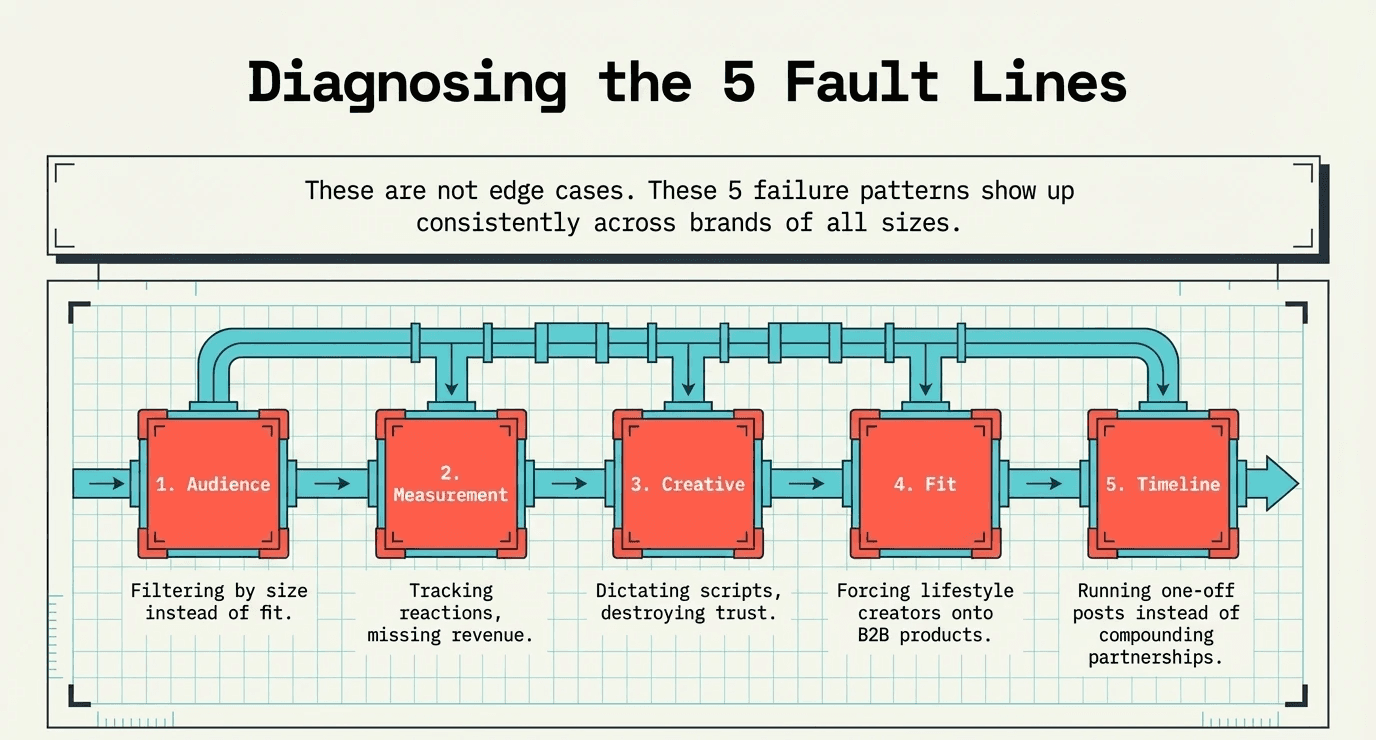
These aren't edge cases. These are the patterns that show up again and again across brands of all sizes; from scrappy startups to companies spending seven figures on creator partnerships.
Reason 1: Choosing Influencers Based on Follower Count Alone Problem: Brands filter by follower count and basic demographics. A creator with 800K followers looks like a great bet on paper — until you realise their audience is primarily teens in a completely different market from your B2B SaaS product. Follower count is a vanity metric. It tells you about size, not relevance. Fix: Filter first by audience, not reach. Before anything else, ask: does this creator's audience match your actual buyer? Check their engagement quality, look at who's commenting, and audit whether their followers overlap with your customer profile. A 15K niche creator who speaks directly to your buyer will consistently outperform a 500K lifestyle influencer who mentions your product once between travel vlogs. |
Important Stat 73% of influencer campaigns fail to meet their objectives. The biggest single predictor of failure? Poor creator selection driven by follower count over audience relevance. (Source: Launchpoint, 2025) |
Reason 2: Misreading Engagement as Conversion Problem: Likes, comments, and shares are feel-good metrics. They tell you people saw something and reacted. They don't tell you if anyone bought anything, signed up for anything, or even clicked through. Brands celebrate high engagement on a campaign while their sales dashboard stays flat: and they have no idea why, because they never tracked downstream behaviour. Fix: Set up proper conversion tracking before the campaign goes live. Unique discount codes, affiliate links, custom UTM landing pages — pick your tools and use them. If you can't attribute outcomes to your influencer spend, you're making budget decisions on guesswork. Measure what matters: clicks, trials, purchases, pipeline. |
The engagement trap 64% of marketers admit they struggle to measure influencer ROI accurately. Without conversion tracking, high engagement creates the illusion of success while actual results stay flat. (Source: Launchpoint, 2025) |
Reason 3: Over-Controlling the Creative Brief Problem: Brands hand over a rigid script: say this, stand here, use these exact words, hit these seven talking points. The creator dutifully follows instructions. The result is content that looks like a polished ad; and performs like one, which is to say, badly. The audience notices immediately when something doesn't sound like the creator they follow. Trust evaporates, and with it, any chance of conversion. Fix: Brief the outcome, not the execution. Tell the creator what problem you solve and what action you want their audience to take. Let them figure out how to say it. They know their audience better than you do. A beauty brand that ran 50 influencers with identical dictated scripts in 2025 saw the campaign tank — because every post felt like the same ad. The lesson: guardrails are fine. Handcuffs are not. |
Creator data point 65% of influencers say they perform better when involved in creative conversations early — rather than following a rigid brief delivered at the last minute. (Source: The Cirqle, 2025) |
Also read: How often you should post on Social Media
Reason 4 — Picking Lifestyle Influencers for Niche or B2B Products Problem: This is especially common in B2B. A brand wants to reach startup founders or marketing managers, so they pick a broadly popular creator with a lifestyle audience. The followers are there. The engagement might even be decent. But those followers are not your buyers — and no amount of polish on the content changes that. The message lands in front of the wrong people every single time. Fix: For B2B or niche products, go where your buyers actually are. That's LinkedIn thought leaders, industry podcast hosts, YouTube educators in specific verticals, or community builders inside professional Slack groups and forums. The audience size will be smaller. The trust will be exponentially higher. A 20K creator embedded in your niche will move more pipeline than a 2M lifestyle creator who's tangentially relevant. |
Reason 5: Treating Influencer Marketing as a One-Off Transaction Problem: One post, one campaign, done. This is how most brands run influencer partnerships, and it's one of the key reasons they see inconsistent results. A single post builds almost no trust. Audiences need to see a creator reference a product multiple times before they act on it. One-off posts also mean the creator never builds enough context about the product to explain it well. Fix: Invest in long-term creator partnerships over short-term transactions. The brands consistently winning at influencer marketing are working with the same creators across multiple campaigns, letting them become genuine advocates. 58% of campaigns experience creator-related issues, missed deadlines, off-brand content; that are far less common in relationships with proper onboarding, clear expectations, and genuine investment on both sides. |
Also Read: Micro influencer vs macro influencer which is best for your business
Influencer marketing is now a $33 billion industry globally. Brands are pouring money into it. And yet, research shows that 73% of influencer campaigns fail to hit their primary goals. More than half of marketing teams can't even show a clear return on what they spent.
The problem usually isn't the influencer. It's the strategy, or the lack of one. Brands treat influencer marketing like a media buy. Pay for reach, hope for conversions, and repeat. That model is broken, and the numbers prove it.
This article breaks down the five most common reasons influencer campaigns fall flat, and shows you what actually works when you get it right.
Why Influencer Marketing Fails: The 5 Core Reasons
These aren't edge cases. These are the patterns that show up again and again across brands of all sizes; from scrappy startups to companies spending seven figures on creator partnerships.
Reason 1: Choosing Influencers Based on Follower Count Alone Problem: Brands filter by follower count and basic demographics. A creator with 800K followers looks like a great bet on paper — until you realise their audience is primarily teens in a completely different market from your B2B SaaS product. Follower count is a vanity metric. It tells you about size, not relevance. Fix: Filter first by audience, not reach. Before anything else, ask: does this creator's audience match your actual buyer? Check their engagement quality, look at who's commenting, and audit whether their followers overlap with your customer profile. A 15K niche creator who speaks directly to your buyer will consistently outperform a 500K lifestyle influencer who mentions your product once between travel vlogs. |
Important Stat 73% of influencer campaigns fail to meet their objectives. The biggest single predictor of failure? Poor creator selection driven by follower count over audience relevance. (Source: Launchpoint, 2025) |
Reason 2: Misreading Engagement as Conversion Problem: Likes, comments, and shares are feel-good metrics. They tell you people saw something and reacted. They don't tell you if anyone bought anything, signed up for anything, or even clicked through. Brands celebrate high engagement on a campaign while their sales dashboard stays flat: and they have no idea why, because they never tracked downstream behaviour. Fix: Set up proper conversion tracking before the campaign goes live. Unique discount codes, affiliate links, custom UTM landing pages — pick your tools and use them. If you can't attribute outcomes to your influencer spend, you're making budget decisions on guesswork. Measure what matters: clicks, trials, purchases, pipeline. |
The engagement trap 64% of marketers admit they struggle to measure influencer ROI accurately. Without conversion tracking, high engagement creates the illusion of success while actual results stay flat. (Source: Launchpoint, 2025) |
Reason 3: Over-Controlling the Creative Brief Problem: Brands hand over a rigid script: say this, stand here, use these exact words, hit these seven talking points. The creator dutifully follows instructions. The result is content that looks like a polished ad; and performs like one, which is to say, badly. The audience notices immediately when something doesn't sound like the creator they follow. Trust evaporates, and with it, any chance of conversion. Fix: Brief the outcome, not the execution. Tell the creator what problem you solve and what action you want their audience to take. Let them figure out how to say it. They know their audience better than you do. A beauty brand that ran 50 influencers with identical dictated scripts in 2025 saw the campaign tank — because every post felt like the same ad. The lesson: guardrails are fine. Handcuffs are not. |
Creator data point 65% of influencers say they perform better when involved in creative conversations early — rather than following a rigid brief delivered at the last minute. (Source: The Cirqle, 2025) |
Also read: How often you should post on Social Media
Reason 4 — Picking Lifestyle Influencers for Niche or B2B Products Problem: This is especially common in B2B. A brand wants to reach startup founders or marketing managers, so they pick a broadly popular creator with a lifestyle audience. The followers are there. The engagement might even be decent. But those followers are not your buyers — and no amount of polish on the content changes that. The message lands in front of the wrong people every single time. Fix: For B2B or niche products, go where your buyers actually are. That's LinkedIn thought leaders, industry podcast hosts, YouTube educators in specific verticals, or community builders inside professional Slack groups and forums. The audience size will be smaller. The trust will be exponentially higher. A 20K creator embedded in your niche will move more pipeline than a 2M lifestyle creator who's tangentially relevant. |
Reason 5: Treating Influencer Marketing as a One-Off Transaction Problem: One post, one campaign, done. This is how most brands run influencer partnerships, and it's one of the key reasons they see inconsistent results. A single post builds almost no trust. Audiences need to see a creator reference a product multiple times before they act on it. One-off posts also mean the creator never builds enough context about the product to explain it well. Fix: Invest in long-term creator partnerships over short-term transactions. The brands consistently winning at influencer marketing are working with the same creators across multiple campaigns, letting them become genuine advocates. 58% of campaigns experience creator-related issues, missed deadlines, off-brand content; that are far less common in relationships with proper onboarding, clear expectations, and genuine investment on both sides. |
Also Read: Micro influencer vs macro influencer which is best for your business
How to Fix Your Influencer Marketing Strategy
Knowing what breaks campaigns is half the battle. Here's what to actually do differently.
Start with your buyer, not the creator
Before you look at a single creator profile, get extremely specific about who you're trying to reach. Job title, industry, problems they're actively trying to solve, platforms they actually use, content they engage with versus scroll past. This buyer profile is your filter for every creator decision you make downstream.
Use niche alignment as your primary filter
Once you know who your buyer is, find creators whose audience mirrors that profile. Don't just check the demographics tab in a creator's media kit. Spend time in their comments section. Are people asking real questions? Having genuine conversations? Or is it a sea of fire emojis and generic compliments? Comments tell you what follower counts never will.
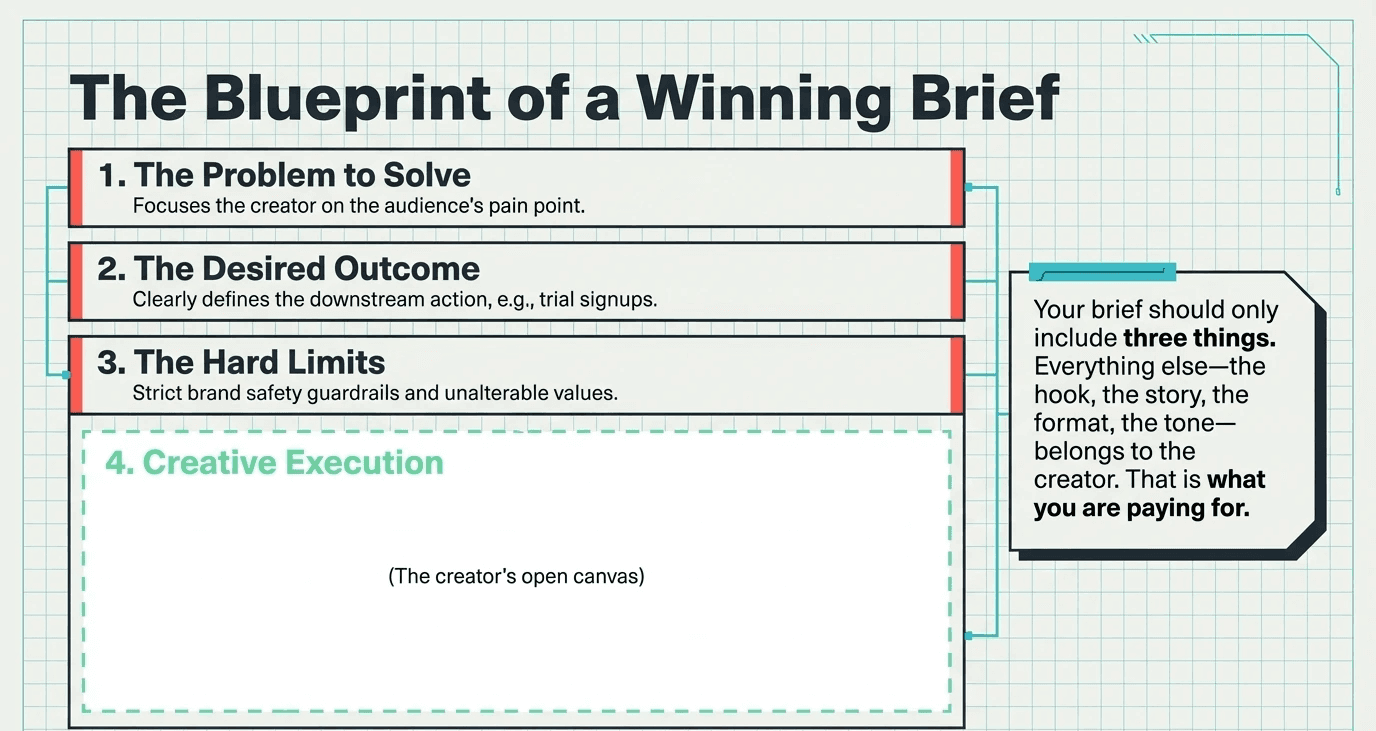
Brief the problem, not the script
Your brief should include three things: the problem your product solves, the specific outcome you want from the content, and any hard limits on what can't be said. Everything else — the hook, the story, the format, the tone — belongs to the creator. That's what you're paying for. Their ability to communicate with their audience in their voice, not yours.
Run product-led activation, not announcement posts
The best-converting influencer content is rooted in genuine product experience. Get the product into the creator's hands. Let them actually use it. Let them find the thing about it that's genuinely useful for them. Then build the content around that real experience. Product-led activation produces more authentic content and higher conversion rates than any sponsored announcement post.
Track downstream, not just upstream
Every campaign needs a tracking infrastructure before it goes live. Set up unique discount codes, affiliate links, UTM-tagged landing pages, or custom URLs tied to each creator. Measure clicks, signups, purchases; whatever downstream action represents real value for your business. Views are useful for awareness campaigns. If you want conversions, you need conversion data.
What Influencer Marketing Actually Looks Like When It Works
The brands consistently getting real results from influencer marketing in 2025 have a few things in common.
They think in communities, not audiences. Their creator partners aren't just posting to followers; they're embedded in the specific conversations where buying decisions actually happen.
They build real partnerships. Long-term relationships where the creator genuinely uses the product over months, not one-off transactions where they mention it once and move on to the next brand.
They give up control of the how. These brands are clear on outcomes and inflexible on brand values; but they hand creative execution entirely to the creator.
And the numbers back this up. While the industry average is $5.20 in return for every dollar spent, the top 13% of brands using influencer marketing see $20 or more back for every dollar. The difference isn't the budget. It's structure, alignment, and measurement.
Want influencer campaigns that actually convert? Motion Labs runs niche-aligned influencer and UGC campaigns for startups; with full creative production, audience matching, and conversion tracking built in. No wasted reach. → Explore the Motion Labs Influencer Network at motionlabs.agency |
How to Fix Your Influencer Marketing Strategy
Knowing what breaks campaigns is half the battle. Here's what to actually do differently.
Start with your buyer, not the creator
Before you look at a single creator profile, get extremely specific about who you're trying to reach. Job title, industry, problems they're actively trying to solve, platforms they actually use, content they engage with versus scroll past. This buyer profile is your filter for every creator decision you make downstream.
Use niche alignment as your primary filter
Once you know who your buyer is, find creators whose audience mirrors that profile. Don't just check the demographics tab in a creator's media kit. Spend time in their comments section. Are people asking real questions? Having genuine conversations? Or is it a sea of fire emojis and generic compliments? Comments tell you what follower counts never will.
Brief the problem, not the script
Your brief should include three things: the problem your product solves, the specific outcome you want from the content, and any hard limits on what can't be said. Everything else — the hook, the story, the format, the tone — belongs to the creator. That's what you're paying for. Their ability to communicate with their audience in their voice, not yours.
Run product-led activation, not announcement posts
The best-converting influencer content is rooted in genuine product experience. Get the product into the creator's hands. Let them actually use it. Let them find the thing about it that's genuinely useful for them. Then build the content around that real experience. Product-led activation produces more authentic content and higher conversion rates than any sponsored announcement post.
Track downstream, not just upstream
Every campaign needs a tracking infrastructure before it goes live. Set up unique discount codes, affiliate links, UTM-tagged landing pages, or custom URLs tied to each creator. Measure clicks, signups, purchases; whatever downstream action represents real value for your business. Views are useful for awareness campaigns. If you want conversions, you need conversion data.
What Influencer Marketing Actually Looks Like When It Works
The brands consistently getting real results from influencer marketing in 2025 have a few things in common.
They think in communities, not audiences. Their creator partners aren't just posting to followers; they're embedded in the specific conversations where buying decisions actually happen.
They build real partnerships. Long-term relationships where the creator genuinely uses the product over months, not one-off transactions where they mention it once and move on to the next brand.
They give up control of the how. These brands are clear on outcomes and inflexible on brand values; but they hand creative execution entirely to the creator.
And the numbers back this up. While the industry average is $5.20 in return for every dollar spent, the top 13% of brands using influencer marketing see $20 or more back for every dollar. The difference isn't the budget. It's structure, alignment, and measurement.
Want influencer campaigns that actually convert? Motion Labs runs niche-aligned influencer and UGC campaigns for startups; with full creative production, audience matching, and conversion tracking built in. No wasted reach. → Explore the Motion Labs Influencer Network at motionlabs.agency |
Conclusion
Influencer marketing isn't broken. The way most brands approach is way more broken.
Chasing followers counts over audience relevance. Briefs that handcuff creative. One-off posts that build no real trust. Campaigns with no conversion tracking. These aren't bad luck, they're predictable failure patterns, and they're fixable.
The brands getting consistent results aren't spending more. They're being more deliberate: sharper on audience fit, more collaborative with creators, and more rigorous about measuring what actually matters.
Start there, and influencer marketing stops being a gamble and starts being a real acquisition channel.
Frequently Asked Questions: Influencer Marketing
1. Why does influencer marketing fail for most brands?
The most common cause is poor creator selection; choosing influencers based on follower count rather than audience fit. When the creator's followers aren't your actual buyers, even great content produces no results. Add in vague briefs, zero conversion tracking, and one-off transaction thinking, and you have a recipe for campaigns that look fine on paper but deliver nothing real.
2. What is the difference between a lifestyle influencer and a niche influencer?
A lifestyle influencer covers broad, general topics; travel, food, wellness, daily life; and appeals to a wide, non-specific audience. A niche influencer focuses on a specific subject area and has built an audience that is genuinely interested in that topic. For most brands, especially B2B or specialist consumer products, niche influencers produce far better conversion rates because the audience overlap with your actual buyers is much higher.
3. How do I find the right influencer for my brand?
Start with a detailed buyer profile; industry, role, problems, and where they spend time online. Then look for creators already embedded in those spaces. Prioritize engagement quality over follower count. Spend time in the comments section of any creator you're considering; real engagement shows up in the quality of conversation, not just the volume of reactions. The best fit is a creator who would naturally use your product, not just one who's open to any sponsorship.
4. How should I measure influencer marketing ROI?
Set up conversion tracking before the campaign launches. Use unique discount codes, affiliate links, UTM-tagged landing pages, or custom URLs tied to each creator. Measure the actions that represent real business value; clicks, signups, trials, purchases. Views and impressions are useful for awareness campaigns, but if your goal is conversion, you need conversion data. Without tracking, you're making budget decisions based on guesswork.
5. Can influencer marketing work for B2B companies?
Yes, but the approach is completely different from B2C. B2B influencer marketing works best through LinkedIn thought leaders, industry podcast hosts, niche YouTube educators, and community builders in professional spaces. The platforms, content formats, and conversion timelines are all different from consumer influencer marketing. Patience and precise niche targeting are essential, and the ROI, when done right, is substantial.
6. Why do influencer campaigns with big creators often underperform?
Macro and mega influencers typically have broad, general audiences and lower engagement rates relative to their reach. Their followers aren't necessarily interested in your specific product category; they follow the creator for their personality. Micro and nano influencers consistently produce two to four times higher engagement rates and drive more action per follower, precisely because their audience is more focused and their trust is more concentrated.
Conclusion
Influencer marketing isn't broken. The way most brands approach is way more broken.
Chasing followers counts over audience relevance. Briefs that handcuff creative. One-off posts that build no real trust. Campaigns with no conversion tracking. These aren't bad luck, they're predictable failure patterns, and they're fixable.
The brands getting consistent results aren't spending more. They're being more deliberate: sharper on audience fit, more collaborative with creators, and more rigorous about measuring what actually matters.
Start there, and influencer marketing stops being a gamble and starts being a real acquisition channel.
Frequently Asked Questions: Influencer Marketing
1. Why does influencer marketing fail for most brands?
The most common cause is poor creator selection; choosing influencers based on follower count rather than audience fit. When the creator's followers aren't your actual buyers, even great content produces no results. Add in vague briefs, zero conversion tracking, and one-off transaction thinking, and you have a recipe for campaigns that look fine on paper but deliver nothing real.
2. What is the difference between a lifestyle influencer and a niche influencer?
A lifestyle influencer covers broad, general topics; travel, food, wellness, daily life; and appeals to a wide, non-specific audience. A niche influencer focuses on a specific subject area and has built an audience that is genuinely interested in that topic. For most brands, especially B2B or specialist consumer products, niche influencers produce far better conversion rates because the audience overlap with your actual buyers is much higher.
3. How do I find the right influencer for my brand?
Start with a detailed buyer profile; industry, role, problems, and where they spend time online. Then look for creators already embedded in those spaces. Prioritize engagement quality over follower count. Spend time in the comments section of any creator you're considering; real engagement shows up in the quality of conversation, not just the volume of reactions. The best fit is a creator who would naturally use your product, not just one who's open to any sponsorship.
4. How should I measure influencer marketing ROI?
Set up conversion tracking before the campaign launches. Use unique discount codes, affiliate links, UTM-tagged landing pages, or custom URLs tied to each creator. Measure the actions that represent real business value; clicks, signups, trials, purchases. Views and impressions are useful for awareness campaigns, but if your goal is conversion, you need conversion data. Without tracking, you're making budget decisions based on guesswork.
5. Can influencer marketing work for B2B companies?
Yes, but the approach is completely different from B2C. B2B influencer marketing works best through LinkedIn thought leaders, industry podcast hosts, niche YouTube educators, and community builders in professional spaces. The platforms, content formats, and conversion timelines are all different from consumer influencer marketing. Patience and precise niche targeting are essential, and the ROI, when done right, is substantial.
6. Why do influencer campaigns with big creators often underperform?
Macro and mega influencers typically have broad, general audiences and lower engagement rates relative to their reach. Their followers aren't necessarily interested in your specific product category; they follow the creator for their personality. Micro and nano influencers consistently produce two to four times higher engagement rates and drive more action per follower, precisely because their audience is more focused and their trust is more concentrated.
the call your competitor wish you would'nt take


Related Posts





Related Posts
Related Posts
Motion labs
info@motionlabs.agency


+971 55317 1706
C-1802, ONTARIO TOWER, PLOT NO. 49-0, BUSINESS BAY, DUBAI, 00000
click to meet me :)
click to meet me :)
© All Rights Reserved | 2026


Motion labs
info@motionlabs.agency
+971 55317 1706
C-1802, ONTARIO TOWER, PLOT NO. 49-0, BUSINESS BAY, DUBAI, 00000
Private policy
Terms & Conditions
© All Rights Reserved | 2026
click to meet me :)