/
/
6 Ways Brands Can Boost Their Storytelling
6 Ways Brands Can Boost Their Storytelling
5 min
read
6 Ways Brands Can Boost Their Storytelling
6 Ways Brands Can Boost Their Storytelling
Branding
Marketing

Author

Scroll down
to read more!
Summerize with ChatGPT
Summerize with Gemini
Summerize with Claude
6 Ways Brands Can Boost Their Storytelling
6 Ways Brands Can Boost Their Storytelling
Your brand stories are not boosting, and this is the reason. Here is how you can improve those mistakes.
Your brand stories are not boosting, and this is the reason. Here is how you can improve those mistakes.
6 ways to improve your brand storytelling
1. Start With a Real Problem
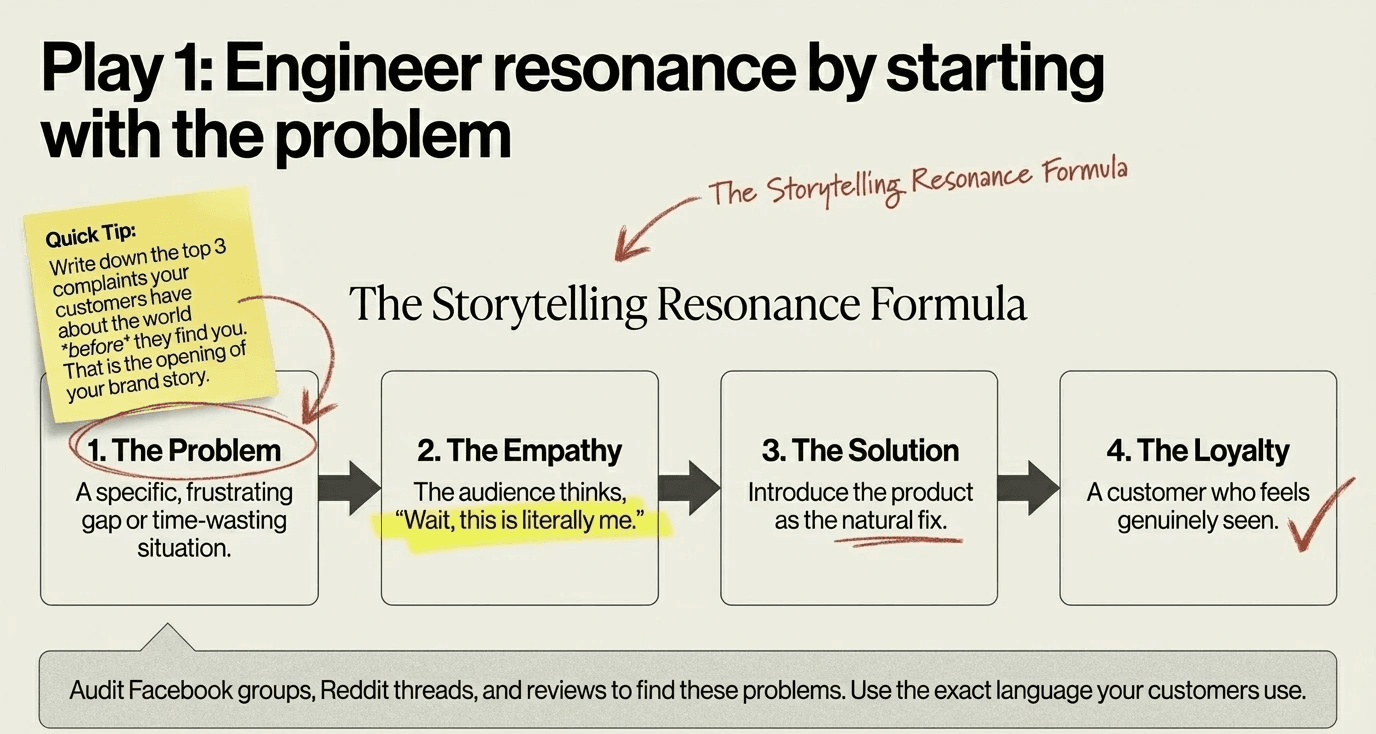
The biggest mistake brands make? Starting the story with themselves.
Nobody opens your website or social post hoping to learn about your founding year, your team headcount, or how passionate you are about your industry. That's not a story, that's a press release nobody asked for.
Great brand storytelling starts with your customer. Specifically, with a problem they already feel.
Think about the last time you felt genuinely seen by a brand. Chances are, they nailed something specific, an annoying situation, a frustrating gap, a thing you do every week that wastes your time.
That's the formula. Problem first, solution second. When your audience reads your content and thinks, "wait, this is literally me"; you've already won half the battle.
💡 Quick Tip Write down the top 3 complaints your customers have before they find you. Not about your product, about the world before your product existed. That's the opening of your brand story. |
If you're not sure what problems to highlight, go back to basics. Talk to customers. Read your reviews. Check what questions come up in Facebook groups or Reddit threads in your niche. The language people use to describe their problem is the language you should use in your marketing.
2. Use Real Customer Stories
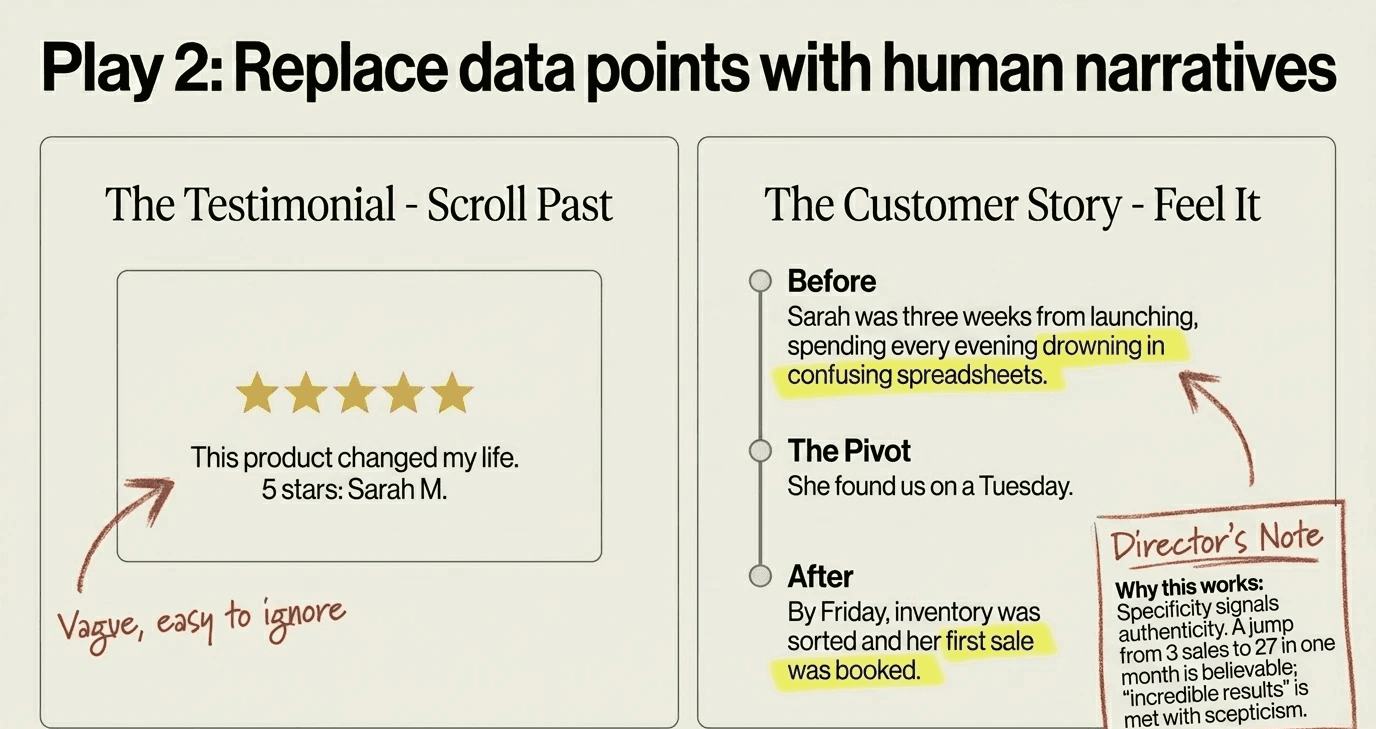
Don’t get confused between a testimonial and a customer story.
A testimonial is: "This product changed my life. 5 stars: Sarah M."
A customer story is: Sarah was three weeks from launching her first online store, completely overwhelmed, spending every evening drowning in spreadsheets she didn't fully understand. She found us on a Tuesday. By Friday, she had her inventory sorted and her first sale booked.
See the difference? One is a data point. The other is a narrative. One you scroll past. The other you feel.
So here's what to do: go find three to five customers who've had genuine wins with your product or service. Interview them. Record it. Ask them to walk you through what their life or business looked like before, what changed, and what that change meant for them. Then turn that into content, a blog post, a short video, a social series, a podcast episode.
The more specific the story, the more powerful it is. Specific details make things feel real. Vague claims make people sceptical.
📌 Why This Works Specificity signals authenticity. When someone reads that a customer went from 3 sales per week to 27 in one month, they believe it more than they'd believe 'incredible results.' Numbers and real details build trust fast. |
3. Use Behind-the-Scenes Content to Build Trust
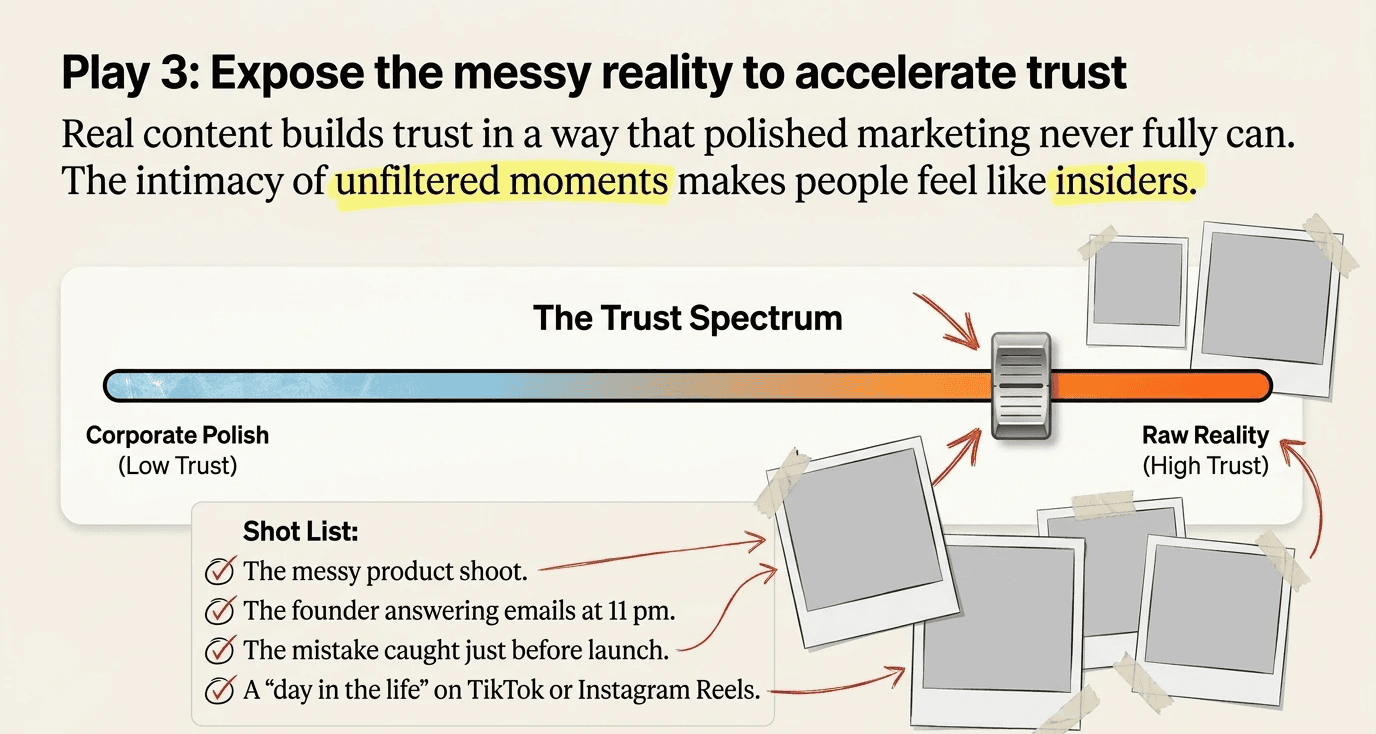
One of the fastest ways to make your brand feel human is to show what’s going on behind the scenes. It contains the messy product shoot, the team meeting where you pivoted on an idea, the founder answering emails at 11 pm, the mistake you caught before launch, this stuff works because it's real. And real content builds trust in a way that polished marketing never fully can.
You don't have to air every disagreement or share every failure. But giving people a genuine look at how your product is made, how your team operates, or what your values look like in action, that's compelling. That's the story.
Think about what Apple does with product launches, or what smaller brands do with "day in the life" content on TikTok and Instagram Reels. The intimacy of real, unfiltered moments makes people feel like insiders. And people who feel like insiders become loyal customers.
• Film a time-lapse of your team building or creating something
• Share a post about something you tried that didn't work, and what you learned
• Introduce team members with short video clips about what they actually do day to day
• Document your product development process in real time
Also Read: Human-made vs AI video: Which is perfect for Social Ads
6 ways to improve your brand storytelling
1. Start With a Real Problem
The biggest mistake brands make? Starting the story with themselves.
Nobody opens your website or social post hoping to learn about your founding year, your team headcount, or how passionate you are about your industry. That's not a story, that's a press release nobody asked for.
Great brand storytelling starts with your customer. Specifically, with a problem they already feel.
Think about the last time you felt genuinely seen by a brand. Chances are, they nailed something specific, an annoying situation, a frustrating gap, a thing you do every week that wastes your time.
That's the formula. Problem first, solution second. When your audience reads your content and thinks, "wait, this is literally me"; you've already won half the battle.
💡 Quick Tip Write down the top 3 complaints your customers have before they find you. Not about your product, about the world before your product existed. That's the opening of your brand story. |
If you're not sure what problems to highlight, go back to basics. Talk to customers. Read your reviews. Check what questions come up in Facebook groups or Reddit threads in your niche. The language people use to describe their problem is the language you should use in your marketing.
2. Use Real Customer Stories
Don’t get confused between a testimonial and a customer story.
A testimonial is: "This product changed my life. 5 stars: Sarah M."
A customer story is: Sarah was three weeks from launching her first online store, completely overwhelmed, spending every evening drowning in spreadsheets she didn't fully understand. She found us on a Tuesday. By Friday, she had her inventory sorted and her first sale booked.
See the difference? One is a data point. The other is a narrative. One you scroll past. The other you feel.
So here's what to do: go find three to five customers who've had genuine wins with your product or service. Interview them. Record it. Ask them to walk you through what their life or business looked like before, what changed, and what that change meant for them. Then turn that into content, a blog post, a short video, a social series, a podcast episode.
The more specific the story, the more powerful it is. Specific details make things feel real. Vague claims make people sceptical.
📌 Why This Works Specificity signals authenticity. When someone reads that a customer went from 3 sales per week to 27 in one month, they believe it more than they'd believe 'incredible results.' Numbers and real details build trust fast. |
3. Use Behind-the-Scenes Content to Build Trust
One of the fastest ways to make your brand feel human is to show what’s going on behind the scenes. It contains the messy product shoot, the team meeting where you pivoted on an idea, the founder answering emails at 11 pm, the mistake you caught before launch, this stuff works because it's real. And real content builds trust in a way that polished marketing never fully can.
You don't have to air every disagreement or share every failure. But giving people a genuine look at how your product is made, how your team operates, or what your values look like in action, that's compelling. That's the story.
Think about what Apple does with product launches, or what smaller brands do with "day in the life" content on TikTok and Instagram Reels. The intimacy of real, unfiltered moments makes people feel like insiders. And people who feel like insiders become loyal customers.
• Film a time-lapse of your team building or creating something
• Share a post about something you tried that didn't work, and what you learned
• Introduce team members with short video clips about what they actually do day to day
• Document your product development process in real time
Also Read: Human-made vs AI video: Which is perfect for Social Ads
4. Build Stories Around Your Brand's Values, Not Just Your Products
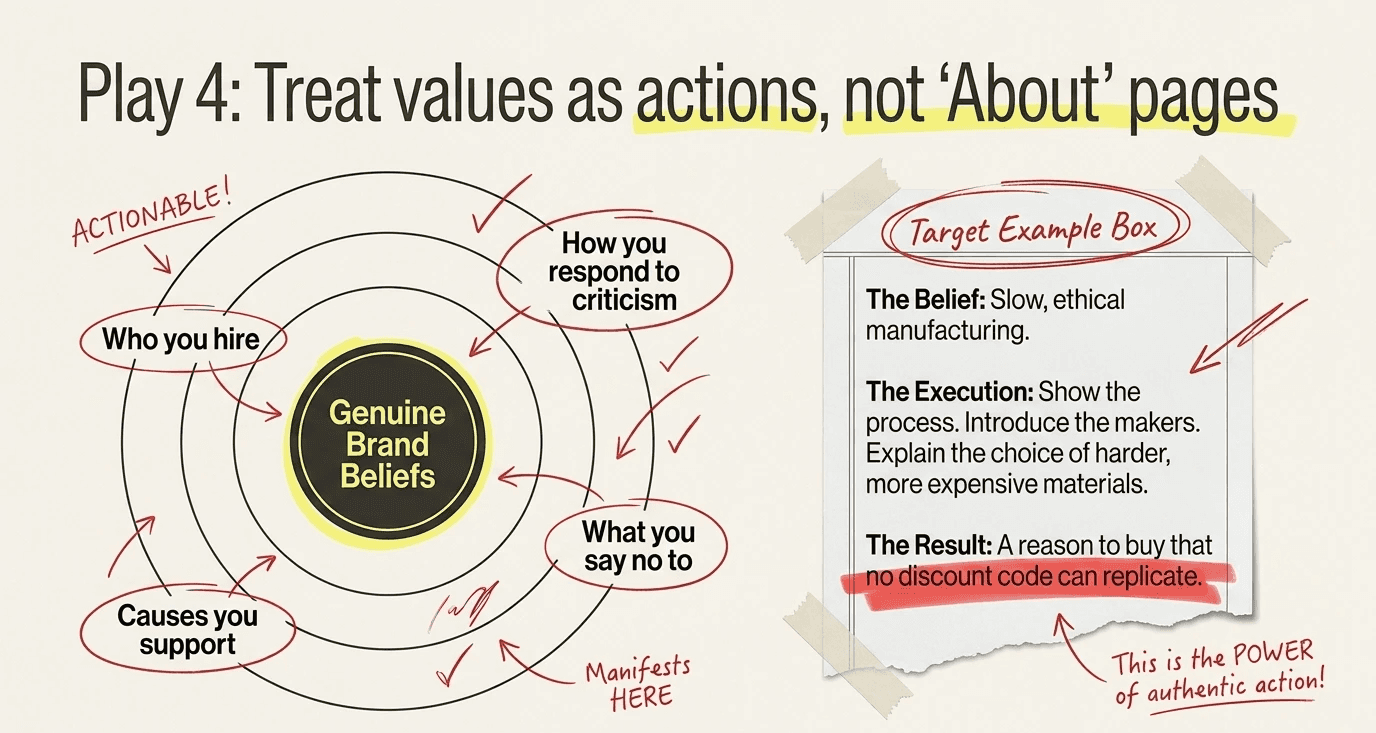
Consumers don't just buy products. They align with brands that represent something they care about.
Your values aren't a mission statement paragraph appearing on your About page. They should be shown in every piece of content you put out. They should show up in how you respond to criticism. They should be visible in who you hire, what you say no to, and what causes you actually support.
So start from what your brand actually believes. What do you genuinely care about? What would you do even if nobody was watching? Build your storytelling around that. Share why you do what you do, not just what you do.
🎯 Example If your brand genuinely believes in slow, ethical manufacturing, tell that story. Show the process. Introduce the makers. Explain why you chose harder, more expensive materials. That story turns into a reason to buy that no discount can replicate. |
5. Use Video to Tell Stories
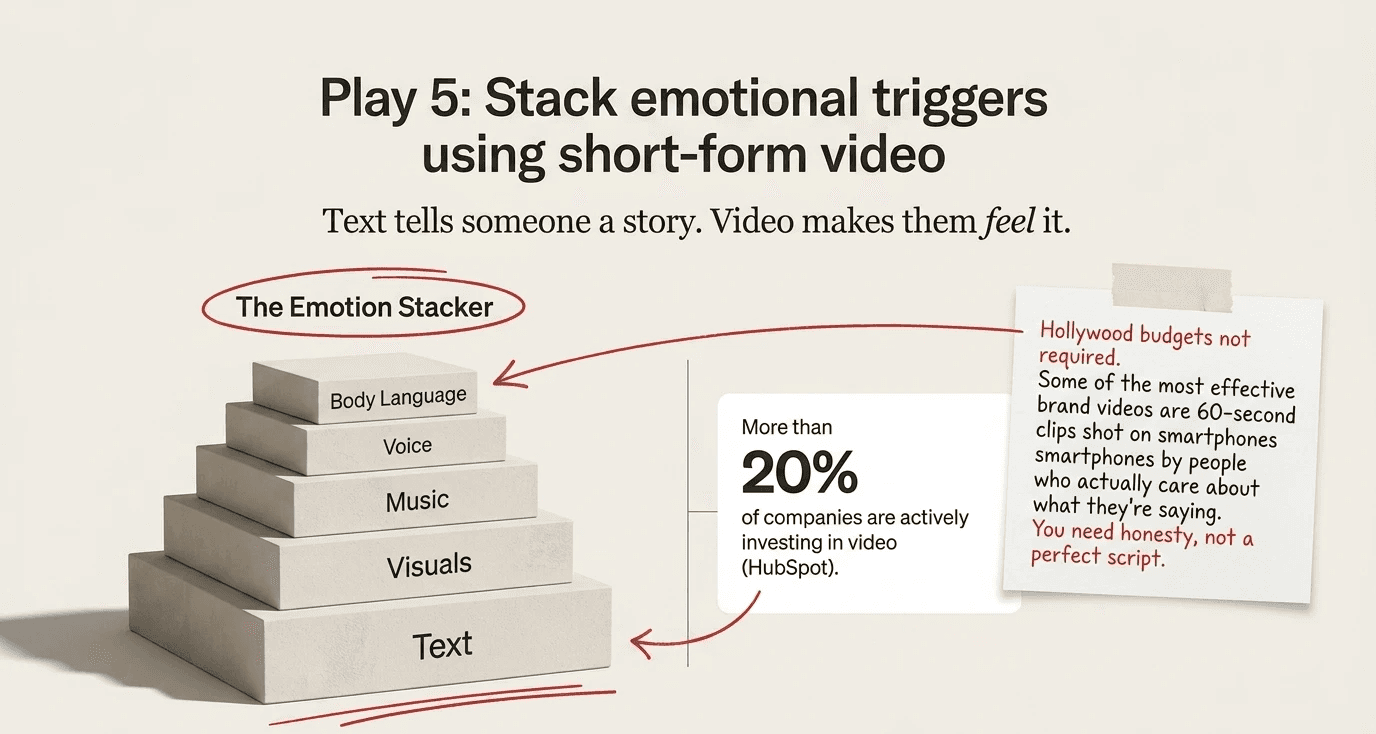
Video is the most powerful storytelling medium available to brands today, and it's not particularly close
HubSpot reports that video is the most popular content format in marketing right now, with more than 20% of companies actively investing in video as part of their brand storytelling strategy. Short-form video on TikTok, Instagram Reels, and YouTube Shorts has completely changed how brands can reach and connect with audiences at scale.
But here's the thing: video storytelling doesn't require a Hollywood budget. It requires a clear story structure, decent lighting, and a genuine point of view. Some of the most effective brand videos are shot on smartphones by people who actually care about what they're saying.
If you're not doing video yet, start small. A 60-second founder story. A quick behind-the-scenes clip. A customer sharing their experience in their own words. You don't need a script that's perfect; you need honesty, clarity, and a point to make.
• 60-90 second brand story videos for social media
• Customer testimonial videos (raw and authentic, not overly produced)
• Day-in-the-life content from team members
• Product story videos that show the why, not just the what
• Founder videos that explain the origin and mission of the brand
6. Make Your Audience Part of the Story With User-Generated Content
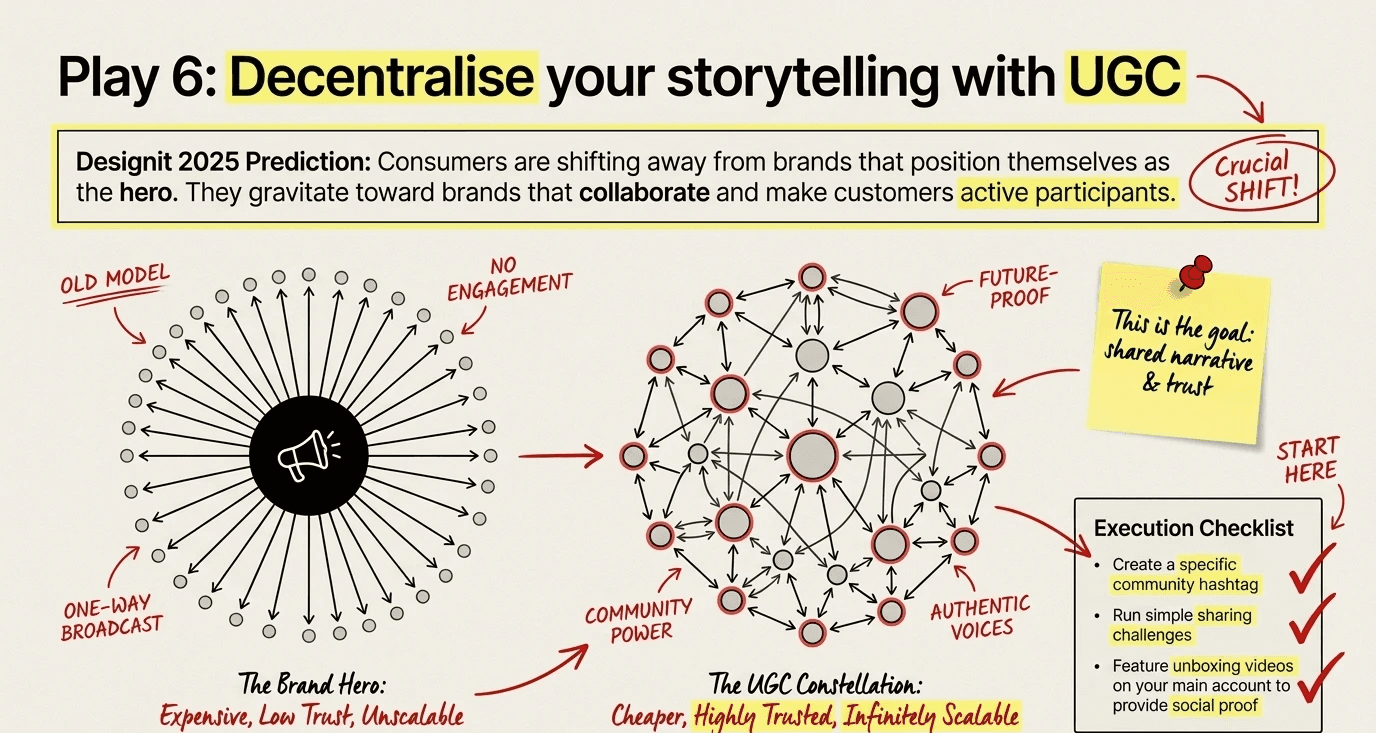
The smartest move a brand can make is to stop being the only storyteller. User-generated content (UGC), photos, videos, reviews, and posts that your actual customers create, is one of the most trusted forms of content marketing that exists. It's not you talking about how great you are. It's someone else showing it.
The easiest way to get started with UGC is to ask. Create a specific hashtag. Feature customers on your account. Run a simple challenge or contest. Make it easy and desirable for people to share their experiences with your brand publicly.
UGC is also cheaper than produced content, more trusted by new audiences, and infinitely scalable when your community grows. It's not a tactic. It's a storytelling infrastructure.
Also Read: How influencer marketing fails: And how to fix it
4. Build Stories Around Your Brand's Values, Not Just Your Products
Consumers don't just buy products. They align with brands that represent something they care about.
Your values aren't a mission statement paragraph appearing on your About page. They should be shown in every piece of content you put out. They should show up in how you respond to criticism. They should be visible in who you hire, what you say no to, and what causes you actually support.
So start from what your brand actually believes. What do you genuinely care about? What would you do even if nobody was watching? Build your storytelling around that. Share why you do what you do, not just what you do.
🎯 Example If your brand genuinely believes in slow, ethical manufacturing, tell that story. Show the process. Introduce the makers. Explain why you chose harder, more expensive materials. That story turns into a reason to buy that no discount can replicate. |
5. Use Video to Tell Stories
Video is the most powerful storytelling medium available to brands today, and it's not particularly close
HubSpot reports that video is the most popular content format in marketing right now, with more than 20% of companies actively investing in video as part of their brand storytelling strategy. Short-form video on TikTok, Instagram Reels, and YouTube Shorts has completely changed how brands can reach and connect with audiences at scale.
But here's the thing: video storytelling doesn't require a Hollywood budget. It requires a clear story structure, decent lighting, and a genuine point of view. Some of the most effective brand videos are shot on smartphones by people who actually care about what they're saying.
If you're not doing video yet, start small. A 60-second founder story. A quick behind-the-scenes clip. A customer sharing their experience in their own words. You don't need a script that's perfect; you need honesty, clarity, and a point to make.
• 60-90 second brand story videos for social media
• Customer testimonial videos (raw and authentic, not overly produced)
• Day-in-the-life content from team members
• Product story videos that show the why, not just the what
• Founder videos that explain the origin and mission of the brand
6. Make Your Audience Part of the Story With User-Generated Content
The smartest move a brand can make is to stop being the only storyteller. User-generated content (UGC), photos, videos, reviews, and posts that your actual customers create, is one of the most trusted forms of content marketing that exists. It's not you talking about how great you are. It's someone else showing it.
The easiest way to get started with UGC is to ask. Create a specific hashtag. Feature customers on your account. Run a simple challenge or contest. Make it easy and desirable for people to share their experiences with your brand publicly.
UGC is also cheaper than produced content, more trusted by new audiences, and infinitely scalable when your community grows. It's not a tactic. It's a storytelling infrastructure.
Also Read: How influencer marketing fails: And how to fix it
Conclusion
Storytelling isn't a marketing add-on. It's the core of how brands build real relationships with real people.
The brands winning right now aren't the ones with the biggest ad spend. They're the ones who figured out how to make their audience feel something, seen, understood, and included in something worth believing in. That's what a great brand story does.
Start with the problem. Feature real people. Go behind the scenes. Stand for something. Use video. Invite your audience into the story. Do that consistently, and your brand stops being just another option in someone's search results; it becomes the one they remember and come back to.
Ready to Turn Your Brand Into a Story Worth Telling? We're a marketing agency that specialises in building brand storytelling strategies that actually drive results. Whether you need content, video, UGC campaigns, or a full brand narrative overhaul, we can help you build it. If you're ready to stop blending in and start standing out, let's talk. We'll help you craft a brand story that connects with the right people and actually moves the needle. → Get in touch with our team at motionlabs.agency |
Frequently Asked Questions About Brand Storytelling
What is brand storytelling, and why does it matter?
Brand storytelling is how a company communicates who it is, what it believes, and why it exists, through narrative rather than just product information. It matters because people are wired to connect with stories. A good brand story builds emotional connection, which leads to trust, loyalty, and sales. Plain feature-listing rarely creates that kind of bond.
How do small brands compete with big brands through storytelling?
Small brands often have a natural advantage here; they can be more real, more specific, and more human than large corporations. A founder story, a local community angle, or deeply knowing your niche audience can make a small brand's story far more compelling than a polished campaign from a massive company. Authenticity beats budget when it comes to storytelling.
How often should a brand share its story?
Brand storytelling isn't a one-time campaign. It's an ongoing thread woven through all your content. You don't retell the same origin story every week, but your values, your customer wins, your behind-the-scenes moments, and your product stories all build on each other consistently. Think of it as a conversation that never really ends.
What types of content work best for brand storytelling?
Video is leading the pack, especially short-form content on platforms like TikTok, Instagram Reels, and YouTube Shorts. But long-form content, blog articles, podcasts, and newsletters still drive deep engagement and SEO value. Customer story content, behind-the-scenes posts, and UGC campaigns are also among the most effective formats right now.
How do I make my brand story feel authentic and not scripted?
Start with what's real. What actually happened when you started your brand? What problem were you genuinely trying to solve? What do you actually believe about your industry? Real stories told with specific details will always feel more authentic than polished marketing copy written by committee. Talk like a human being, not a brand.
Can user-generated content really help with brand storytelling?
Yes, it's one of the most powerful tools available. UGC brings in third-party voices that consumers trust far more than branded content. When real customers share genuine experiences with your brand, it adds credibility and social proof that no amount of polished marketing can replicate. The best brands build systems that actively encourage and amplify UGC.
How does brand storytelling affect SEO?
Good storytelling naturally improves SEO because it drives engagement, increases time-on-page, earns backlinks, and builds the kind of trust signals that Google's algorithms are increasingly designed to reward. Content that tells real stories tends to rank better because it satisfies user intent more completely than generic, keyword-stuffed copy.
Conclusion
Storytelling isn't a marketing add-on. It's the core of how brands build real relationships with real people.
The brands winning right now aren't the ones with the biggest ad spend. They're the ones who figured out how to make their audience feel something, seen, understood, and included in something worth believing in. That's what a great brand story does.
Start with the problem. Feature real people. Go behind the scenes. Stand for something. Use video. Invite your audience into the story. Do that consistently, and your brand stops being just another option in someone's search results; it becomes the one they remember and come back to.
Ready to Turn Your Brand Into a Story Worth Telling? We're a marketing agency that specialises in building brand storytelling strategies that actually drive results. Whether you need content, video, UGC campaigns, or a full brand narrative overhaul, we can help you build it. If you're ready to stop blending in and start standing out, let's talk. We'll help you craft a brand story that connects with the right people and actually moves the needle. → Get in touch with our team at motionlabs.agency |
Frequently Asked Questions About Brand Storytelling
What is brand storytelling, and why does it matter?
Brand storytelling is how a company communicates who it is, what it believes, and why it exists, through narrative rather than just product information. It matters because people are wired to connect with stories. A good brand story builds emotional connection, which leads to trust, loyalty, and sales. Plain feature-listing rarely creates that kind of bond.
How do small brands compete with big brands through storytelling?
Small brands often have a natural advantage here; they can be more real, more specific, and more human than large corporations. A founder story, a local community angle, or deeply knowing your niche audience can make a small brand's story far more compelling than a polished campaign from a massive company. Authenticity beats budget when it comes to storytelling.
How often should a brand share its story?
Brand storytelling isn't a one-time campaign. It's an ongoing thread woven through all your content. You don't retell the same origin story every week, but your values, your customer wins, your behind-the-scenes moments, and your product stories all build on each other consistently. Think of it as a conversation that never really ends.
What types of content work best for brand storytelling?
Video is leading the pack, especially short-form content on platforms like TikTok, Instagram Reels, and YouTube Shorts. But long-form content, blog articles, podcasts, and newsletters still drive deep engagement and SEO value. Customer story content, behind-the-scenes posts, and UGC campaigns are also among the most effective formats right now.
How do I make my brand story feel authentic and not scripted?
Start with what's real. What actually happened when you started your brand? What problem were you genuinely trying to solve? What do you actually believe about your industry? Real stories told with specific details will always feel more authentic than polished marketing copy written by committee. Talk like a human being, not a brand.
Can user-generated content really help with brand storytelling?
Yes, it's one of the most powerful tools available. UGC brings in third-party voices that consumers trust far more than branded content. When real customers share genuine experiences with your brand, it adds credibility and social proof that no amount of polished marketing can replicate. The best brands build systems that actively encourage and amplify UGC.
How does brand storytelling affect SEO?
Good storytelling naturally improves SEO because it drives engagement, increases time-on-page, earns backlinks, and builds the kind of trust signals that Google's algorithms are increasingly designed to reward. Content that tells real stories tends to rank better because it satisfies user intent more completely than generic, keyword-stuffed copy.
the call your competitor wish you would'nt take


Related Posts





Related Posts
Related Posts
Motion labs
info@motionlabs.agency


+971 55317 1706
C-1802, ONTARIO TOWER, PLOT NO. 49-0, BUSINESS BAY, DUBAI, 00000
click to meet me :)
click to meet me :)
© All Rights Reserved | 2026


Motion labs
info@motionlabs.agency
+971 55317 1706
C-1802, ONTARIO TOWER, PLOT NO. 49-0, BUSINESS BAY, DUBAI, 00000
Private policy
Terms & Conditions
© All Rights Reserved | 2026
click to meet me :)