/
/
What is SAAS Marketing? Strategies, Explanation & Examples
What is SAAS Marketing? Strategies, Explanation & Examples
5 min
read
What is SAAS Marketing? Strategies, Explanation & Examples
What is SAAS Marketing? Strategies, Explanation & Examples
Strategy
Startup

Author

Scroll down
to read more!
Summerize with ChatGPT
Summerize with Gemini
Summerize with Claude
What is SAAS Marketing? Strategies, Explanation & Examples
What is SAAS Marketing? Strategies, Explanation & Examples
Marketing your SaaS product needs a unique approach and strategies that are built for your brand only. SaaS marketing is all about the strategies, explanations, and examples we will discuss in this article.
Marketing your SaaS product needs a unique approach and strategies that are built for your brand only. SaaS marketing is all about the strategies, explanations, and examples we will discuss in this article.
What is SaaS?
Saas is software as a service, a way of delivering software over the internet instead of installing it on your own computer or server. It’s more like a business model in which customers pay to access and use cloud-hosted software over the Internet, so they do not have to purchase it outright.
SaaS provides access to apps through monthly or annual subscriptions, with common features such as multi-user accounts and pricing tiers.
Some of the best SaaS platforms examples are Salesforce and Slack, which offer tools like CRM, communication, and collaboration through a simple pay-as-you-go model.
Also Read: How to use AI Automation?
What is SaaS Marketing?
SaaS marketing is a strategic approach to promote and sell subscription-based software products. The goal is to acquire, retain, and expand a loyal customer base through digital and offline channels.
Traditional product marketing, used to target one-time purchases, SaaS marketing aims to encourage clients to keep using the application, renew their subscription, and potentially upgrade to a bigger plan.
There are many points on which SaaS marketing relies, such as SEO and content marketing, paid search, email marketing, product growth, partnership and many more things.
Top SaaS marketing strategies
1. Product-Led Growth
The first goal is to cater the platform to users. Provide them free trials, freemium tiers, and in-app referral loops to reduce CAC dramatically. The best examples of product-led growth are Slack, Notion, and Calendly, all of which grew this way. The product becomes the top-of-funnel.
2. SEO & Content Marketing
The highest ROI channel for most SaaS companies over a 12–24 month horizon. Target bottom-of-funnel keywords first because they convert. Then build out top-of-funnel educational content for authority.
3. Review Site Domination
G2, Capterra, and Trustpilot are where B2B buyers go before making decisions. Actively managing your presence, collecting reviews, and ranking on category pages drives significant pipeline.
4. Email Nurture Sequences
Trial users who don't convert immediately need nurturing. Behavioural email sequences triggered by in-app actions are one of the highest-leverage retention and conversion tools.
5. Paid Search
Google Ads do target high-intent keywords like brand terms, competitor terms, and category terms. That’s expensive but fast and result-driven. Works best alongside organic to dominate the SERP.
What is SaaS?
Saas is software as a service, a way of delivering software over the internet instead of installing it on your own computer or server. It’s more like a business model in which customers pay to access and use cloud-hosted software over the Internet, so they do not have to purchase it outright.
SaaS provides access to apps through monthly or annual subscriptions, with common features such as multi-user accounts and pricing tiers.
Some of the best SaaS platforms examples are Salesforce and Slack, which offer tools like CRM, communication, and collaboration through a simple pay-as-you-go model.
Also Read: How to use AI Automation?
What is SaaS Marketing?
SaaS marketing is a strategic approach to promote and sell subscription-based software products. The goal is to acquire, retain, and expand a loyal customer base through digital and offline channels.
Traditional product marketing, used to target one-time purchases, SaaS marketing aims to encourage clients to keep using the application, renew their subscription, and potentially upgrade to a bigger plan.
There are many points on which SaaS marketing relies, such as SEO and content marketing, paid search, email marketing, product growth, partnership and many more things.
Top SaaS marketing strategies
1. Product-Led Growth
The first goal is to cater the platform to users. Provide them free trials, freemium tiers, and in-app referral loops to reduce CAC dramatically. The best examples of product-led growth are Slack, Notion, and Calendly, all of which grew this way. The product becomes the top-of-funnel.
2. SEO & Content Marketing
The highest ROI channel for most SaaS companies over a 12–24 month horizon. Target bottom-of-funnel keywords first because they convert. Then build out top-of-funnel educational content for authority.
3. Review Site Domination
G2, Capterra, and Trustpilot are where B2B buyers go before making decisions. Actively managing your presence, collecting reviews, and ranking on category pages drives significant pipeline.
4. Email Nurture Sequences
Trial users who don't convert immediately need nurturing. Behavioural email sequences triggered by in-app actions are one of the highest-leverage retention and conversion tools.
5. Paid Search
Google Ads do target high-intent keywords like brand terms, competitor terms, and category terms. That’s expensive but fast and result-driven. Works best alongside organic to dominate the SERP.
6. Integration and Partnership Marketing
Getting listed in app marketplaces like HubSpot, Salesforce, and Zapier ultimately puts you in front of buyers already using complementary tools. Co-marketing with partners extends reach without big ad spend.
7. Webinars and Live Content
Webinars and live content are high-converting for mid-funnel leads. Webinars can position you as an authority, generate qualified leads, and give sales a warm audience to follow up with.
8. Customer Expansion Marketing
Most SaaS revenue growth comes from existing customers, upsells, seat expansion, and plan upgrades. In-app messaging, email campaigns, and customer success touchpoints all drive NRR (net revenue retention) up.
What are successful SaaS marketing examples?
Outfunnel
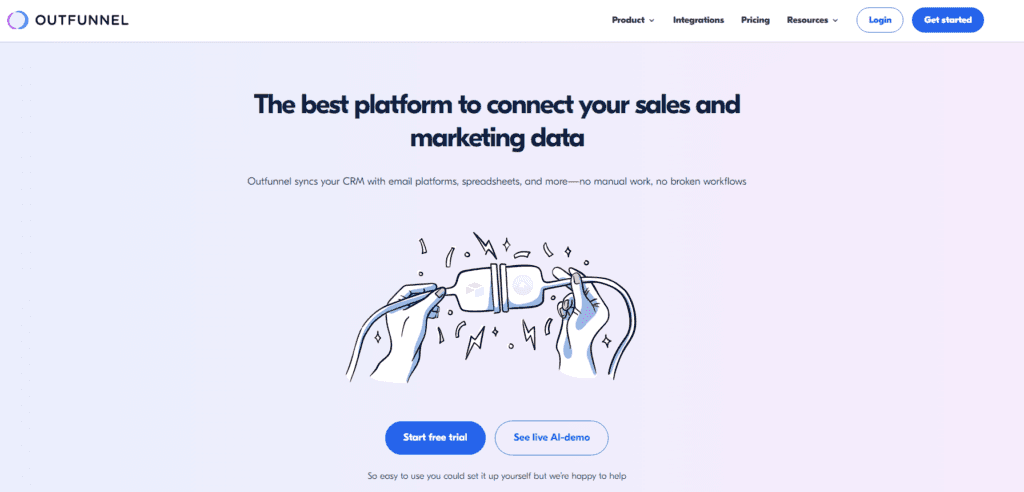
Outfunnel is a B2B SaaS company that integrates marketing tools with CRMs like HubSpot. It helps in collaboration between sales and marketing teams. It can also enable automated email campaigns, website tracking, and lead scoring.
These are some SaaS marketing approaches by Outfunnel:
They invest in branded content, along with it, they’ve created original reports designed to offer value and attract backlinks.
They focus on unique visuals and commissioned custom illustrations so they can stand out visually in the market.
They do use niche distribution channels and regularly share their content on platforms like Hacker News, where their target audience hangs out.
Building trust takes time and authenticity, so they publish deep dives, founder-written pieces, and case studies to gradually build SEO authority.
HubSpot
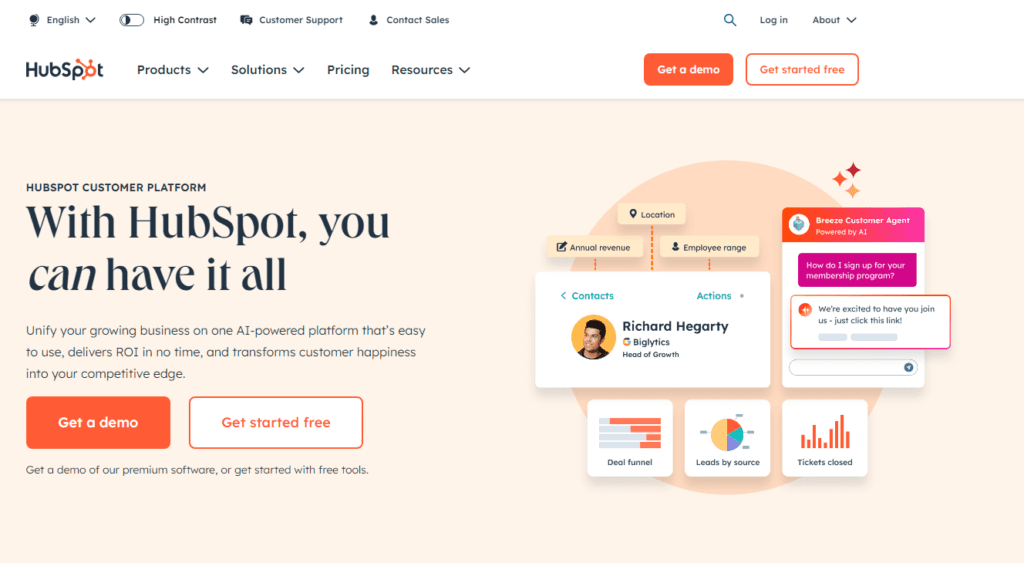
HubSpot is a customer relationship management (CRM) platform that helps businesses grow with tools for marketing, sales, customer service, and content management.
Here are the SaaS marketing strategies of HubSpot:
They offer product-led growth by offering a freemium model that allows users to get started with free tools and upgrade according to their needs.
They follow the trick of cross-selling via multi-hub adoption. By promoting integration across marketing, sales, service, and operations hubs, they improved the overall customer lifetime value.
HUbspot offers strong content and inbound marketing. Remained committed to its roots in inbound marketing, consistently publishing high-value educational content to attract qualified leads.
6. Integration and Partnership Marketing
Getting listed in app marketplaces like HubSpot, Salesforce, and Zapier ultimately puts you in front of buyers already using complementary tools. Co-marketing with partners extends reach without big ad spend.
7. Webinars and Live Content
Webinars and live content are high-converting for mid-funnel leads. Webinars can position you as an authority, generate qualified leads, and give sales a warm audience to follow up with.
8. Customer Expansion Marketing
Most SaaS revenue growth comes from existing customers, upsells, seat expansion, and plan upgrades. In-app messaging, email campaigns, and customer success touchpoints all drive NRR (net revenue retention) up.
What are successful SaaS marketing examples?
Outfunnel
Outfunnel is a B2B SaaS company that integrates marketing tools with CRMs like HubSpot. It helps in collaboration between sales and marketing teams. It can also enable automated email campaigns, website tracking, and lead scoring.
These are some SaaS marketing approaches by Outfunnel:
They invest in branded content, along with it, they’ve created original reports designed to offer value and attract backlinks.
They focus on unique visuals and commissioned custom illustrations so they can stand out visually in the market.
They do use niche distribution channels and regularly share their content on platforms like Hacker News, where their target audience hangs out.
Building trust takes time and authenticity, so they publish deep dives, founder-written pieces, and case studies to gradually build SEO authority.
HubSpot
HubSpot is a customer relationship management (CRM) platform that helps businesses grow with tools for marketing, sales, customer service, and content management.
Here are the SaaS marketing strategies of HubSpot:
They offer product-led growth by offering a freemium model that allows users to get started with free tools and upgrade according to their needs.
They follow the trick of cross-selling via multi-hub adoption. By promoting integration across marketing, sales, service, and operations hubs, they improved the overall customer lifetime value.
HUbspot offers strong content and inbound marketing. Remained committed to its roots in inbound marketing, consistently publishing high-value educational content to attract qualified leads.
Conclusion
SaaS marketing is a bit different from oh, so common marketing or the “traditional marketing." SaaS marketing is all about being smart with your strategy and knowing your audience.
From choosing the right digital channels to setting clear business goals, every endeavour is a step toward getting and keeping customers. Join Motion.labs and do it very effectively.
FAQ
1. What is SaaS marketing?
SaaS marketing focuses on selling software that's delivered via subscription over the internet.
2. What are the most effective SaaS marketing strategies for early-stage startups? Early-stage SaaS companies get the best results from product-led growth (free trials or freemium), SEO-driven content targeting bottom-of-funnel keywords, and actively building their G2 or Capterra presence.
3. How do SaaS companies measure marketing success?
The key metrics are MRR (monthly recurring revenue) influenced by marketing, CAC (customer acquisition cost), LTV (lifetime value), trial-to-paid conversion rate, and churn rate. Traffic and leads matter, but pipeline contribution is what connects marketing directly to revenue.
4. What is product-led growth and why do so many SaaS companies use it? Product-led growth means the product itself drives acquisition through free tiers, trials, or viral sharing features. It works because it lets users experience value before committing, which lowers the barrier to signup and reduces reliance on expensive paid advertising.
Conclusion
SaaS marketing is a bit different from oh, so common marketing or the “traditional marketing." SaaS marketing is all about being smart with your strategy and knowing your audience.
From choosing the right digital channels to setting clear business goals, every endeavour is a step toward getting and keeping customers. Join Motion.labs and do it very effectively.
FAQ
1. What is SaaS marketing?
SaaS marketing focuses on selling software that's delivered via subscription over the internet.
2. What are the most effective SaaS marketing strategies for early-stage startups? Early-stage SaaS companies get the best results from product-led growth (free trials or freemium), SEO-driven content targeting bottom-of-funnel keywords, and actively building their G2 or Capterra presence.
3. How do SaaS companies measure marketing success?
The key metrics are MRR (monthly recurring revenue) influenced by marketing, CAC (customer acquisition cost), LTV (lifetime value), trial-to-paid conversion rate, and churn rate. Traffic and leads matter, but pipeline contribution is what connects marketing directly to revenue.
4. What is product-led growth and why do so many SaaS companies use it? Product-led growth means the product itself drives acquisition through free tiers, trials, or viral sharing features. It works because it lets users experience value before committing, which lowers the barrier to signup and reduces reliance on expensive paid advertising.
the call your competitor wish you would'nt take


Related Posts



Related Posts
Related Posts
Motion labs
info@motionlabs.agency


+971 55317 1706
578 Market St, San Francisco, CA 94105, USA
click to meet me :)
click to meet me :)
© All Rights Reserved | 2026


Motion labs
info@motionlabs.agency
+971 55317 1706
578 Market St, San Francisco, CA 94105, USA
Private policy
Terms & Conditions
© All Rights Reserved | 2026
click to meet me :)